
UA | ENG
Vision: Slava Balbek
Architects: Ira Holubieva, Vitalina Hoshovska
Project managers: Alina Nosovska, Kateryna Okhremenko, Arina Petrenko
Identity and navigation development: ideil.
A primary mobile shelter by RE:Ukraine Shelters is a modular shelter design project for densely populated cities.
TASK
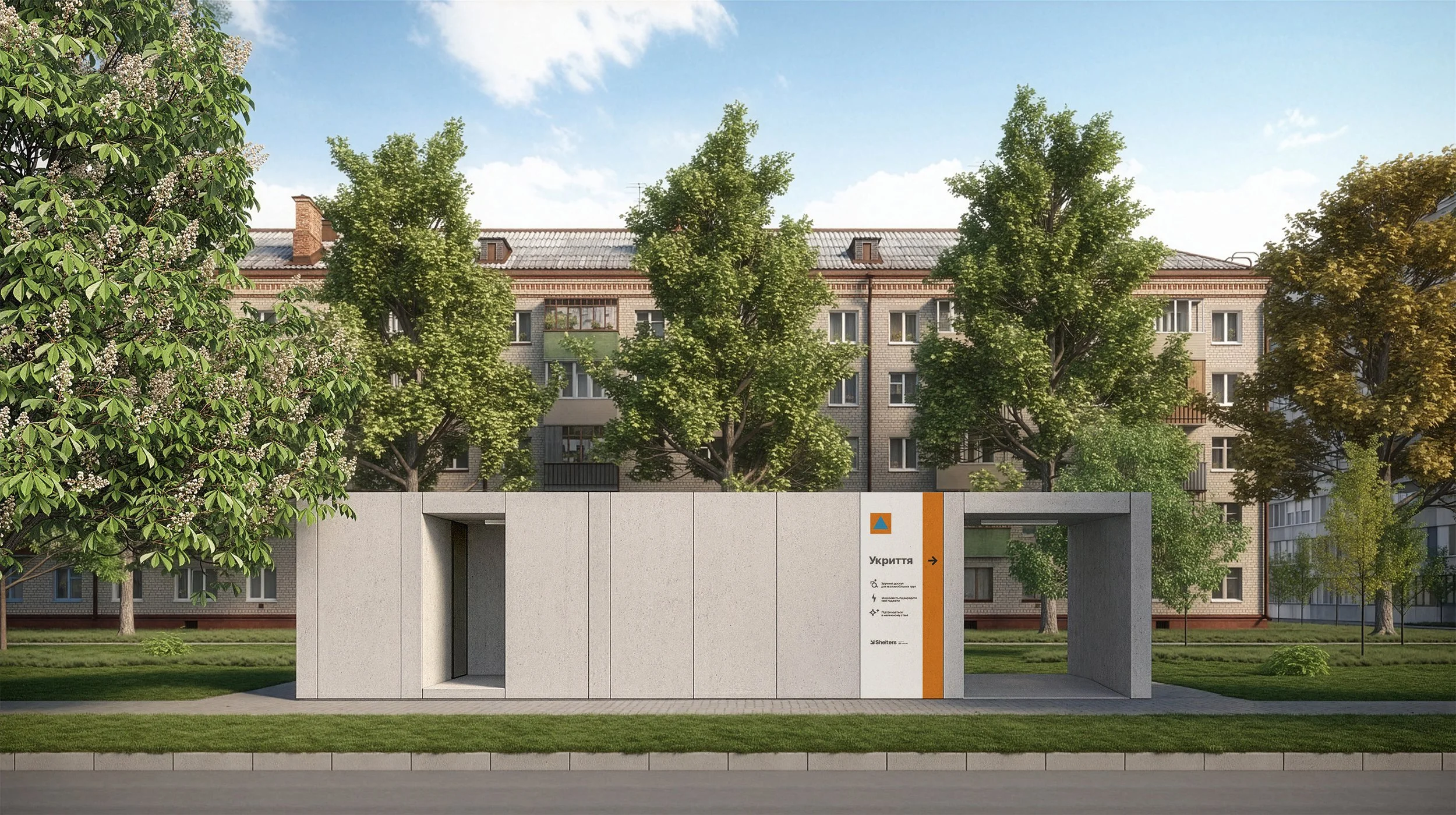
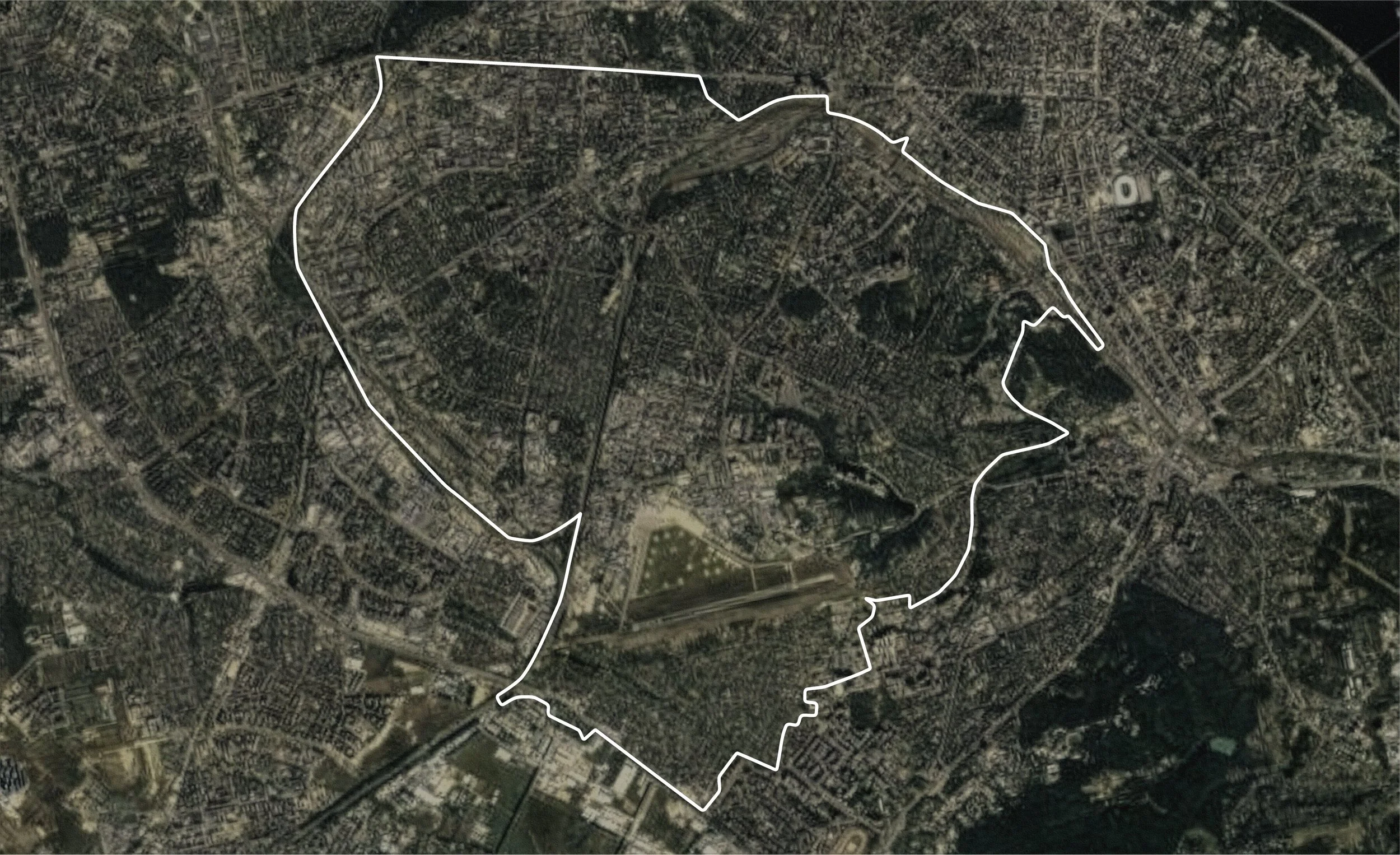
The Solomyanskyi District State Administration approached the bureau with a request to develop a design proposal for temporary mobile shelters. They provided examples of potential locations to help us understand the context and characteristics of typical installation sites. These were mainly parks, areas adjacent to residential buildings, and public transport stops. It prompted the idea of designing modular shelters that would complement and unify small architectural forms – such as bus stops and kiosks – into a coherent visual solution.
DESIGN
According to DSTU (State Standards of Ukraine), primary mobile shelters (PMS) have a maximum capacity of 50 people for up to four hours. These temporary modular shelters are designed to protect against missile and drone debris and are suitable for installation in densely populated cities located far from the front line. The ceiling height of the shelter has been increased beyond the standard specified in regulations – not only to enhance comfort during stays but also to make the design more versatile. Such shelters can be installed in other countries and adjusted for protection against emergencies or risks of armed conflict.
We developed the project in collaboration with manufacturers of concrete-and-metal structures, who consulted the team on the structural features of the shelter elements. If the project proposal is approved, the shelter will undergo full-scale testing at a proving ground.
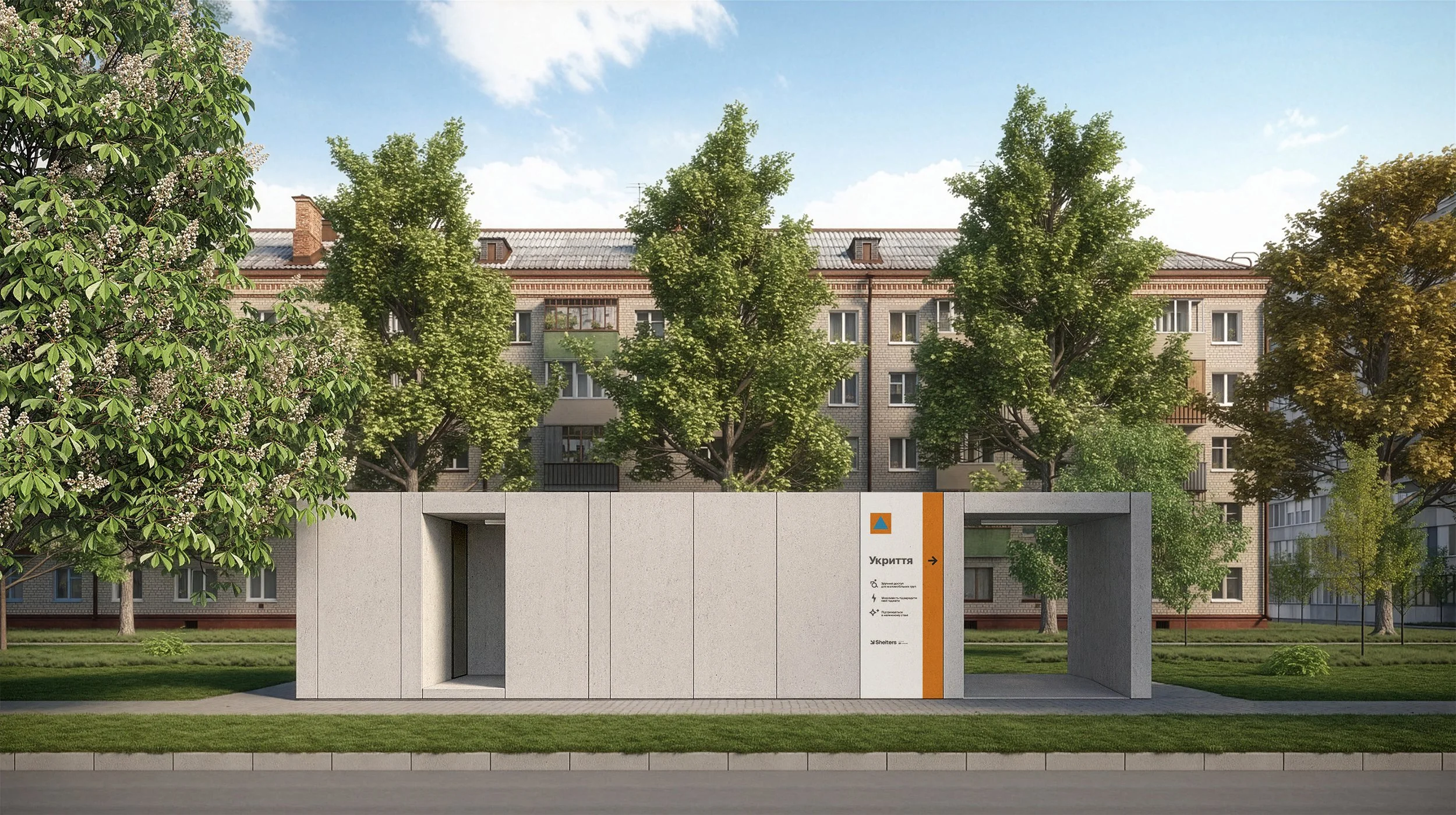
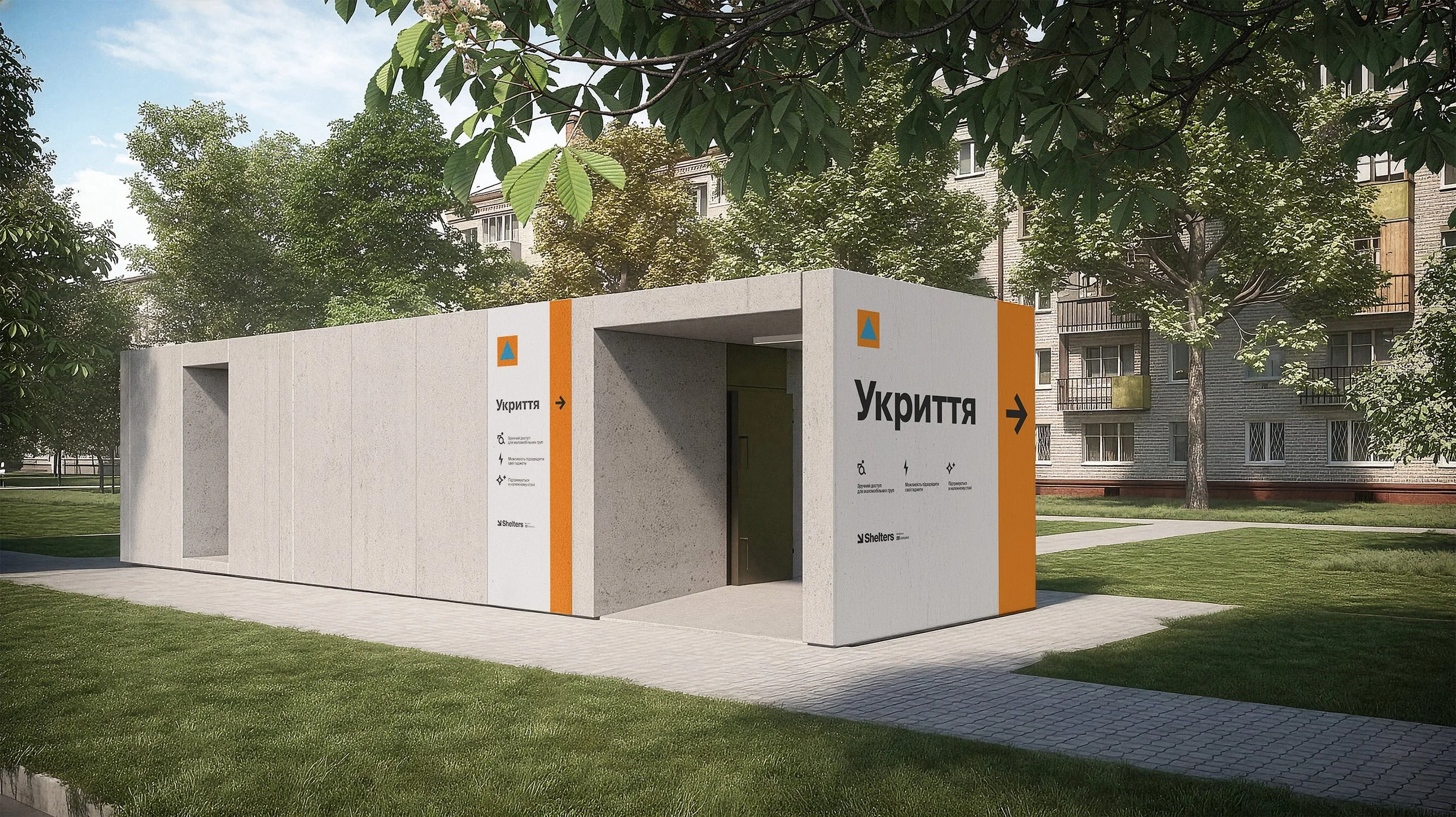
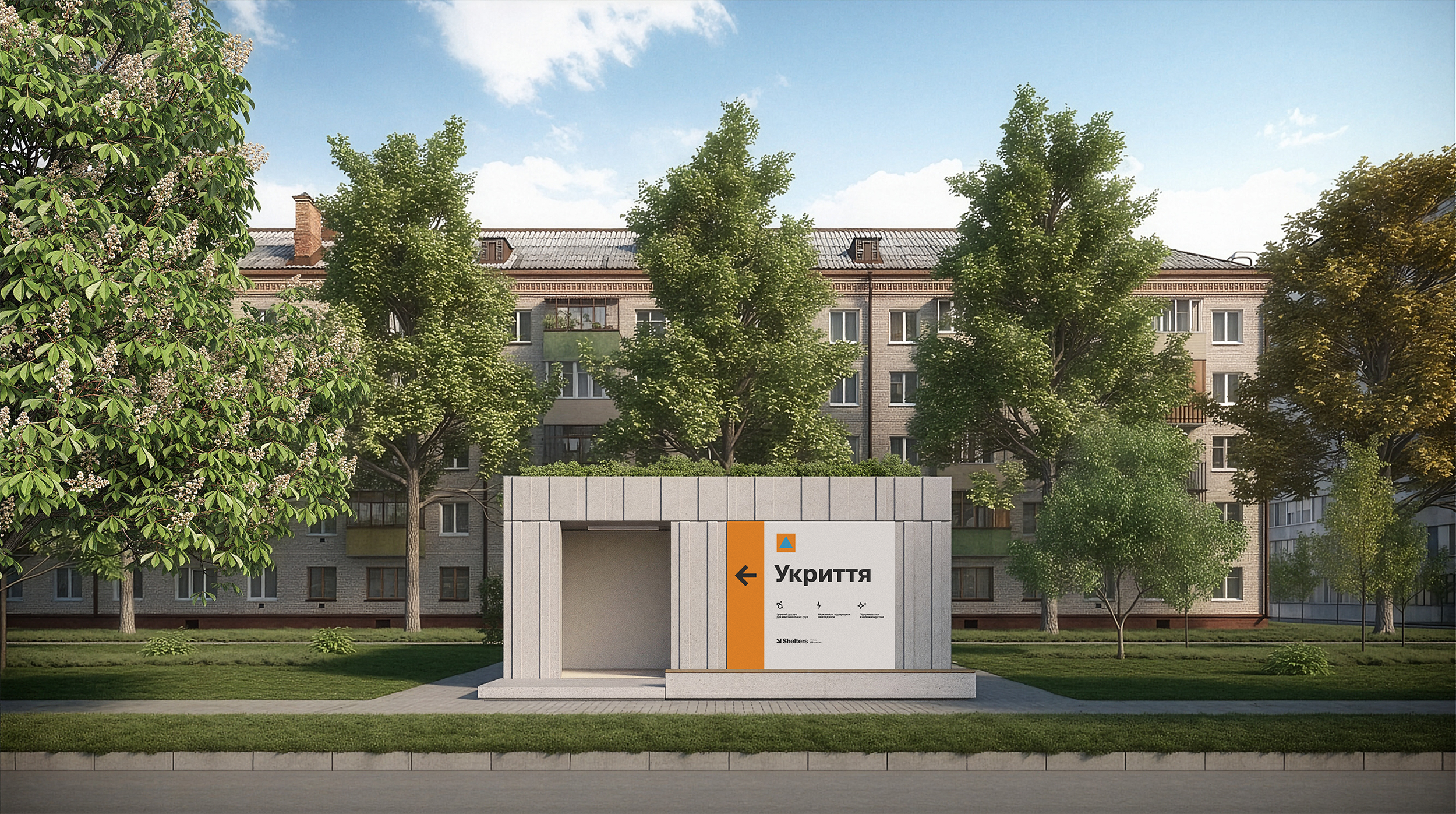
The RE:Ukraine Shelters team developed two main layout options, each available in several configurations. The shelter consists of fixed modules; for each selected site, an appropriate combination is installed depending on the required capacity. The proposed solution is highly implementable and does not require excavation or anchoring – the module is installed directly on a prepared site. In developing the project, we aimed to introduce architectural means that would enhance the visual perception of concrete units within the urban landscape: for example, tinting the concrete in Silk Grey and Moss Grey – shades that blend harmoniously with surroundings.
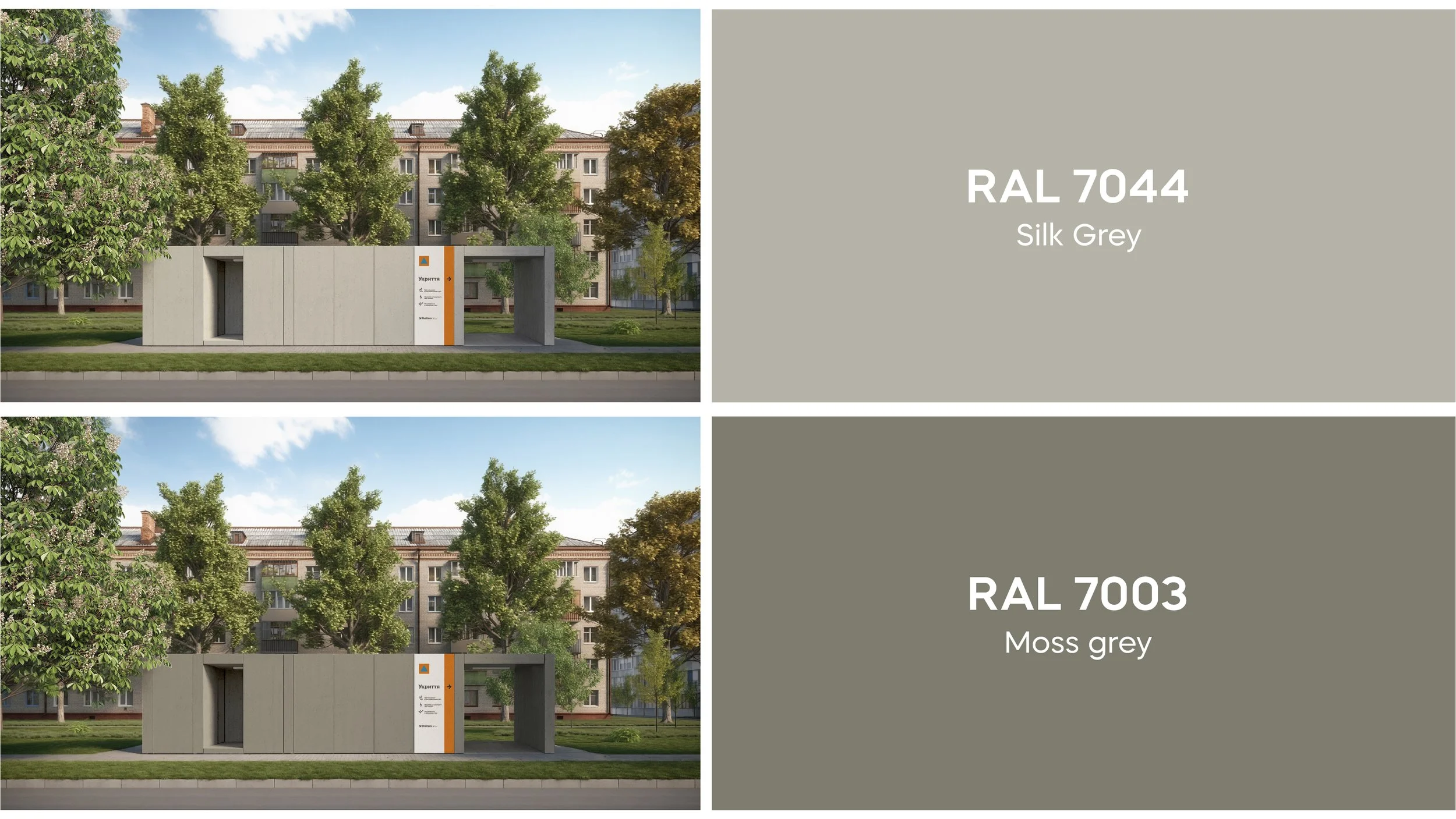
OPTION 1
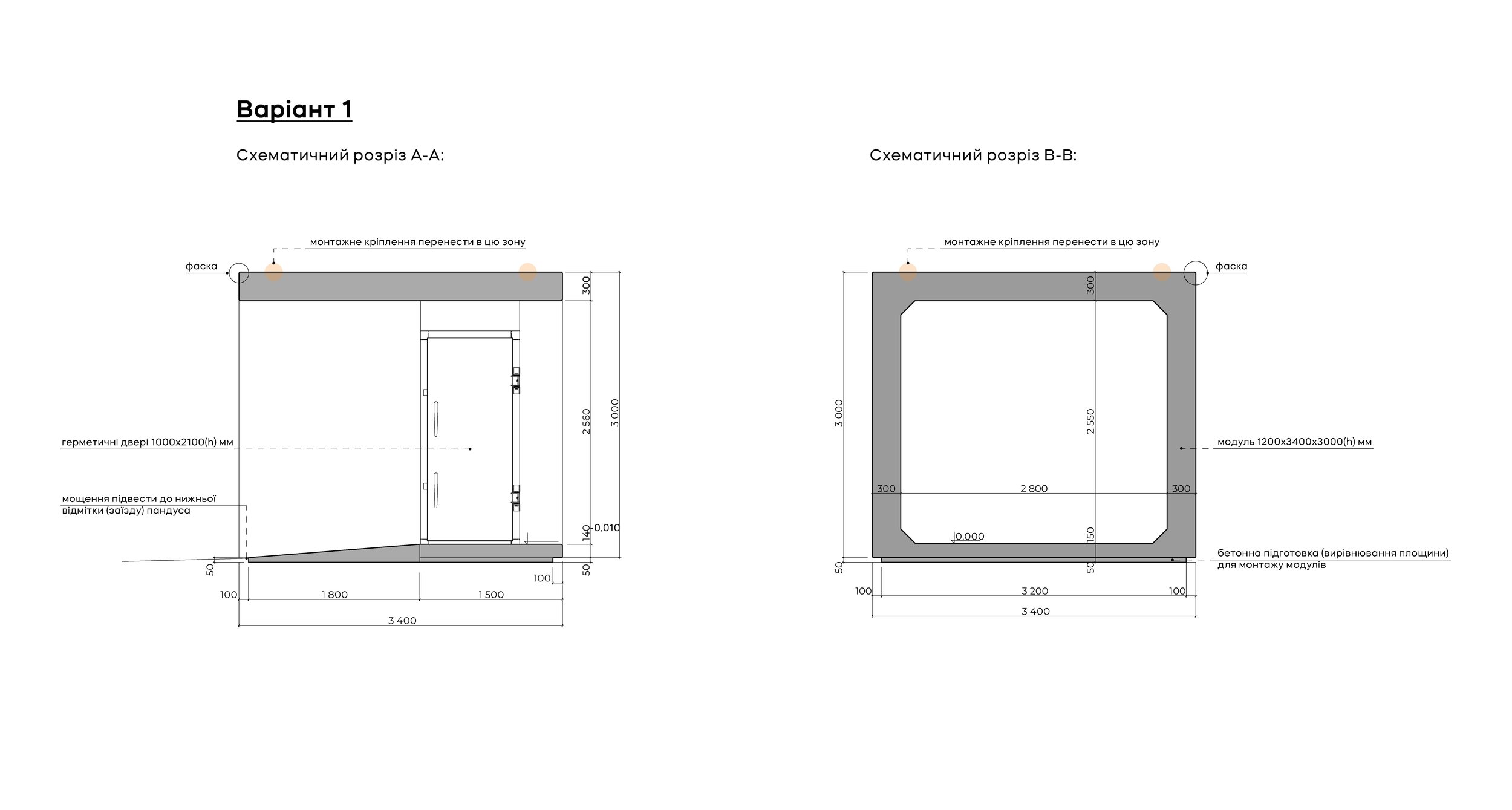
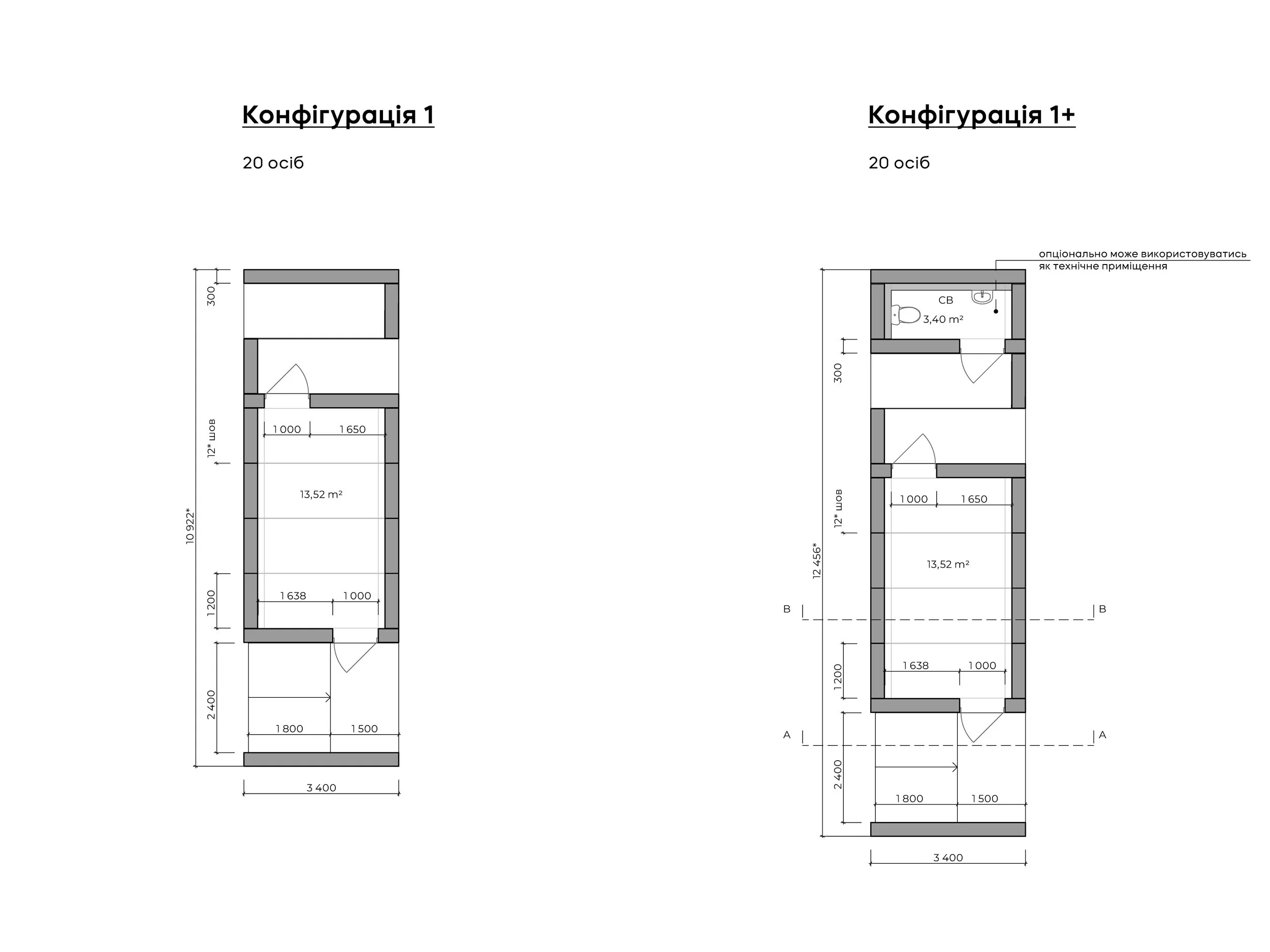
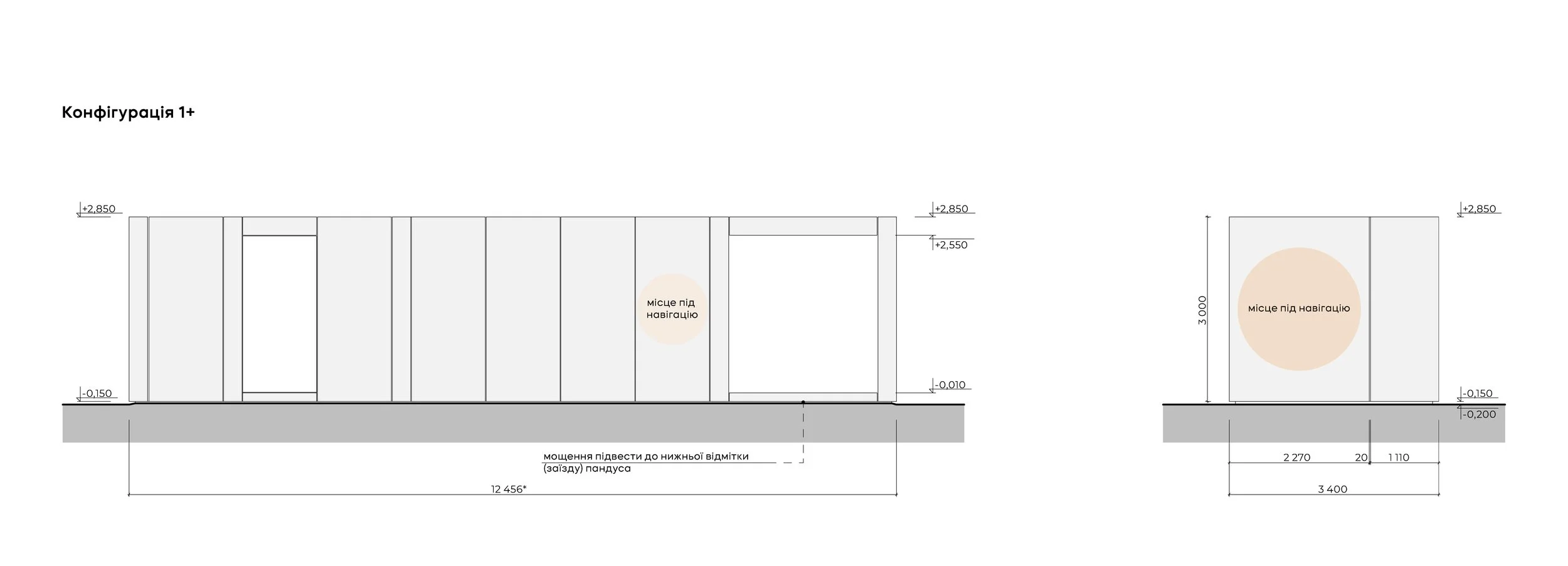
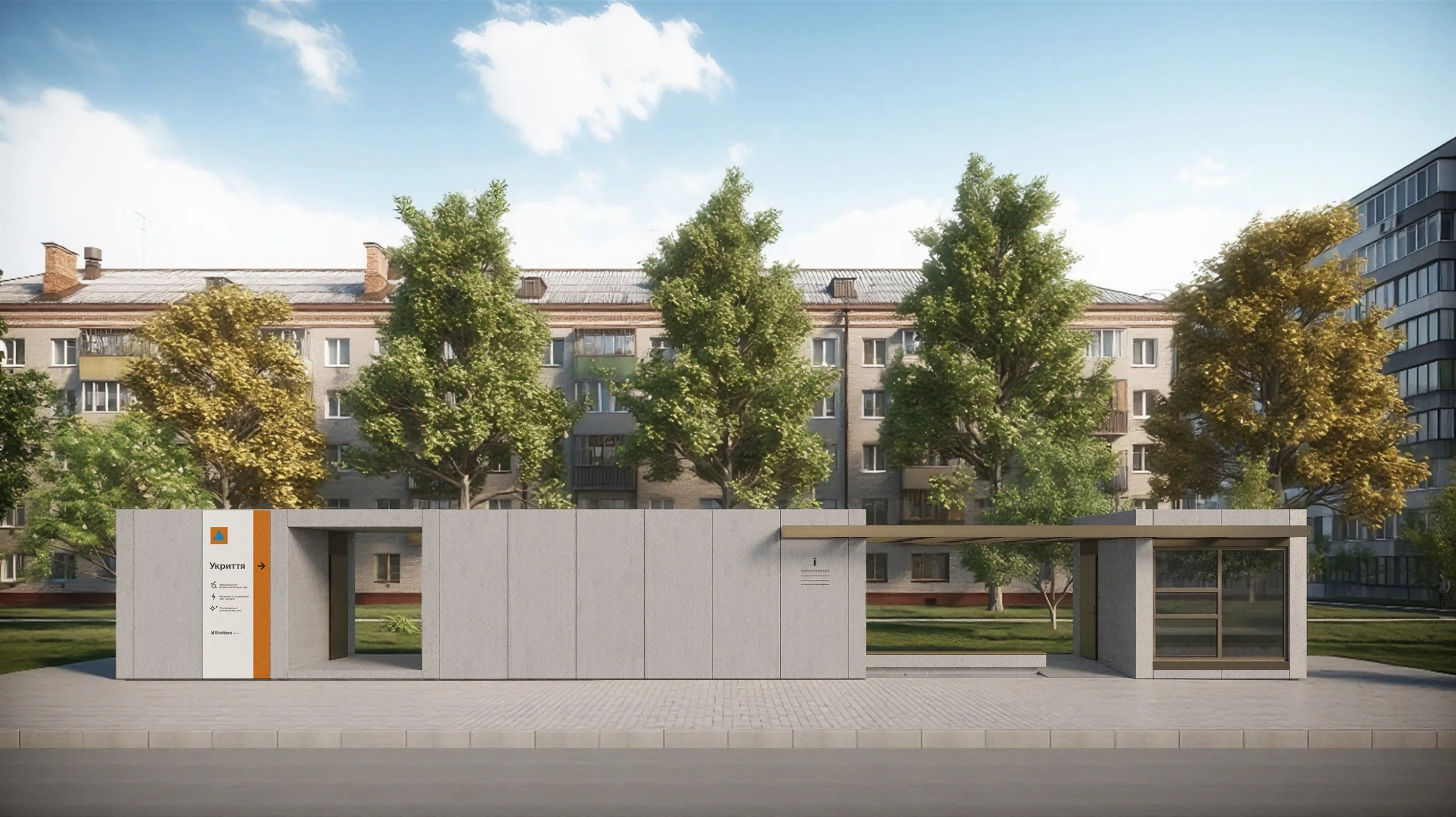
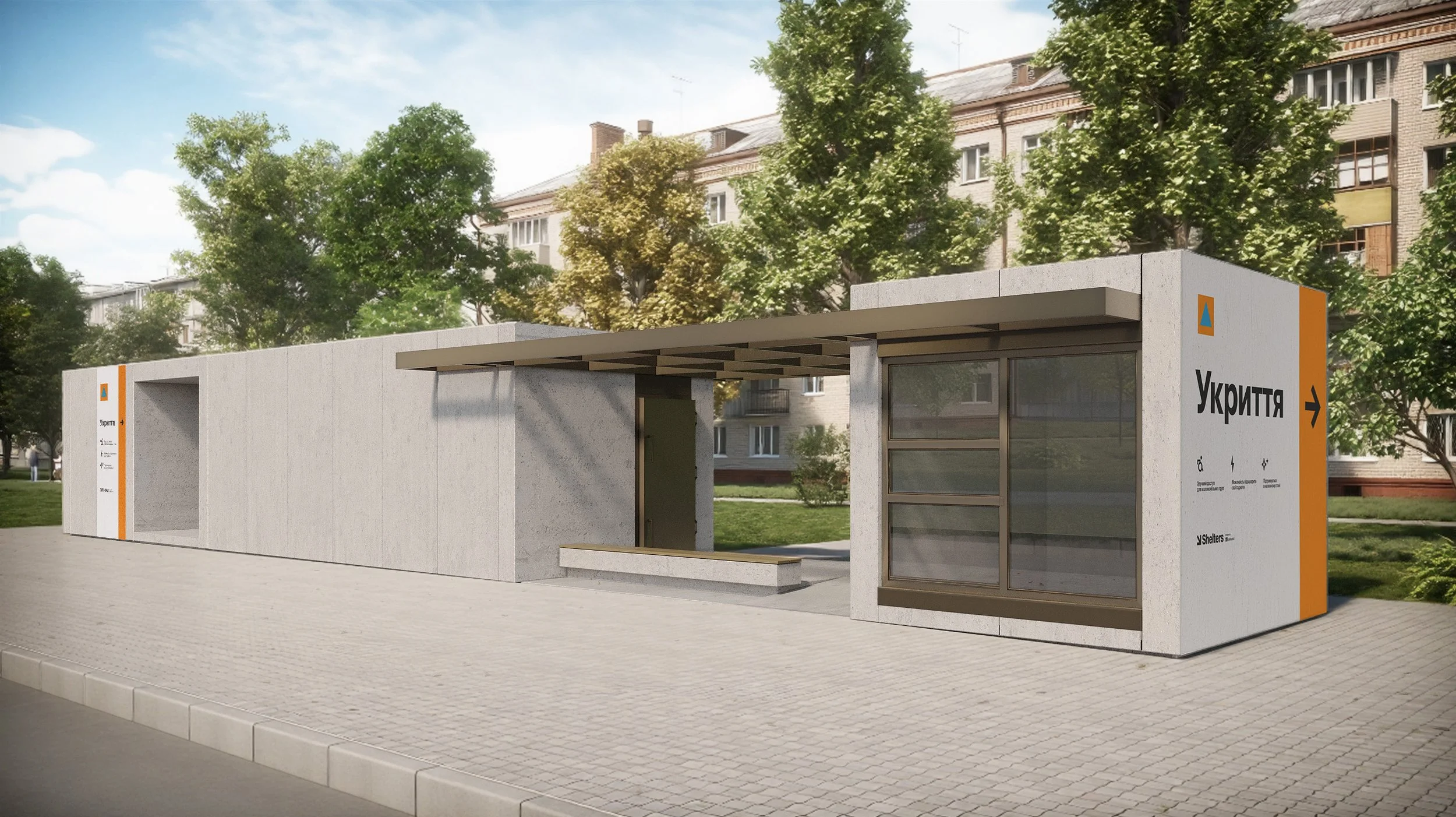
Shelters with the first layout option are intended for narrow transit zones. Configuration 1 – a utilitarian option designed for 20 people – consists of an entrance module and ramp. Configuration 1+ adds a public restroom. When there is no air raid alert, the main structure remains closed, but the restroom can still be used since it is separate from the shelter space. Expanded layout variations allow the installation of an accessible restroom designed for persons with reduced mobility.
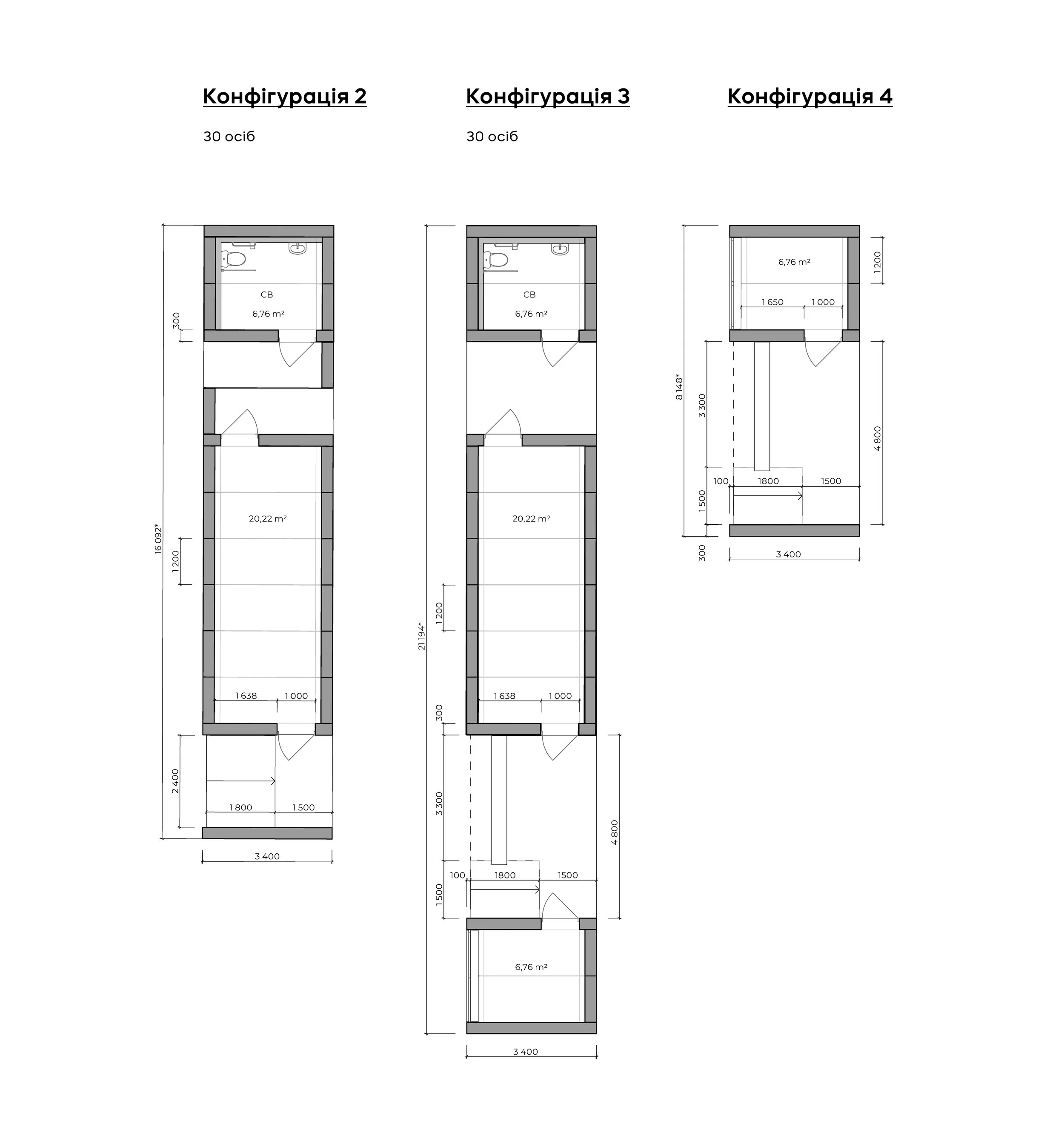
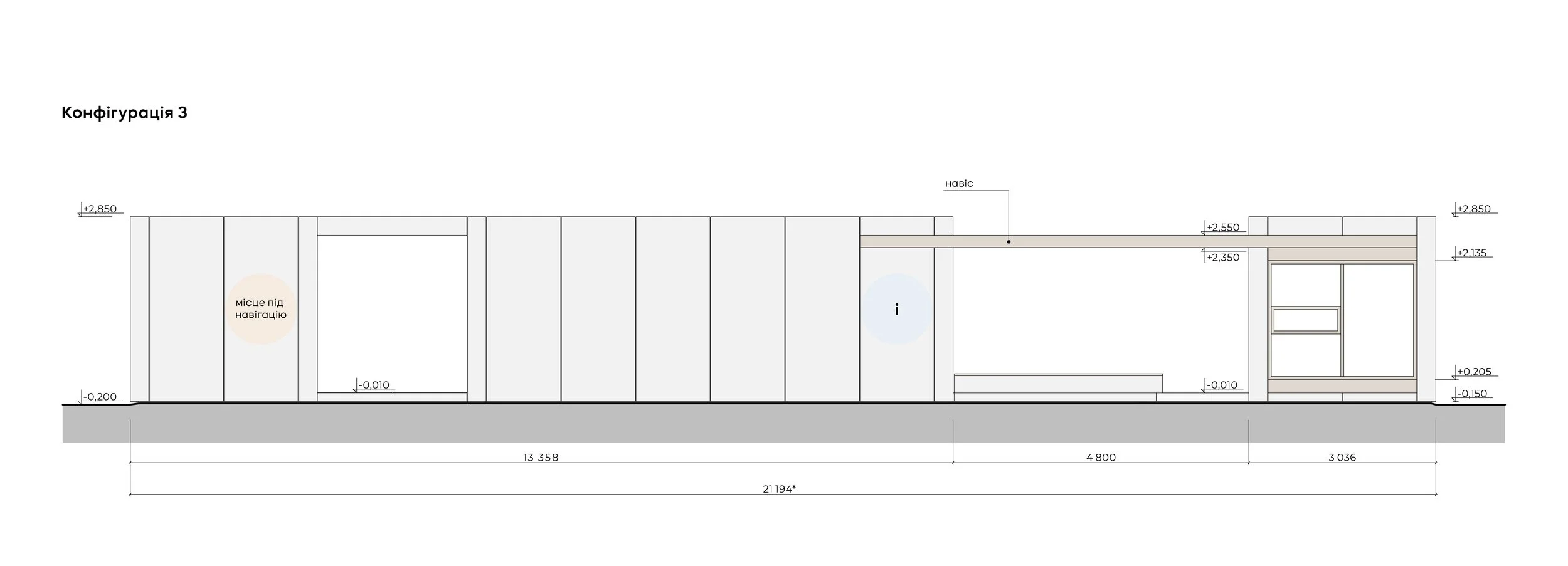
Configuration 2 is an extended, more spacious layout option. Configuration 3 integrates a public transport stop canopy and a kiosk for business rental – entrepreneurs could potentially help maintain the shelter in proper condition. As part of the project, we also proposed Configuration 4, which omits the shelter module entirely and provides only a public transport stop and a small area for a shop.
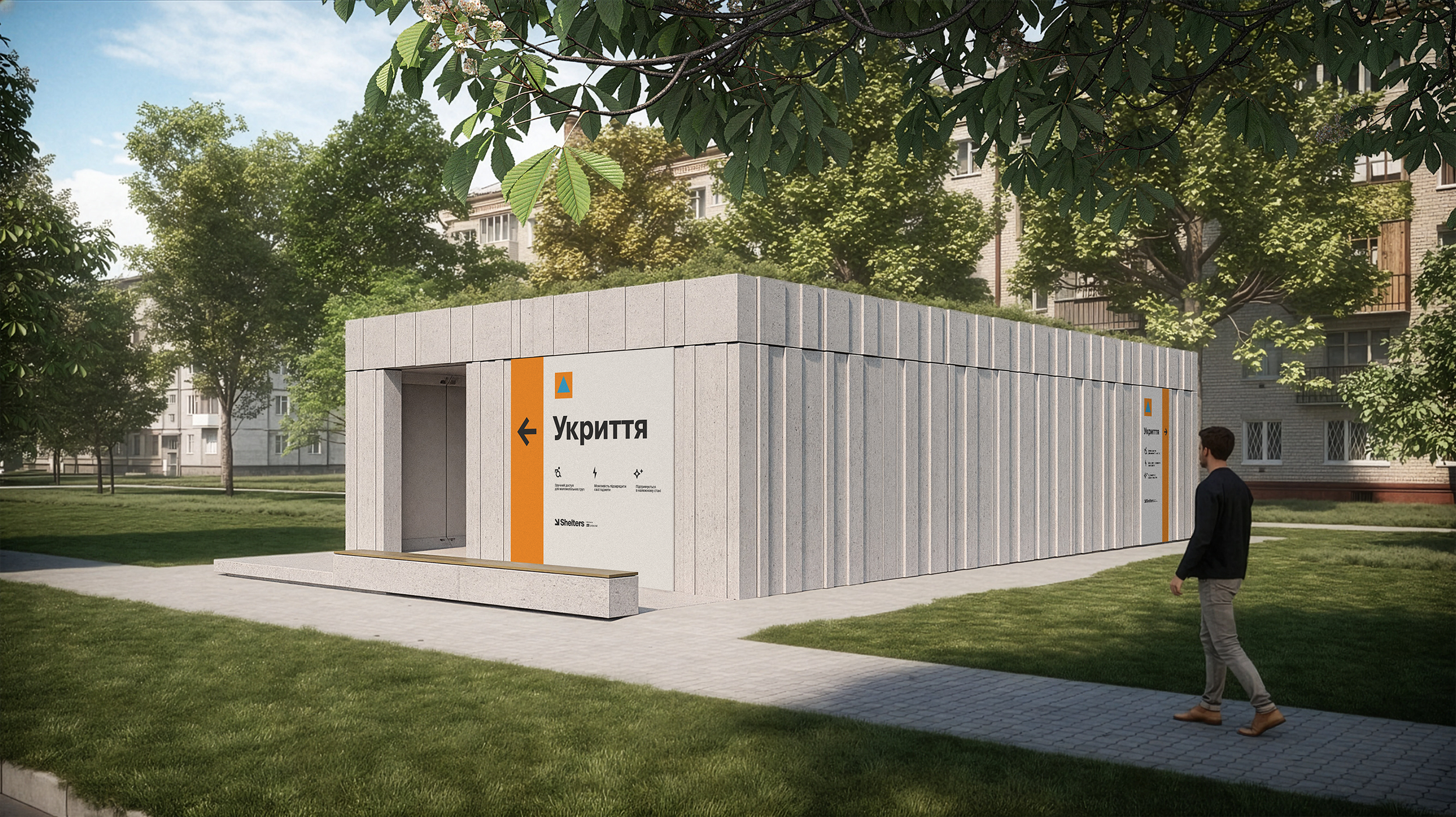
The facade design incorporates navigation elements, ensuring that the entrance is easy to locate from any direction. This is especially important for visitors to the city, as the visual cues allow them to locate the shelter quickly. In the configuration with a bus stop, we designated a separate area for public transport navigation elements – such as the stop name or a timetable display. Navigation development is ongoing; the visualizations show preliminary examples created in collaboration with specialists from the ideil team.
OPTION 2
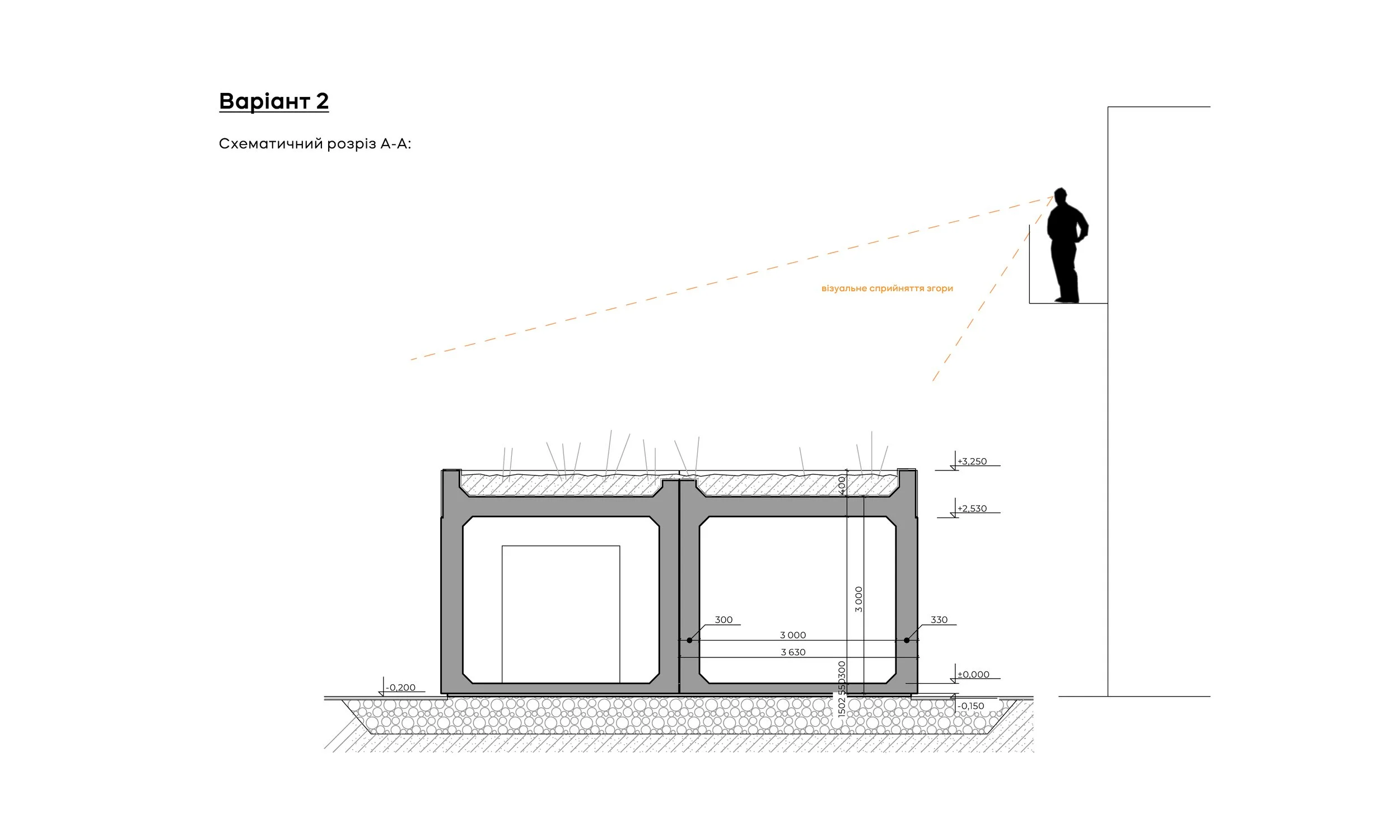
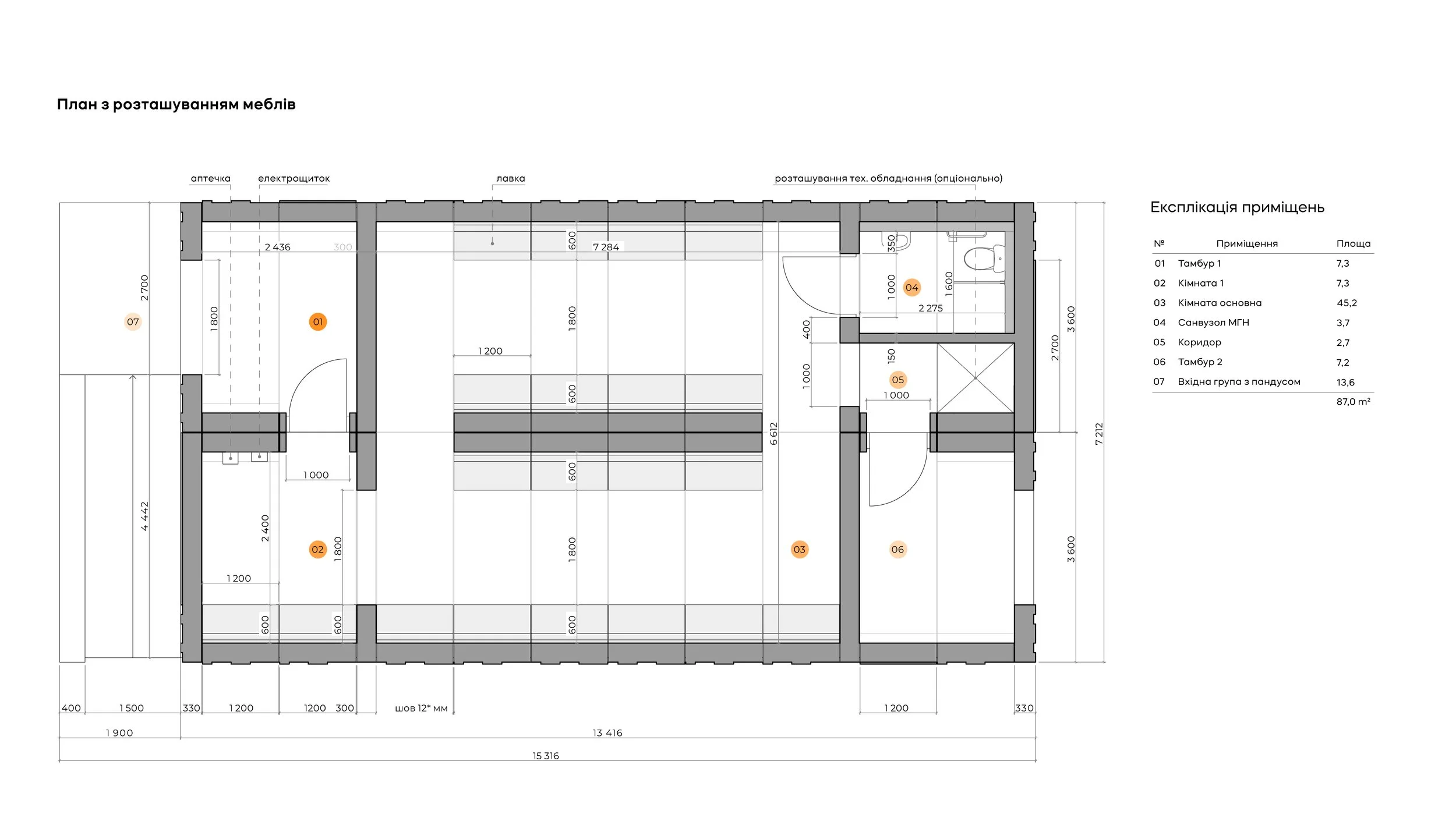
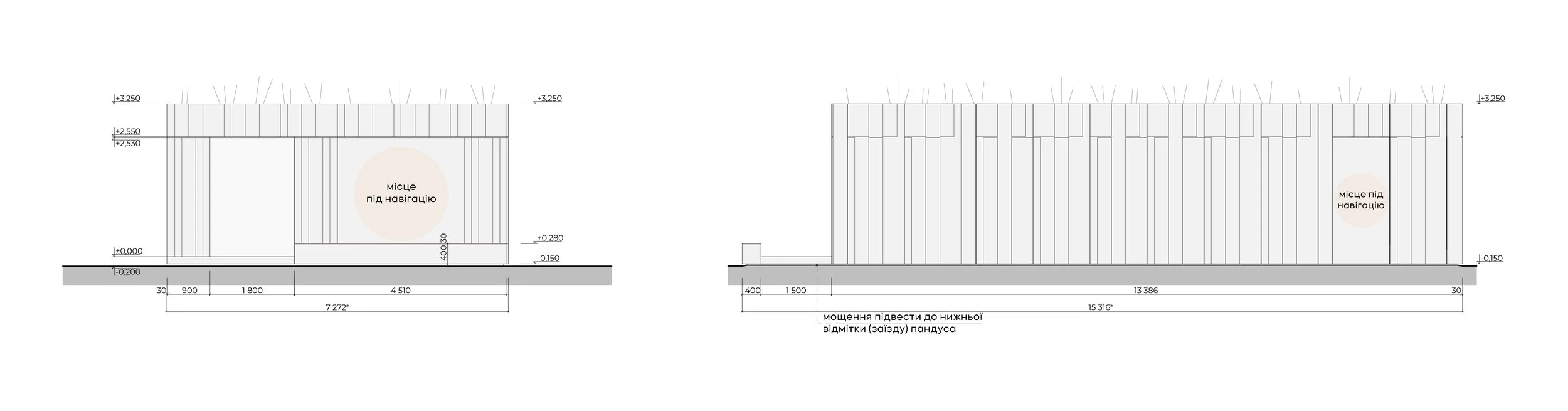
We propose the second, more spacious shelter layout for installation in areas adjacent to residential buildings. In addition to greater width and capacity, its defining feature is the green roof. By placing such a shelter near residential buildings, we integrate it into the local landscape and create additional greenery; instead of a bare concrete roof, residents will enjoy a view of carefully arranged vegetation from their balconies. The facade of this shelter variant is textured, providing a vandal-resistant effect. At the entrance, a concrete bench is installed, with a ramp positioned behind it leading directly into the shelter.
INTERIOR
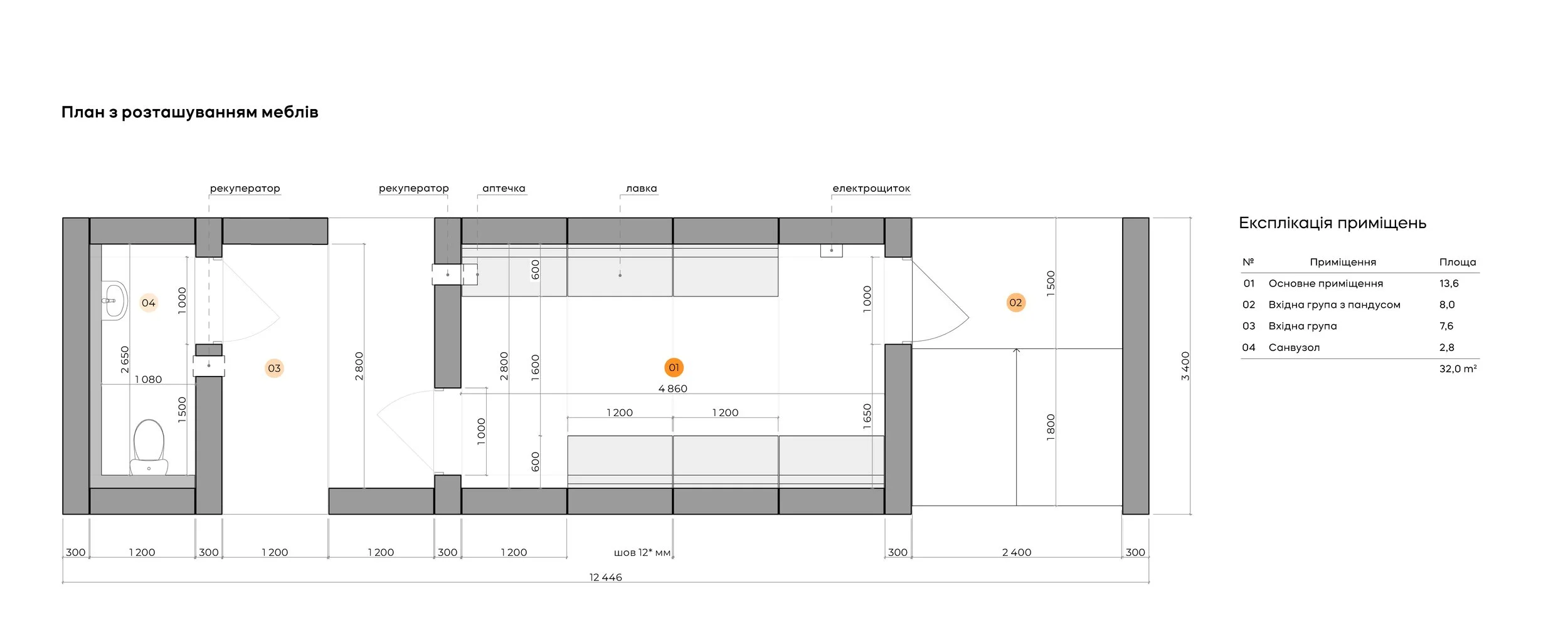
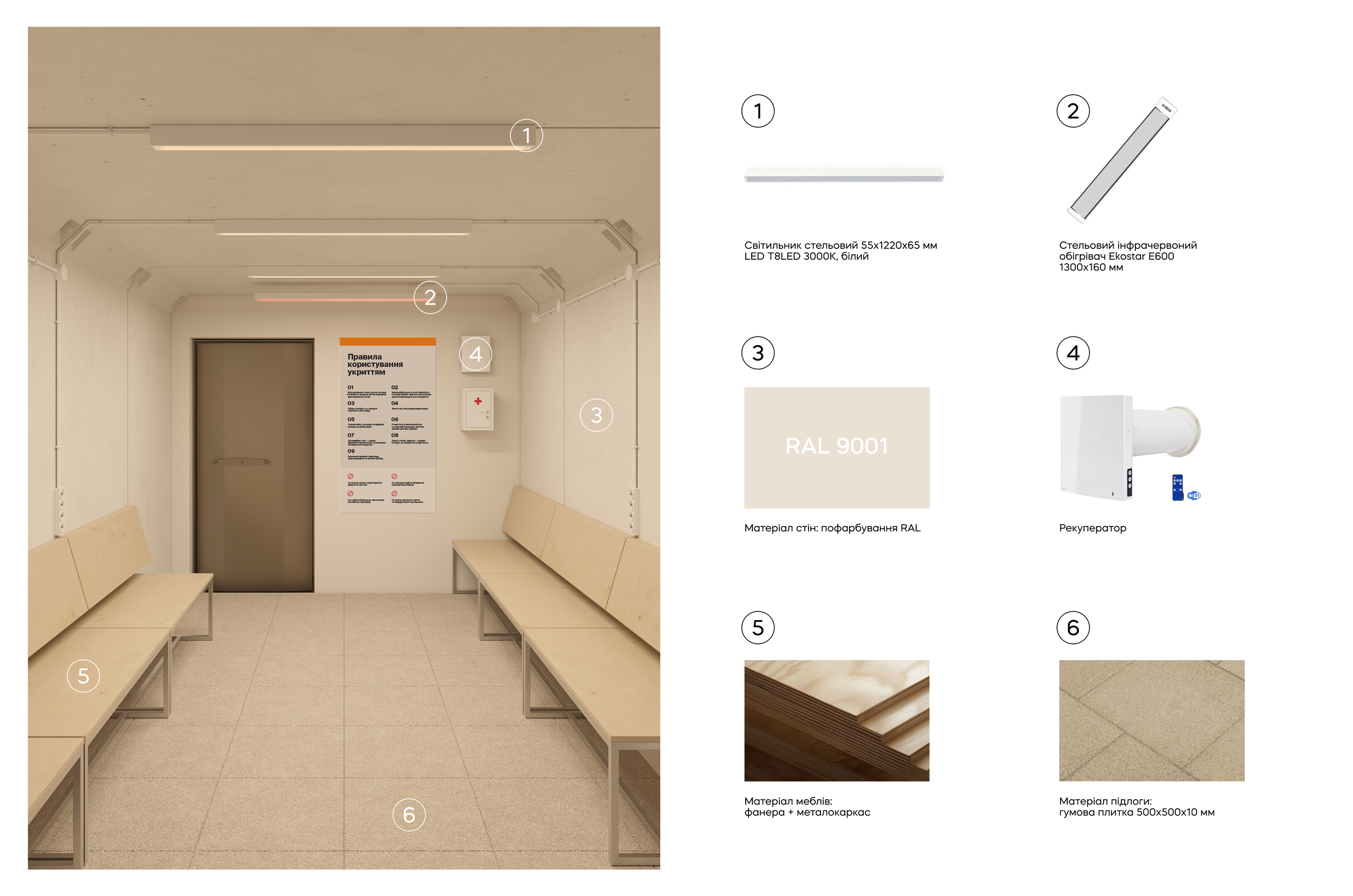
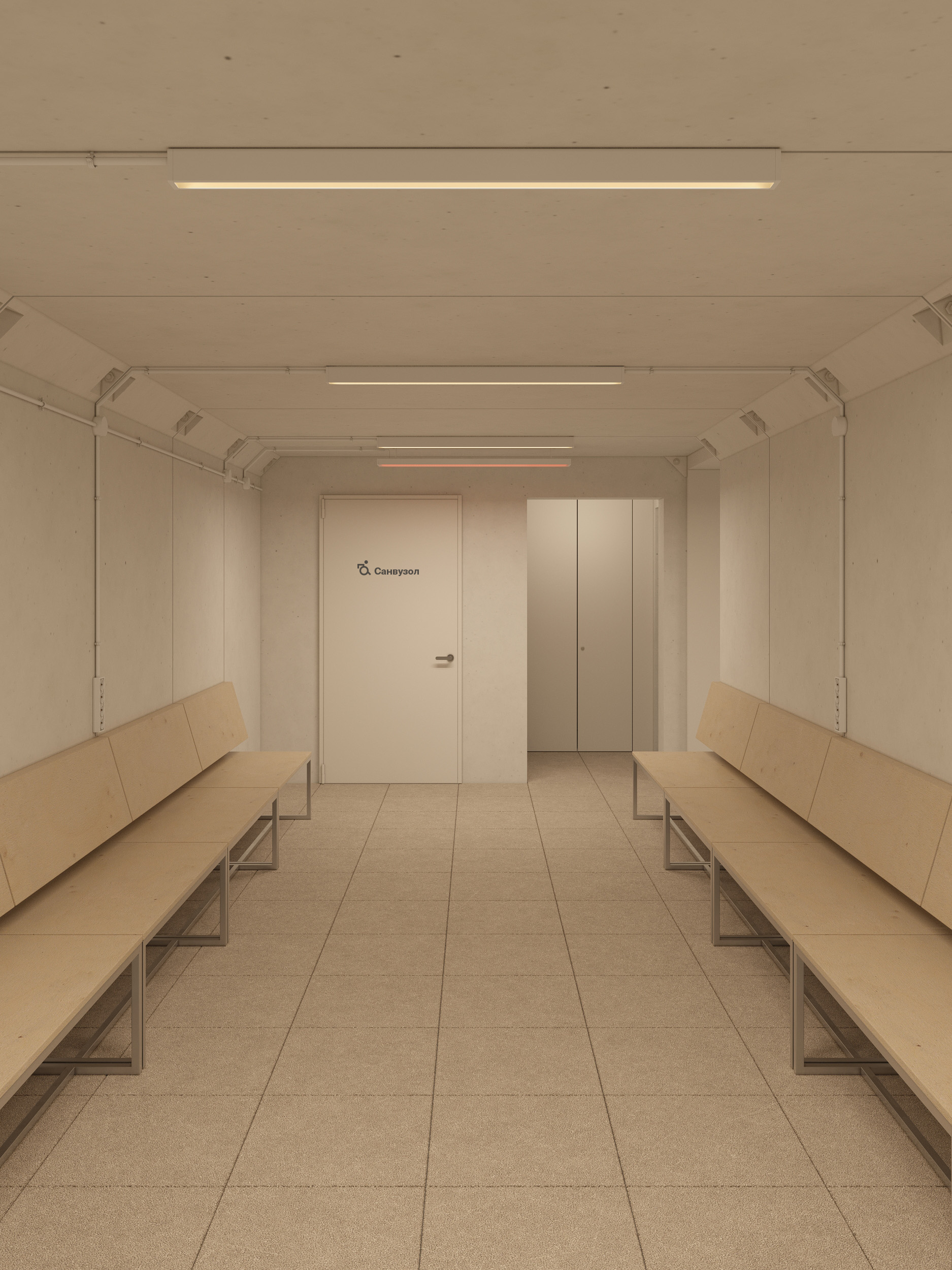
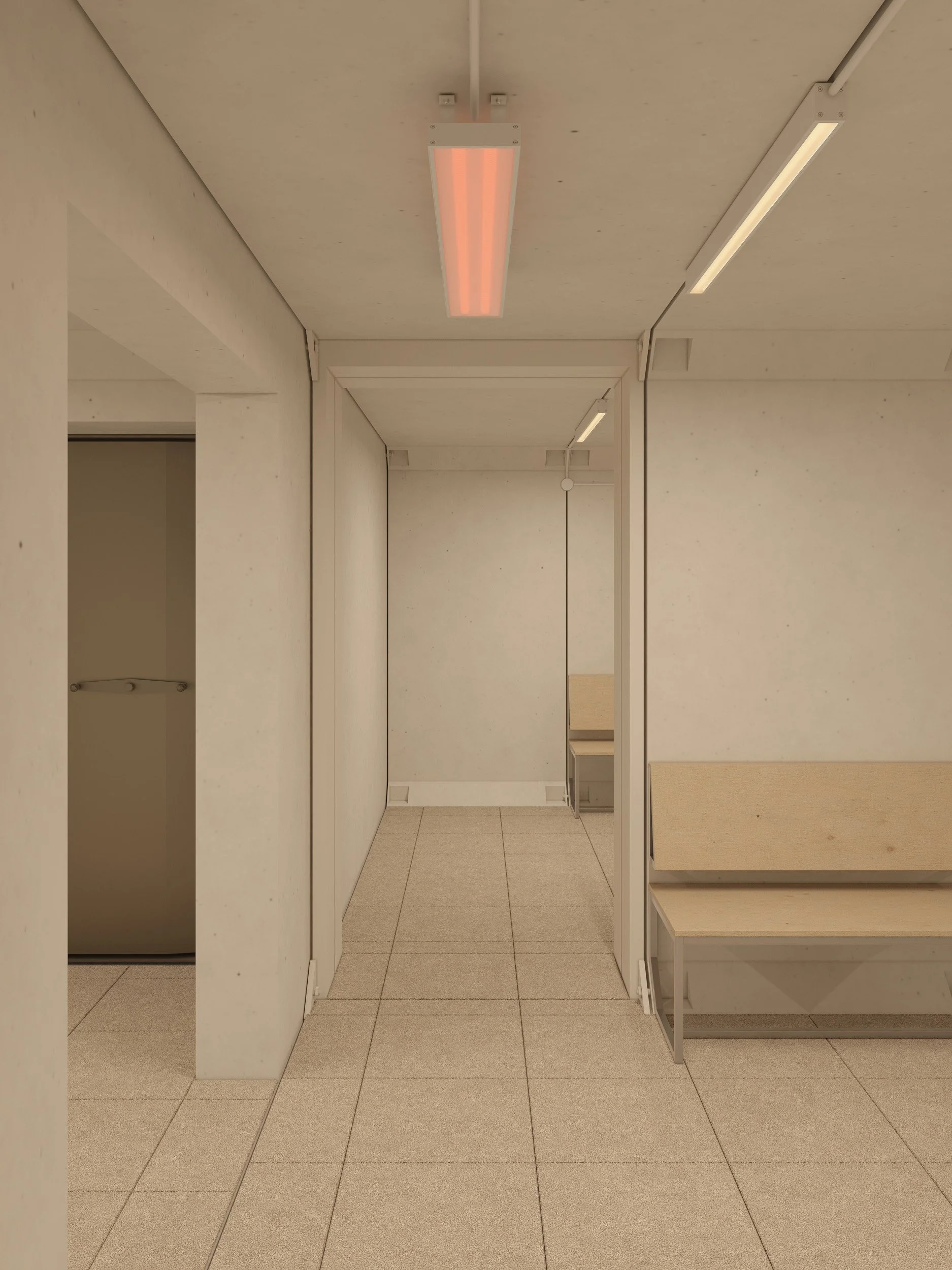
We selected wear-resistant materials and furniture for the shelter's interior. The colors are neutral, calm, and warm, ensuring that the space does not intensify stressful situations but instead feels predictable and comfortable. The shelter includes phone-charging stations. Ventilation is provided by a wall-mounted recuperator. Near the entrance, a first aid kit and user information materials are placed. In addition to standard lighting, an infrared heater mounted on the ceiling maintains a comfortable indoor temperature. Benches run along the walls, and a furniture-free area is provided where people can leave a stroller, scooter, or wait out an air raid with a pet.
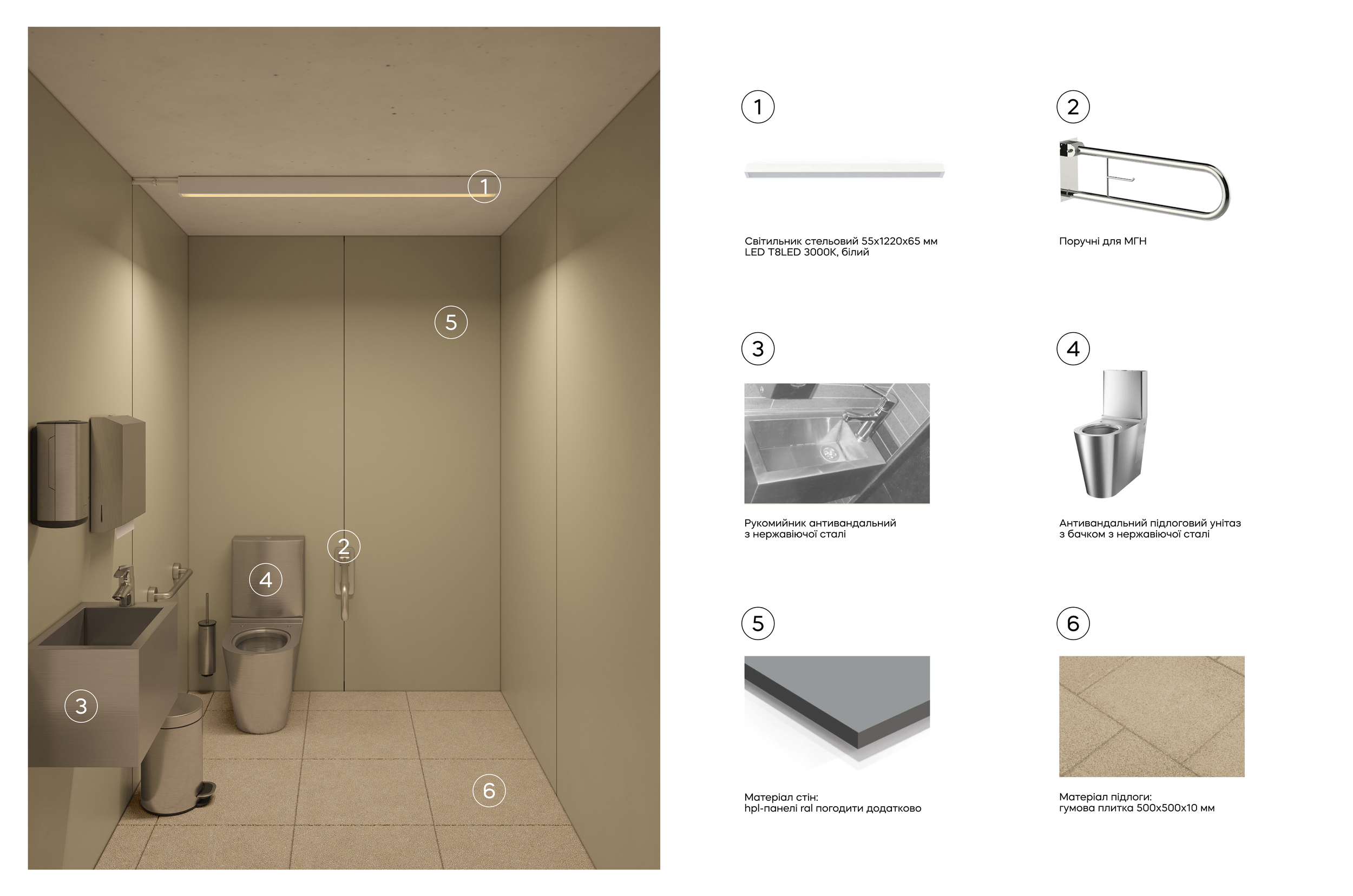
The project’s restrooms are outfitted with vandal-resistant materials – HPL panels and rubber tiles – and fitted with practical, durable stainless steel plumbing fixtures.
RE:UKRAINE SHELTERS
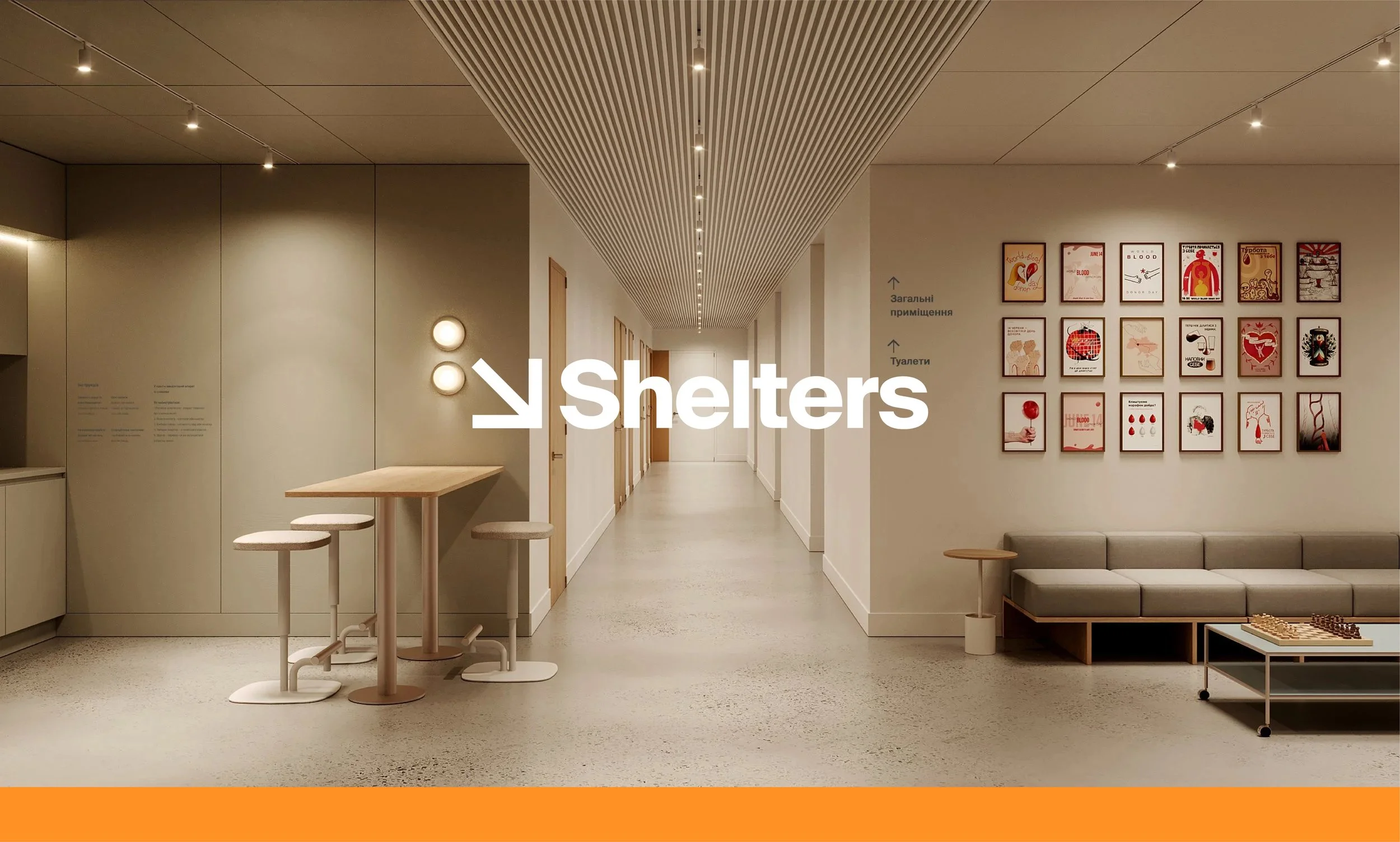
The RE:Ukraine Shelters project seeks to rethink shelters as dignified spaces where people can feel safe. Our goal is to develop architectural solutions for functional and comfortable shelters of all categories, based on leading international experience and aligned with the current needs of Ukrainians. Typically, protective structures are designed under duress as crisis-driven, temporary solutions. The long-term goal of Shelters is to integrate such spaces into everyday life and provide them with additional functions.
TEAM