
SHOPPING MALLS BUILT AROUND PEOPLE, MOVEMENT, AND EXPERIENCE
Shopping centers with high-quality design receive up to 30% more repeat visits.
WHAT WE PROPOSE
Shopping Mall Design
Create a memorable experience for your guests through design solutions that combine atmosphere, functionality, and business goals.
Shopping Mall Renovation
Refresh your existing space while saving up to 30% of the budget compared to a full renovation.
Equipment & supplies
Equip your space with everything it needs – we help select furniture, lighting, technical equipment, and public-space infrastructure that align with the concept. We also connect you with reliable suppliers to ensure smooth day-to-day operations.

WHY US
A STRATEGIC APPROACH BY ARCHITECTS AND CONSULTANTS
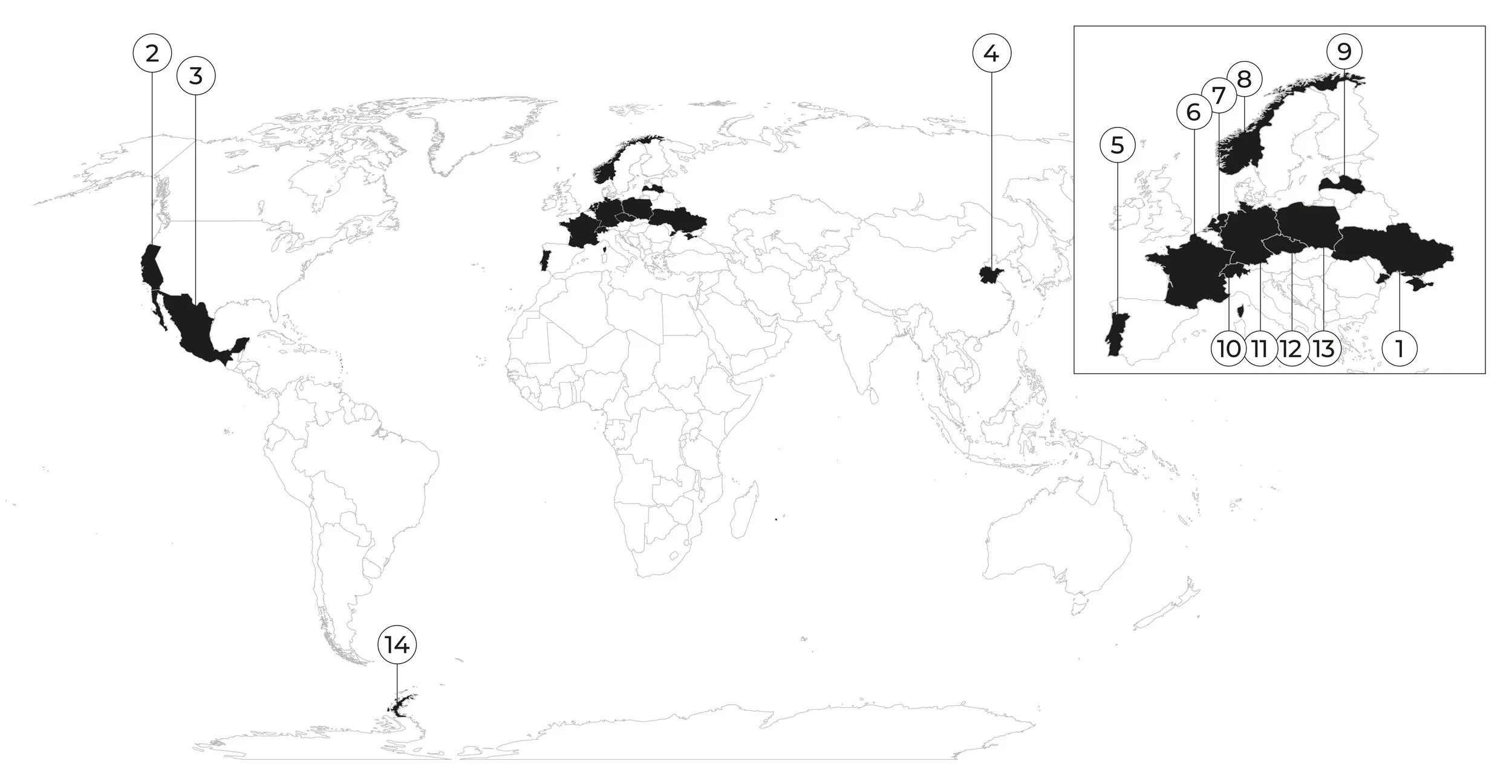
• 15+ years of experience in commercial design with completed projects across 4 continents
• AI-powered analytics for efficient space usage
• Staying within budget and ensuring full cost transparency
• Solutions tailored to your corporate culture and brand goals
Our projects around the world

Our clients

Our awards

MILLA NOVA / bridal boutique
417 sq.m, Warsaw, Poland, 2024
Interior Design Best of Year
Fashion Retail Honoree | Year: 2024
Milla Nova is the flagship showroom of a Ukrainian bridal and eveningwear brand, opened in Warsaw. We reimagined the traditional bridal retail format, combining futuristic aesthetics with a soft, almost ceremonial atmosphere. The three-level showroom is arranged like a landscape — with tiered podiums, cascading fitting rooms, and a lounge area reminiscent of an interplanetary spacecraft interior. Materials such as microcement, gypsum, and epoxy resin create a bold contrast with the delicacy of the dresses. We designed an environment where architecture amplifies the sense of occasion — from the first step inside to the moment in the fitting room.

PROTAGONISTE STORE / store
86 sq.m, Kharkiv, 2020
Protagoniste Store is a multibrand retail space in Kharkiv that merges a concept store, art venue, and event location. The space is organized in an amphitheater format with concrete podiums and a dedicated performance zone. We developed a modular storage system made of perforated metal, easily adaptable to different scenarios. The architecture acts as a stage: a restrained palette, precise forms, and a focus on materials direct attention to the product and overall atmosphere.
FILL OUT THE FORM AND WE WILL CONTACT YOU WITHIN 24 HOURS.
Shopping mall interior design: architecture that shapes experience
Shopping malls are no longer just places to shop. Today, they function as mixed-use environments where retail, leisure, work, and social interaction intersect. In this context, shopping mall interior design becomes a strategic tool that directly affects visitor behavior, dwell time, and return rates.
At balbek bureau, we design retail environments with a clear focus on people and performance. Our mall design services combine architecture, interior design, and commercial logic to create spaces that are easy to navigate, comfortable to spend time in, and effective from a business perspective.
Retail сenter interior design and the «Third Place» concept
Well-designed retail center interior design turns a mall into a city’s third place – not home, not work, but a space for everyday life. A place to meet friends, work between meetings, slow down, or simply exist without pressure to buy.
We avoid visual overload and chaotic spatial solutions that exhaust visitors. Instead, we focus on clear layouts, balanced proportions, and interiors that feel calm, readable, and intuitive.
Our approach is based on three key principles:
Emotional engagement: the space should encourage people to stay, not just complete a purchase.
Visual clarity: a neutral, well-structured background that highlights brands’ storefronts instead of competing with them.
Social sustainability: inclusive, safe, and accessible environments designed for different age groups and mobility needs.
Interior design for malls: planning and visitor flow
At the core of effective interior design for malls lies movement. Planning defines how people circulate, where they pause, and which areas come alive. Our task is to prevent dead zones and distribute footfall evenly across all levels. We design malls as continuous journeys rather than fragmented corridors.
Key components of the customer journey include:
Entrance strategy: clear separation and balance between pedestrian and parking flows.
Intuitive wayfinding: architecture that guides movement naturally, reducing dependence on signage.
Anchor placement: food halls, cinemas, supermarkets, and attractions positioned to activate retail galleries.
Architectural design shopping center: light, scale, and acoustics
Large retail environments demand more than decoration. Architectural design shopping center projects require precise control of scale, verticality, and sensory comfort. We see atriums and galleries as key spaces that support orientation, natural light, and the overall character of the mall.
Our focus areas include:
Daylight integration: skylights and extensive glazing improve well-being while reducing energy consumption.
Vertical circulation: escalators and elevators become part of the spatial rhythm, not just technical elements.
Acoustic comfort: absorptive materials that soften noise and make large volumes feel humane.
Concept-driven shopping mall interior design
A strong concept helps a shopping mall stand out and feel cohesive. A clear idea gives direction, character, and memorability.
Whether the concept is biophilic, industrial, or minimalist, it informs every design decision. We translate this idea into a coherent design code that includes:
Materials: high-durability finishes such as porcelain stoneware, natural stone, and metal – selected for intense traffic and ease of maintenance.
Color logic: from restrained monochrome schemes to deliberate contrasts, always aligned with the project’s identity.
Lighting scenarios: adaptive lighting that responds to time of day and changing use patterns.
Modern shopping mall interior design: from retail box to ecosystem
Globally, malls are evolving from passive retail containers into active urban ecosystems. Contemporary shopping mall interior design no longer serves as a neutral background – it becomes part of the value proposition itself.
At balbek bureau, we move away from outdated retail patterns and focus on solutions that reflect how people use commercial spaces today.
From mono-functional buildings to community hubs
Before: enclosed retail fortresses built around a simple «come in, make a purchase, and leave» logic.
Now: multifunctional public environments. Modern retail center interior design integrates coworking areas, health and wellness services, and educational functions. These additions extend the role of shopping malls beyond retail, turning them into places people use throughout the day for different needs.
From artificial interiors to restorative environments
Before: sealed interiors with permanent artificial lighting and artificial finishes.
Now: spaces that support physical and mental well-being. Daylight, integrated greenery, controlled acoustics, and natural materials help visitors feel relaxed and encourage longer stays.
From fixed layouts to flexible systems
Before: rigid retail units requiring costly reconstruction with each tenant change.
Now: flexible spatial frameworks. Contemporary interior design for malls allows galleries to transform into pop-up stores, exhibition platforms, or event spaces. Architecture adapts to business – not the other way around.
From food courts to social gastronomy
Before: loud, utilitarian dining zones built for quick meals.
Now: food as an anchor experience. We design atmospheric food markets with diverse seating formats, layered lighting, and distinct moods. Dining becomes one of the reasons to visit.
Rest areas as strategic elements of mall design
A meaningful pause is an essential part of the mall experience. Thoughtfully designed rest zones directly affect visitor satisfaction and loyalty.
Our mall design services extend far beyond benches along corridors. We create full-scale lounge environments:
Quiet islands: soft seating areas separated from main circulation by greenery or architectural decisions.
Integrated amenities: charging stations, drinking fountains, and ergonomic tables.
Next-generation food halls: social, design-led spaces with multiple seating scenarios.
FAQ
-
The cost depends on the collaboration format and the scale of the project.
Within our yoga studio interior design services, we offer a flexible model: during a free initial consultation, we work together to define the optimal format — a service that includes everything necessary and nothing excessive, tailored to your business goals, space, and context.The final price is influenced by the floor area, task complexity, number of specialists involved, and the specified time frame.
After the initial brief, we prepare a customized proposal with a detailed breakdown of the cost for each stage.
-
The initial — conceptual — stage usually takes one to two months.
Its duration depends primarily on the speed and quality of communication with the client’s team, as this phase requires frequent cycles: preparation — approval — adjustment.The timeline for the following stages depends on the scope of services and the size of the space.
We can accelerate the process by scaling the project team and are always open to discussing timelines during the negotiation phase.After the very first meeting, we’ll be able to provide a clear timeline estimate and agree on the pace of collaboration.
-
We are not a general contracting company, but we can recommend trusted implementation partners — both in your city and internationally. We're also open to working with your contractors if they’re already involved in the process.
In any case, we can stay engaged during the implementation stage through author supervision.
Additionally, we offer a procurement service: we take care of sourcing contractors and suppliers, as well as placing and managing orders. -
It covers concept development, architectural design, zoning strategy, rest areas, lighting, acoustics, and ergonomic solutions.
-
The duration depends on several factors: the area, complexity level, collaboration format, and the client’s decision-making speed. On average, the full cycle — from the initial meeting to the completion of construction — takes between 6 and 12 months for creating a new bakery in a shell & core format.
We can get involved at any stage — from strategic consulting to procurement and author supervision. After the initial consultation, we’ll be able to provide a well-grounded estimate tailored to your specific case.
In short: when needed, we know how to move very quickly. Thanks to our scalable team of over 70 specialists, we can adjust the pace to meet real business deadlines.
-
A modern interior improves comfort ,extends the time spent in space, strengthens brand perception, and supports commercial performance.