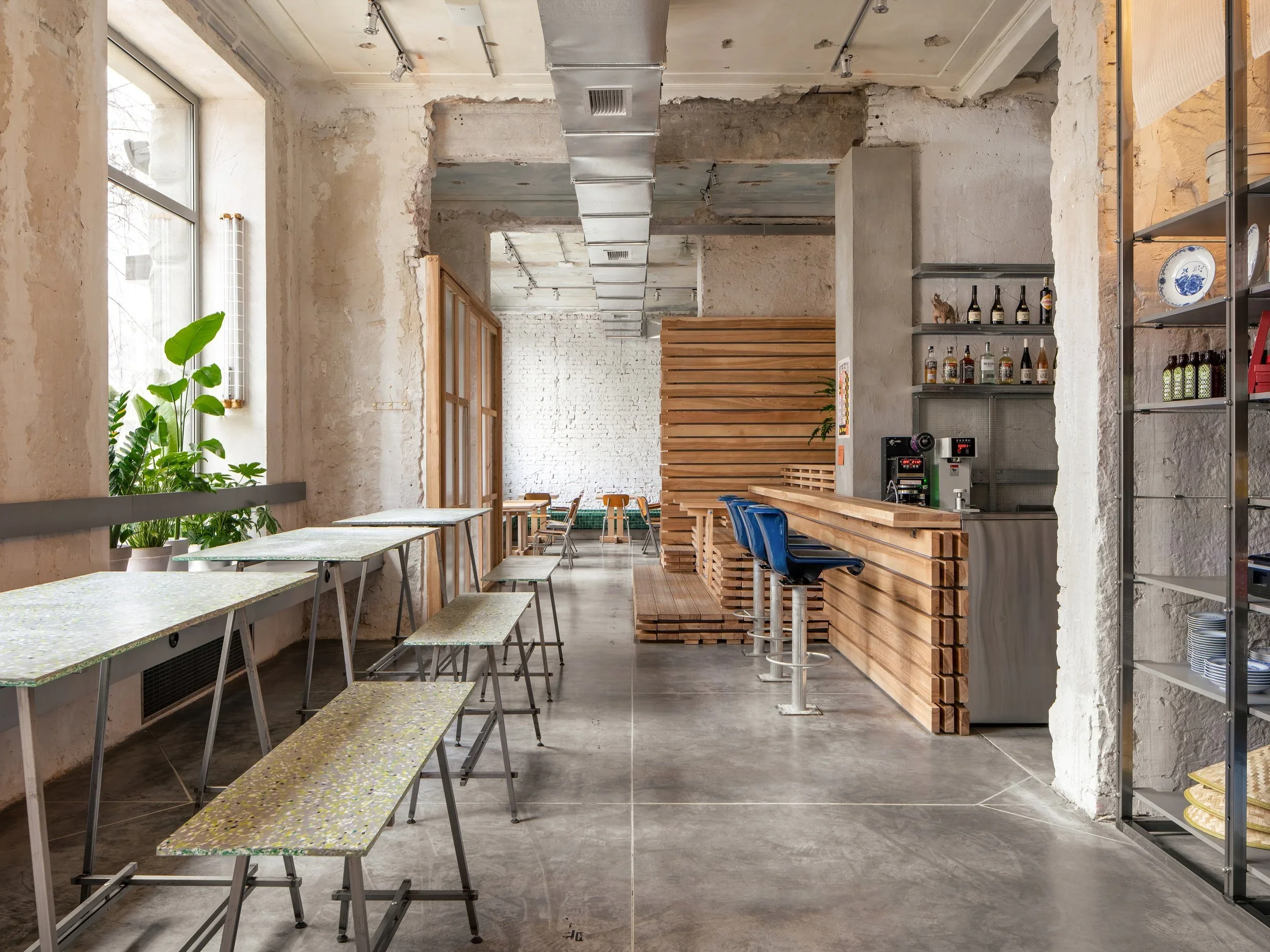
Entrance Area & Bar
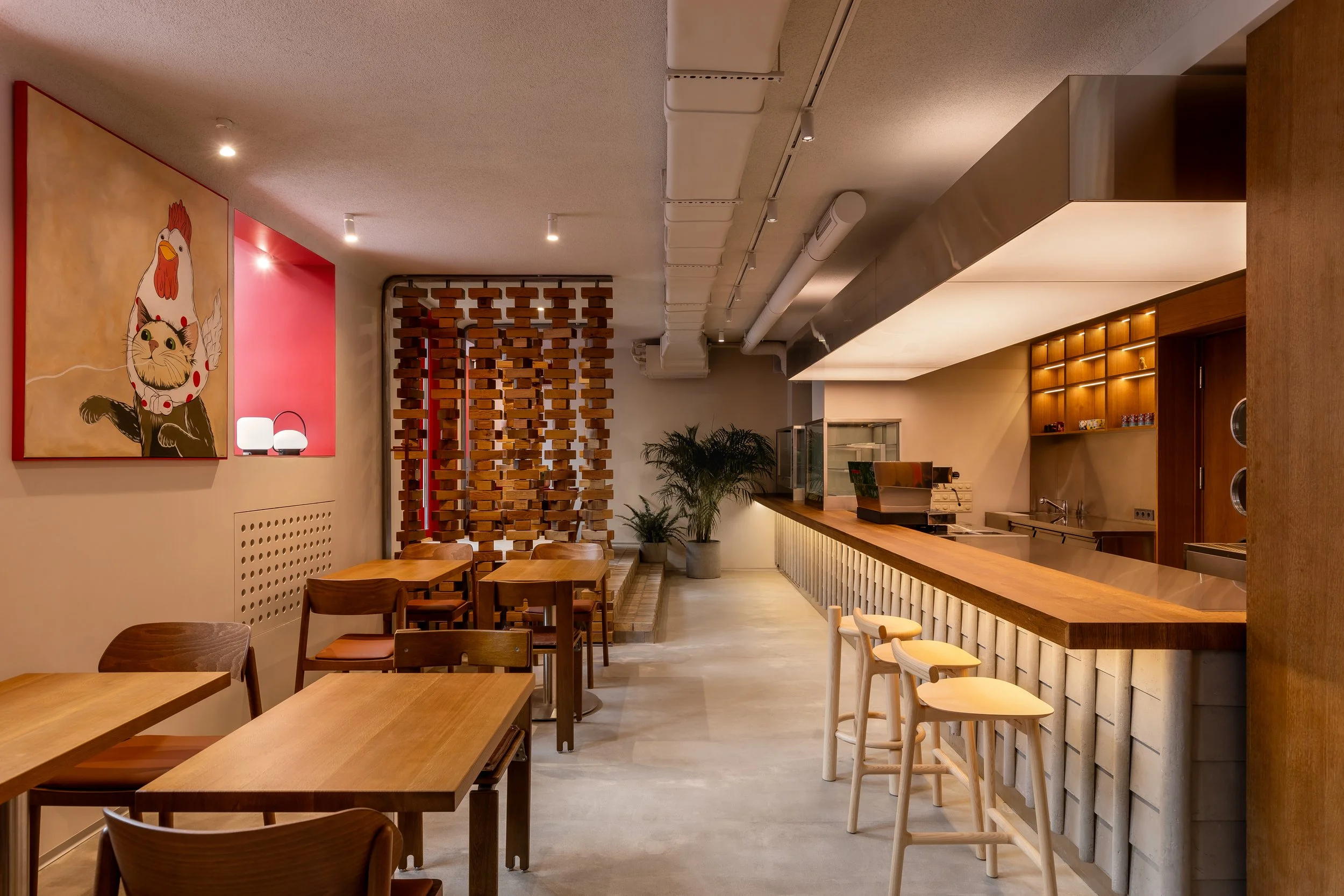
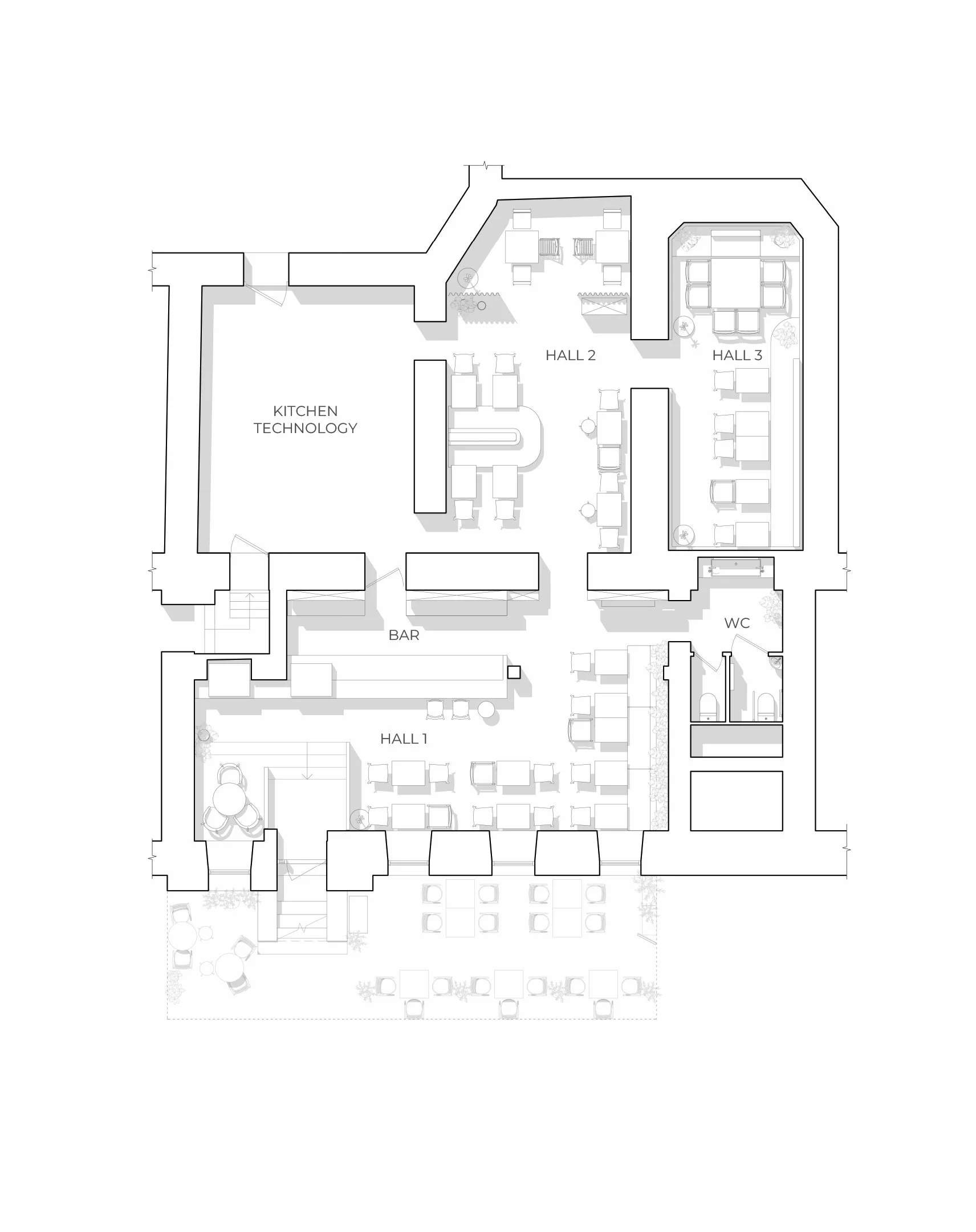
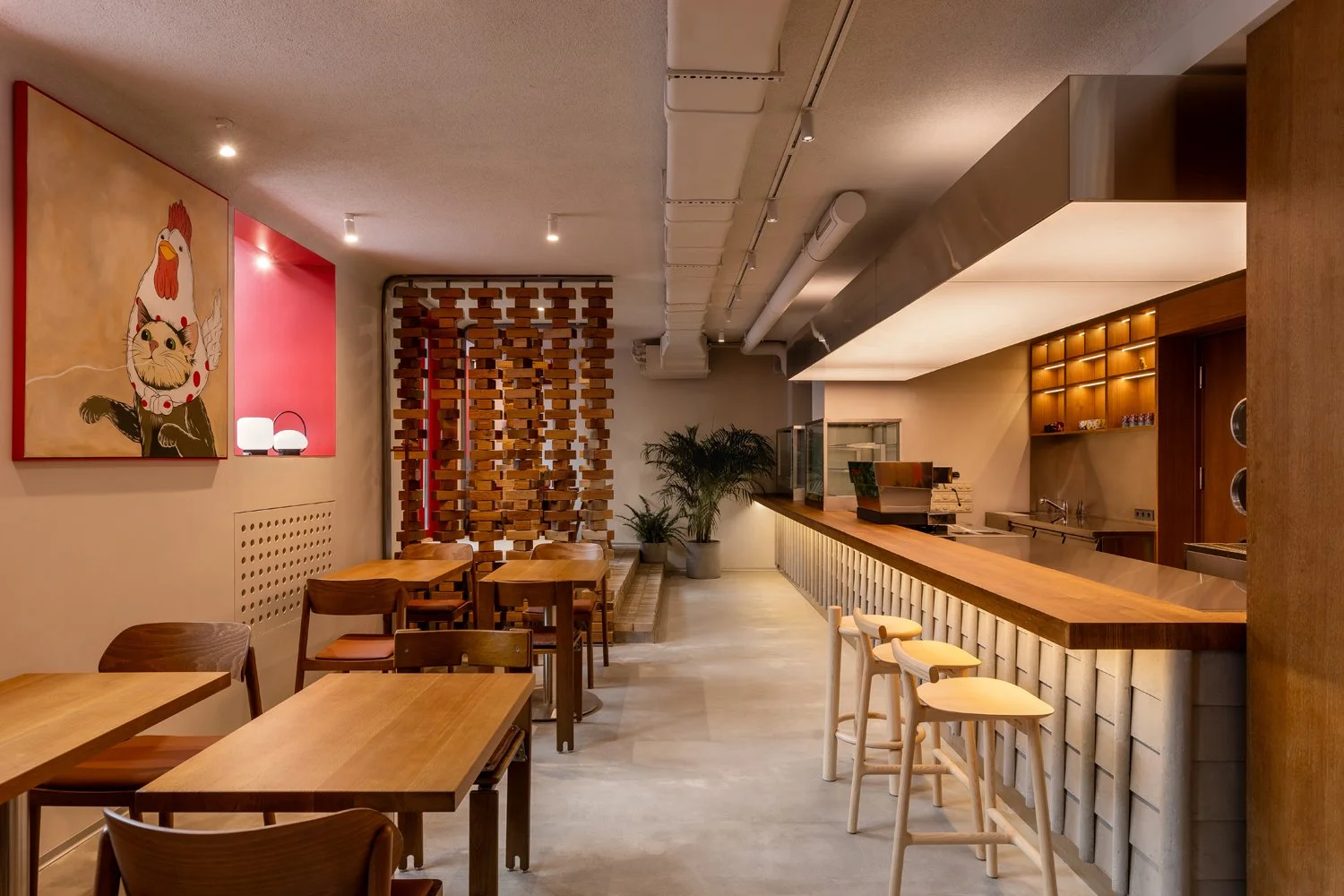
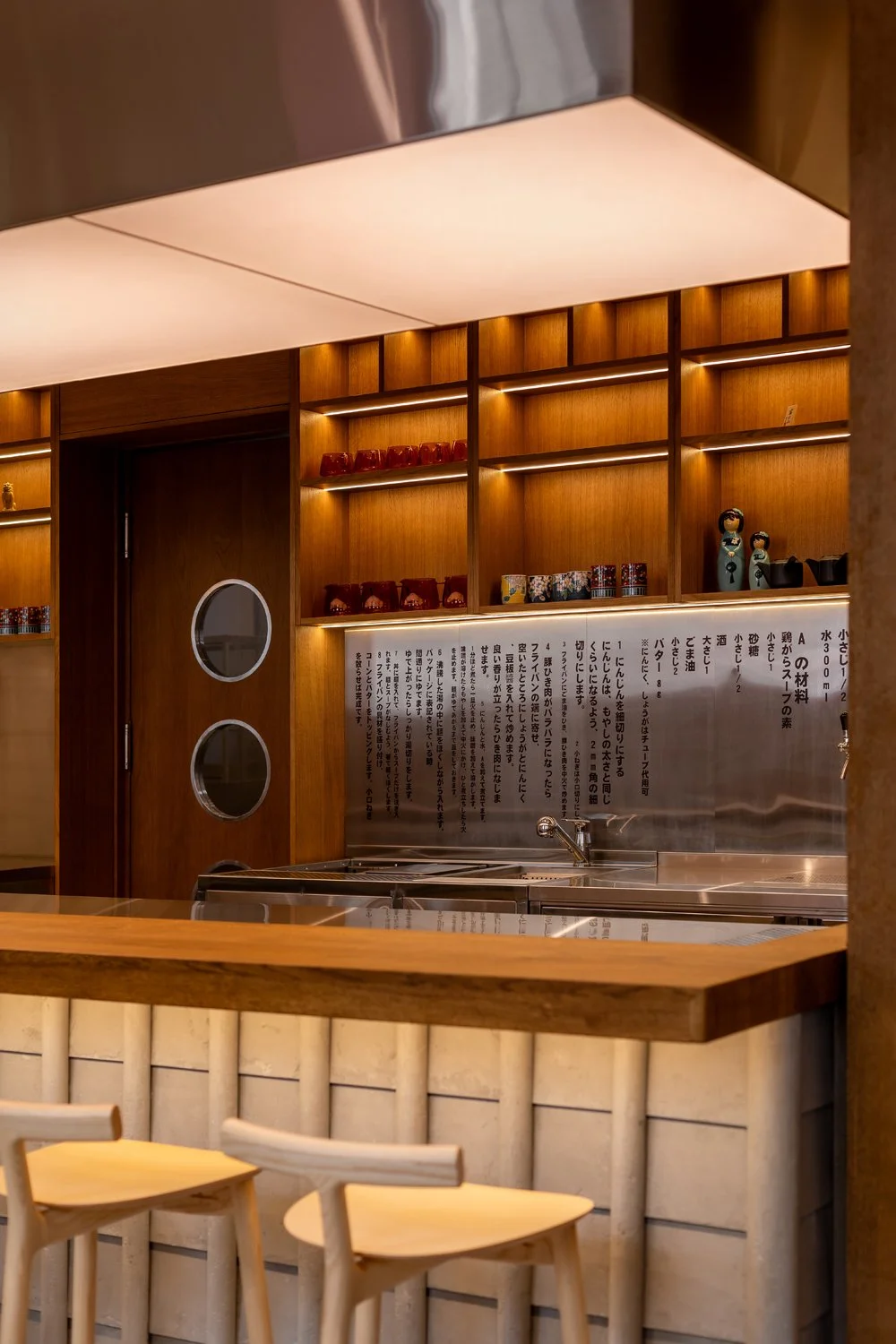
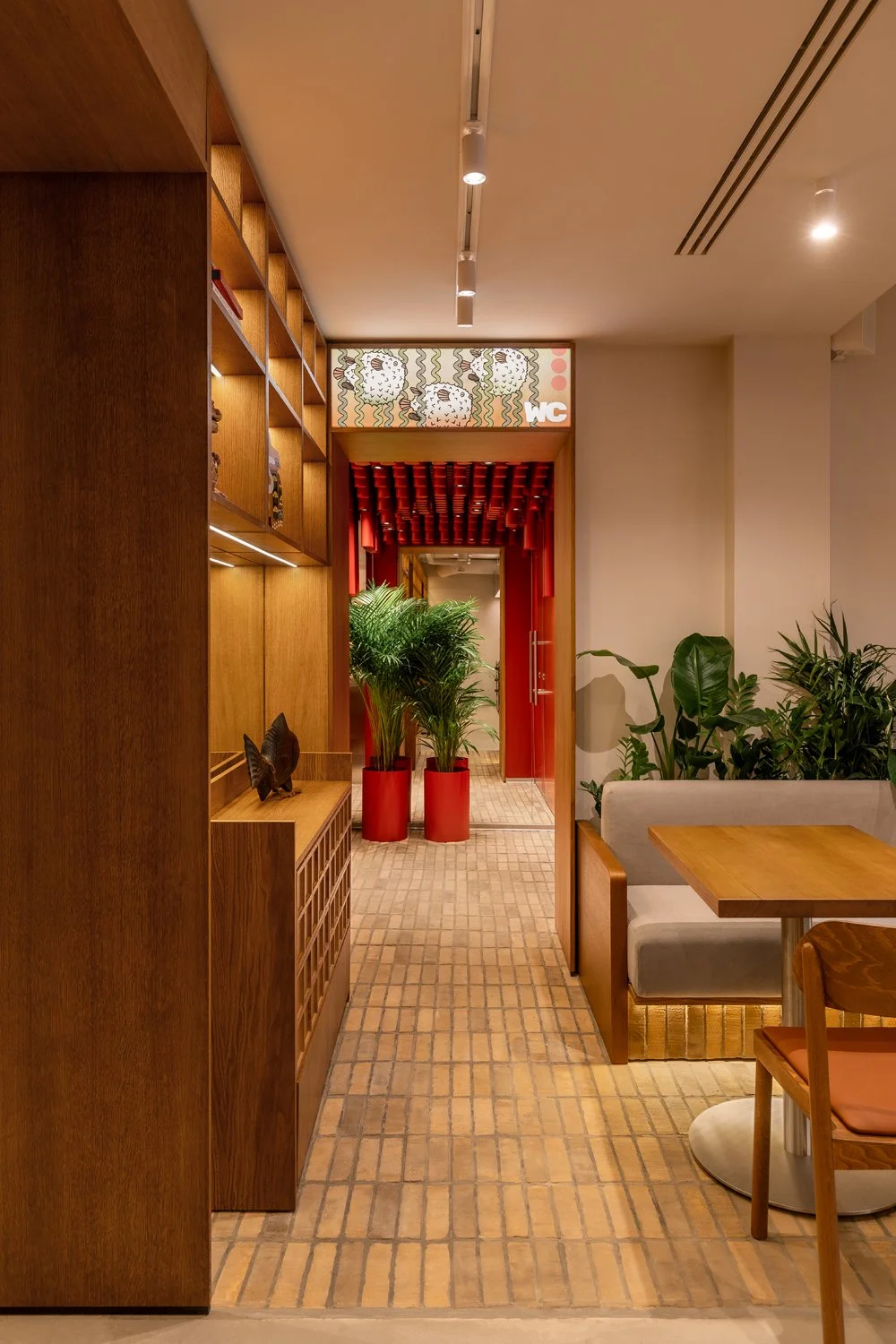
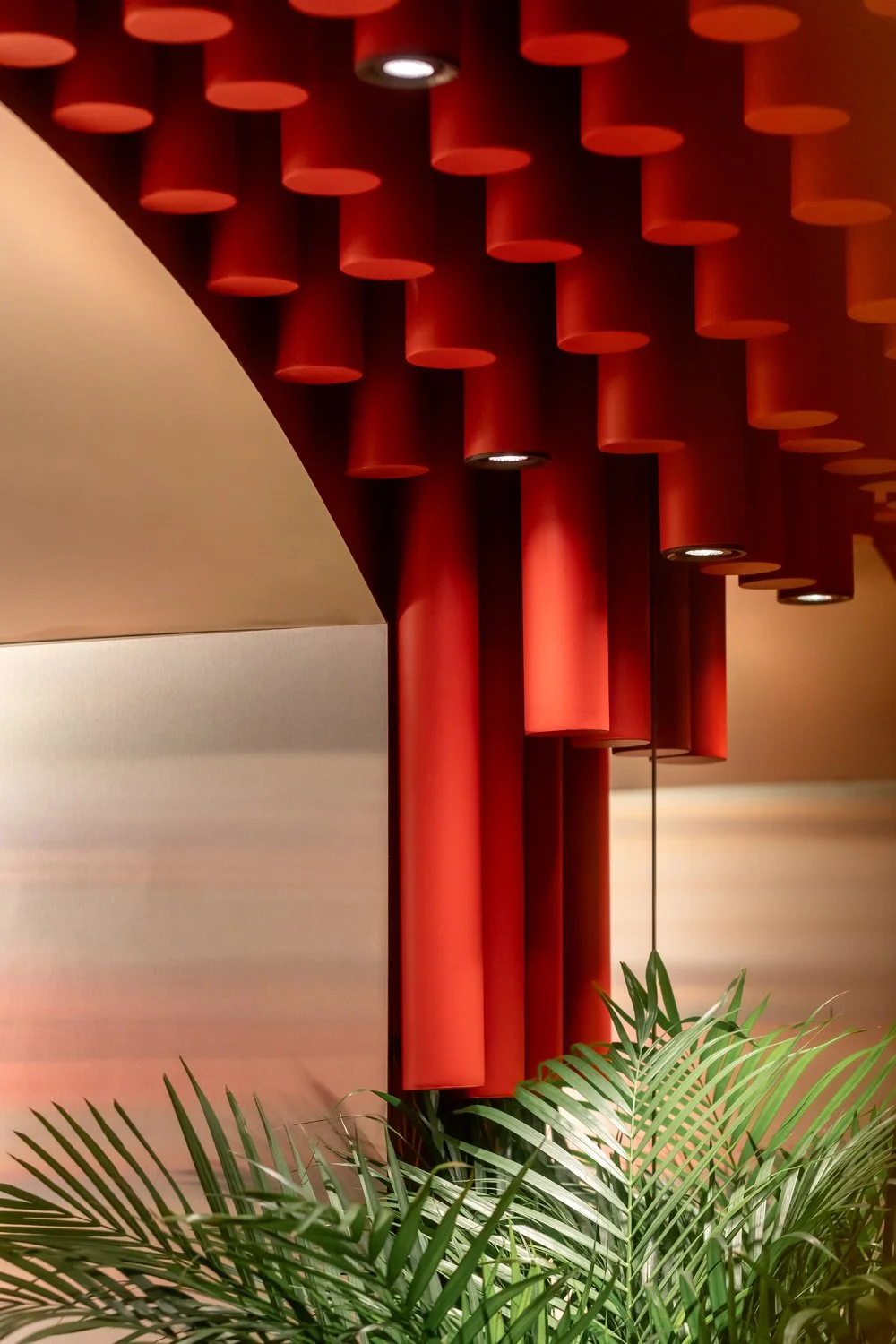
The first element visitors encounter is the bar counter, whose geometry references the silhouette of traditional Japanese tiled roofs. Behind the counter, a stainless-steel panel features a printed traditional ramen recipe in Japanese, while the shelving system extends seamlessly into the wall cladding of the adjacent dining room.
The design also embraces the Japanese appreciation for odd numbers. Three bar stools, three shelving sections, and five rows of roof tiles are among the recurring motifs integrated throughout the space. Elements that may feel unconventional from a European perspective are woven naturally into the restaurant’s visual language.
First Dining Room
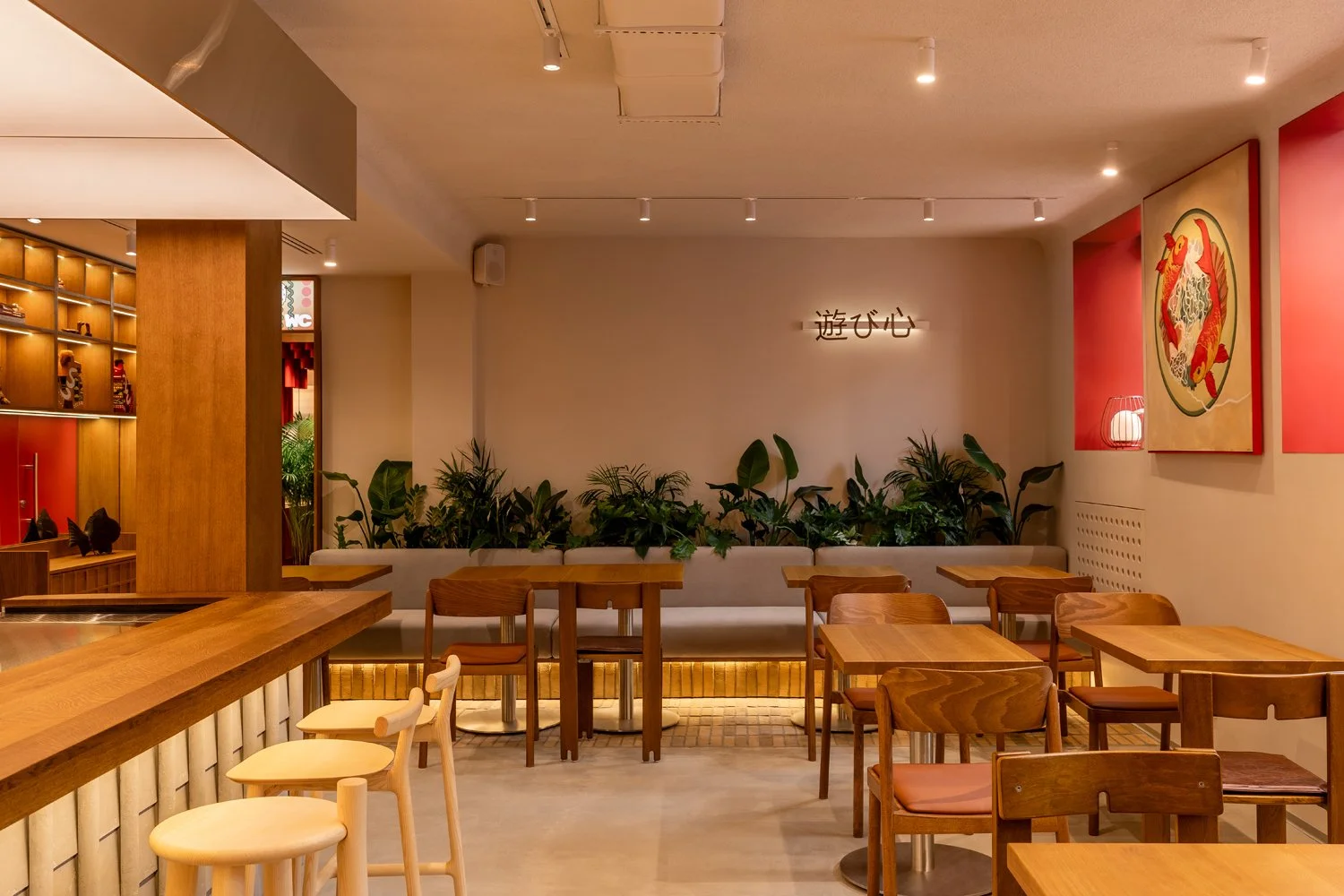
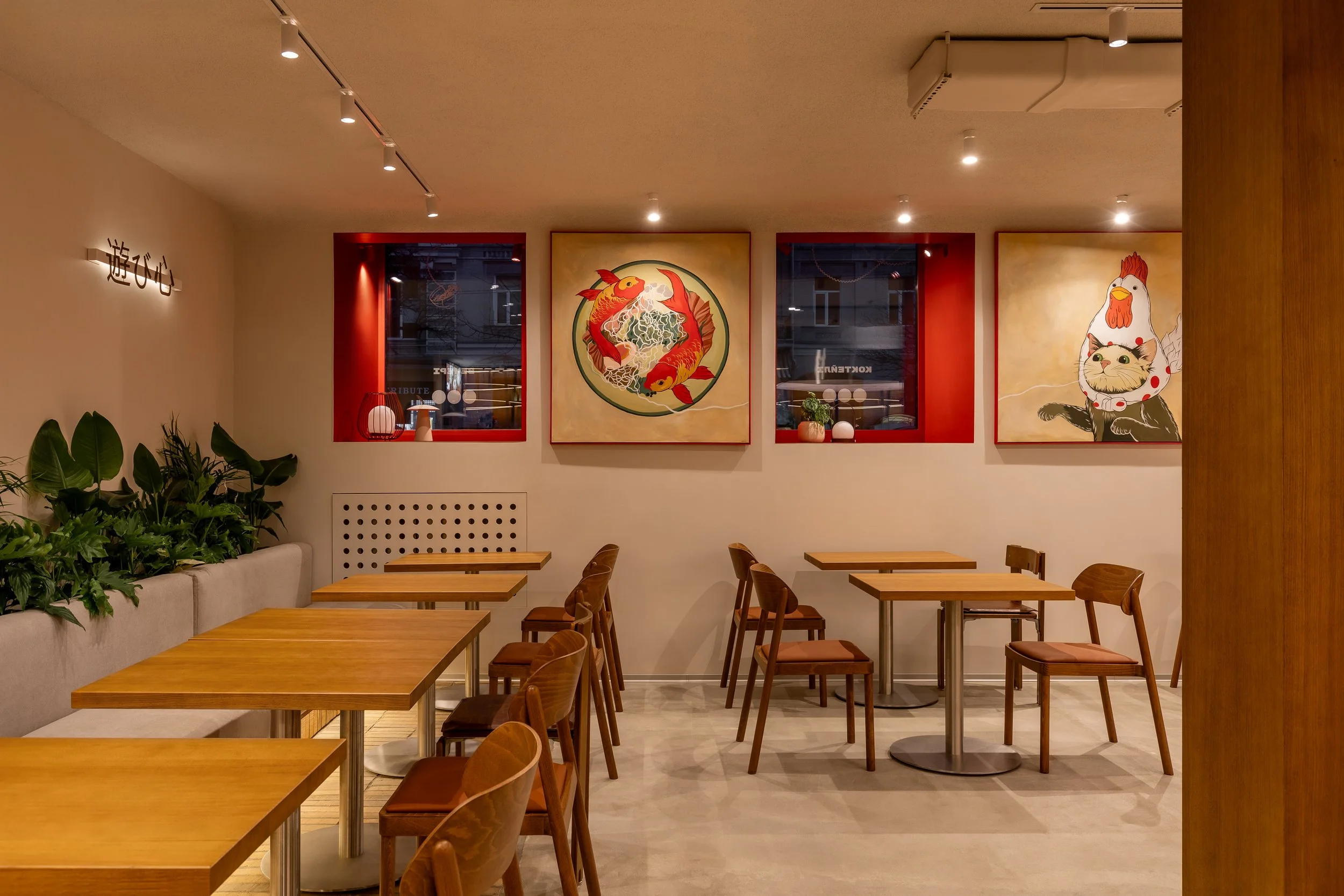
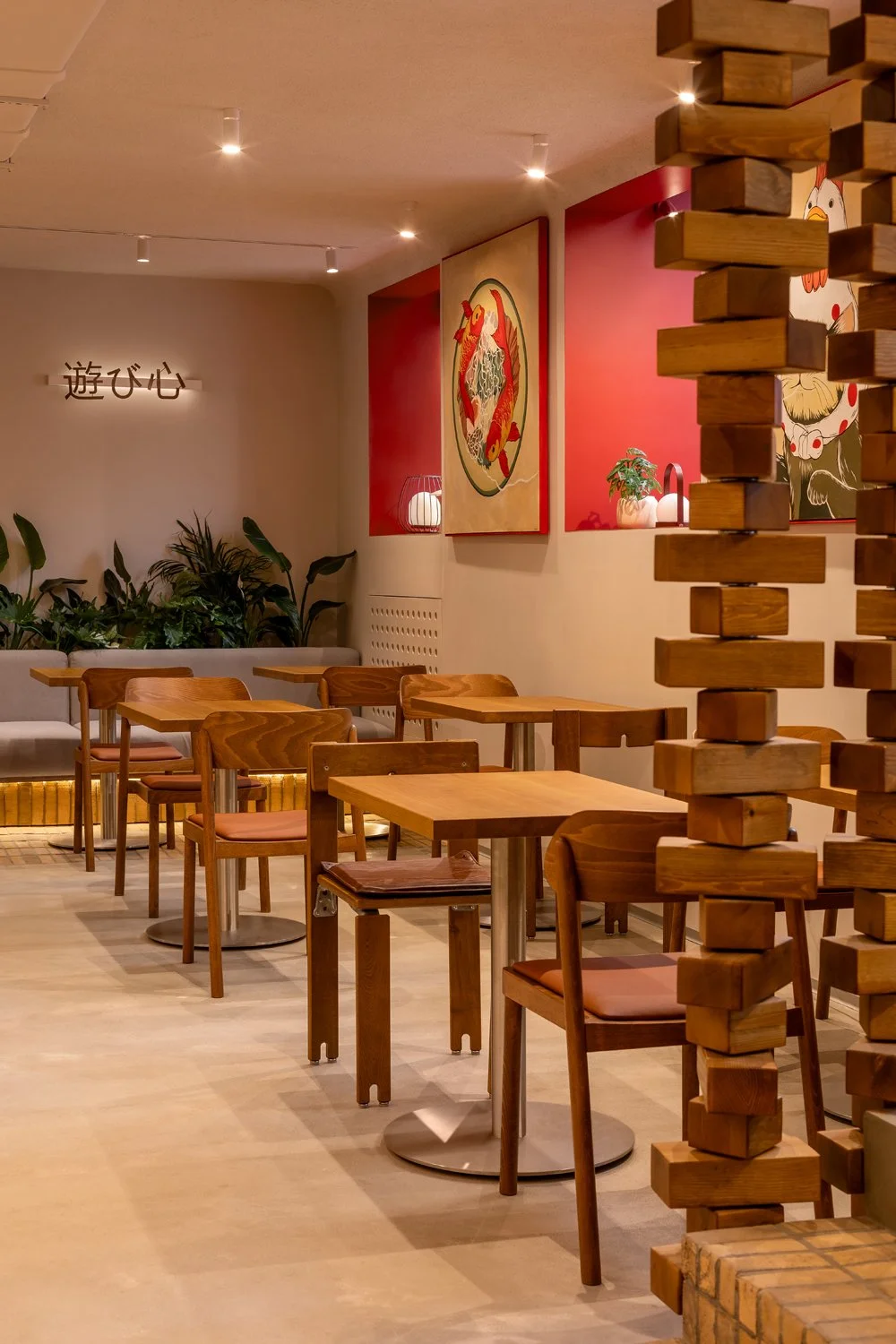
The walls are decorated with large-scale commissioned artworks in red frames depicting a cat and a fish. A lounge seating area at the rear of the room is highlighted by clinker brick cladding that continues onto the sofa plinth and is enhanced with integrated lighting. Above the seating area, a dynamic text installation displays a rotating selection of Japanese expressions:
わくわく (wakuwaku) — anticipation, excitement, and curiosity.
遊び心 (asobigokoro) — a playful spirit.
ときめく (tokimeku) — the feeling of joy, excitement, or affection when something deeply resonates with you.
わいわい (waiwai) — lively, cheerful, and bustling energy.
The Spirit Lies in the Details
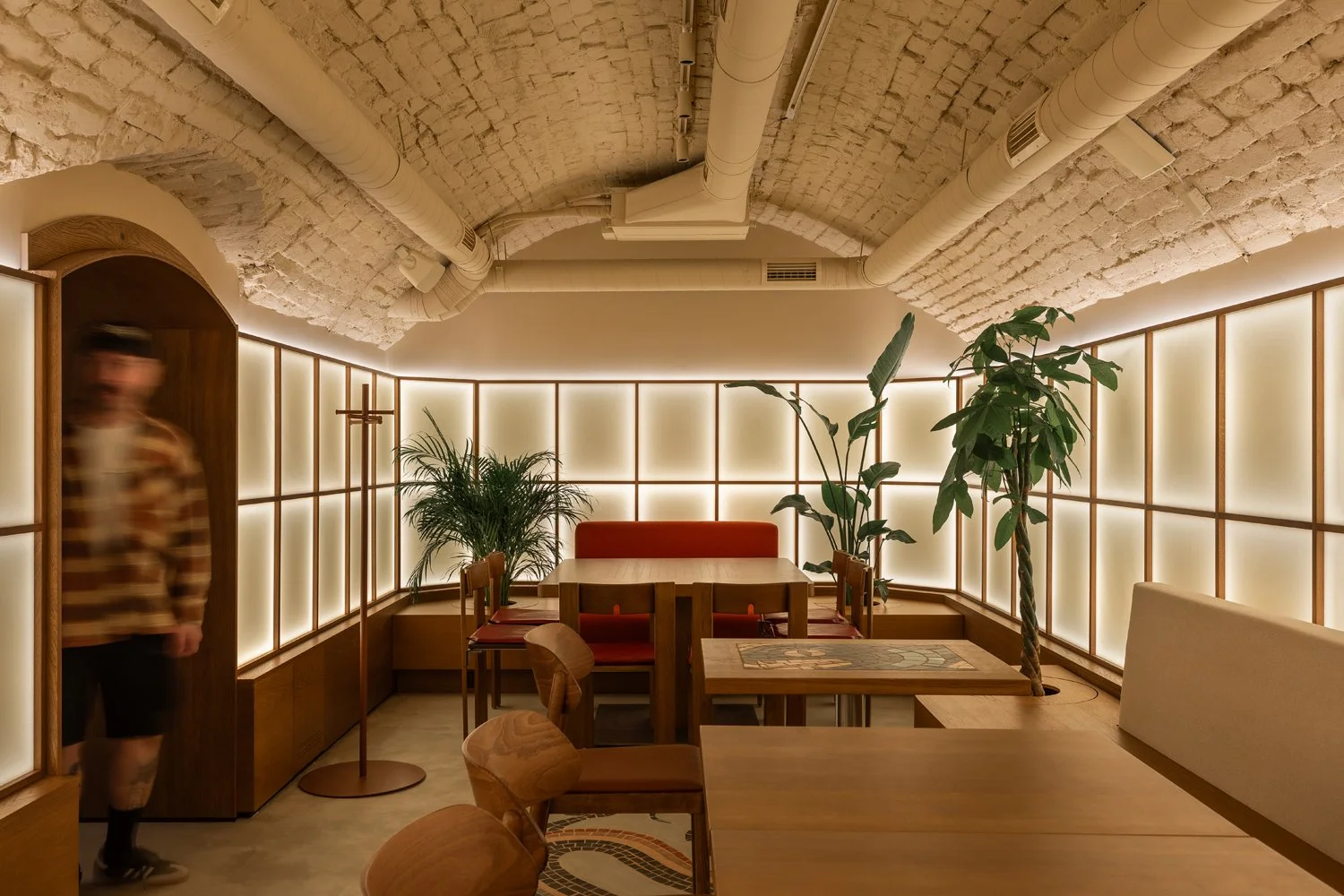
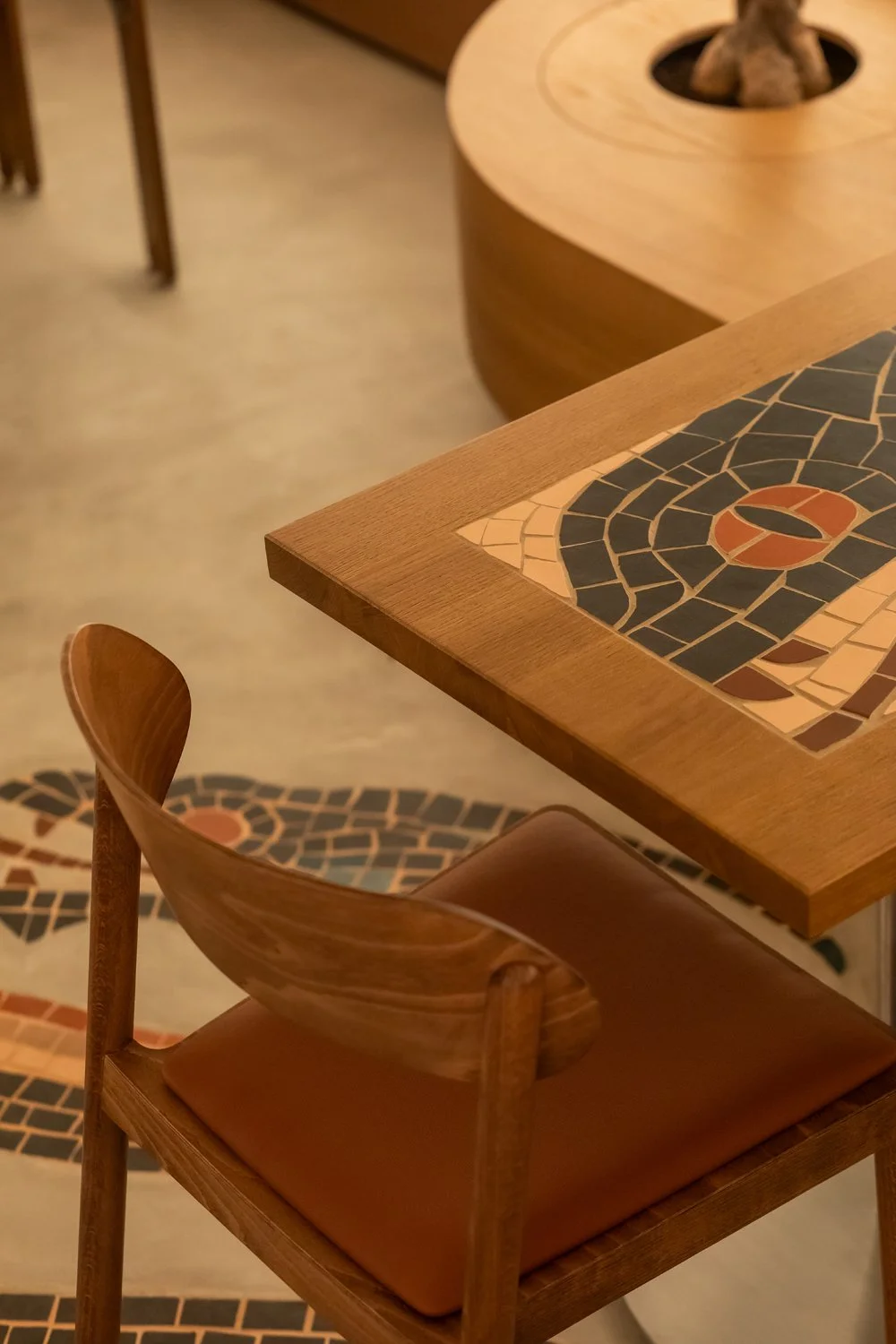
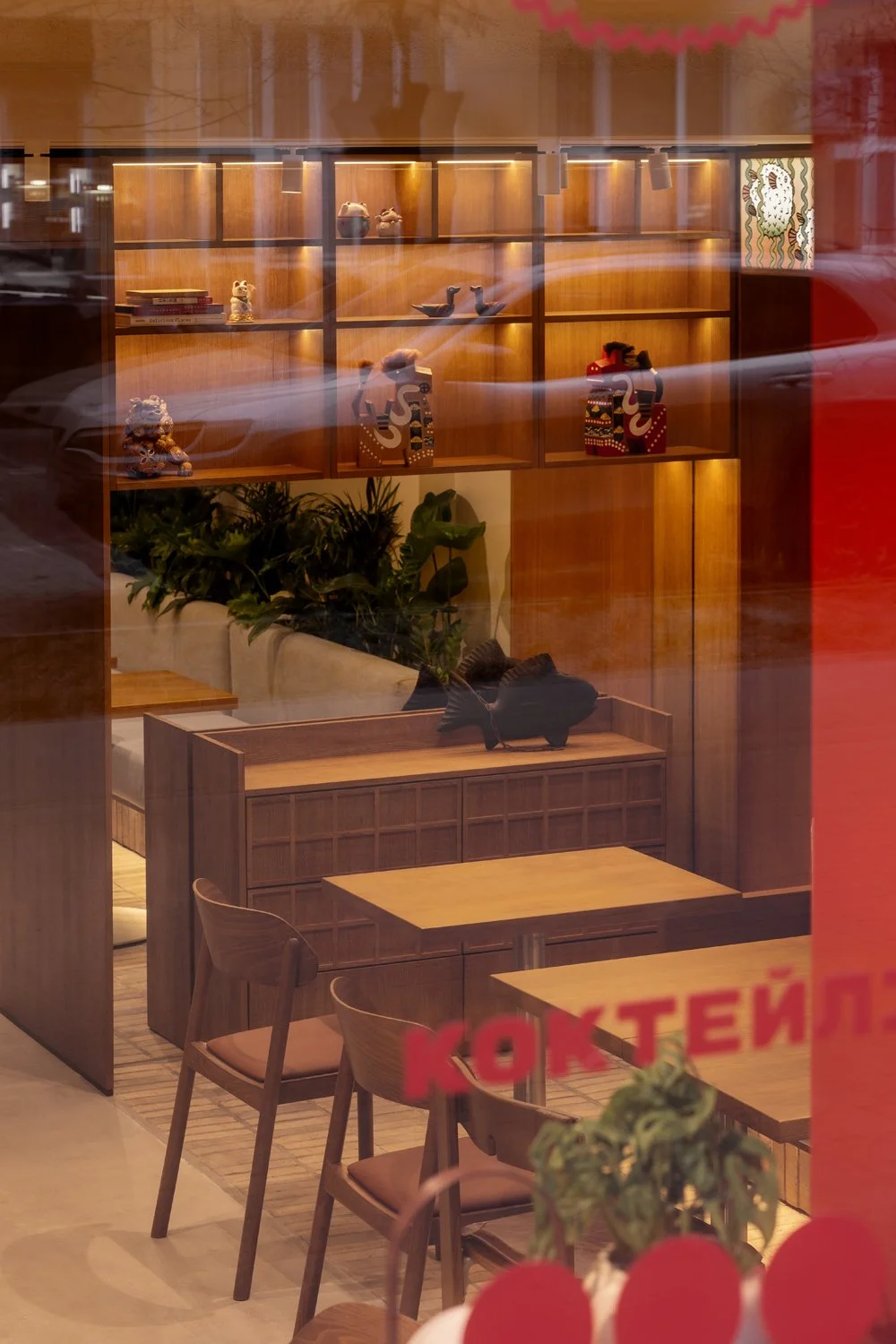
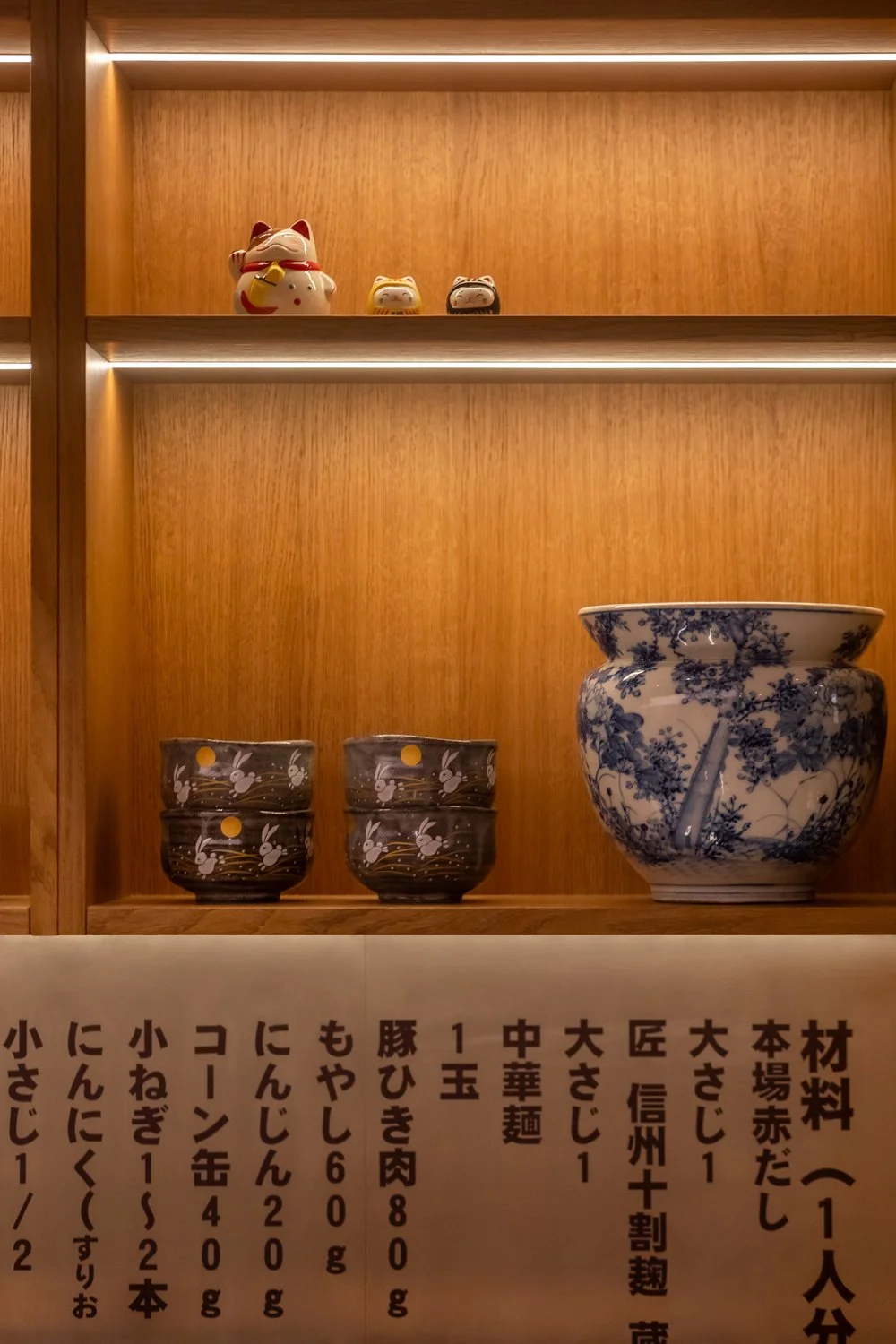
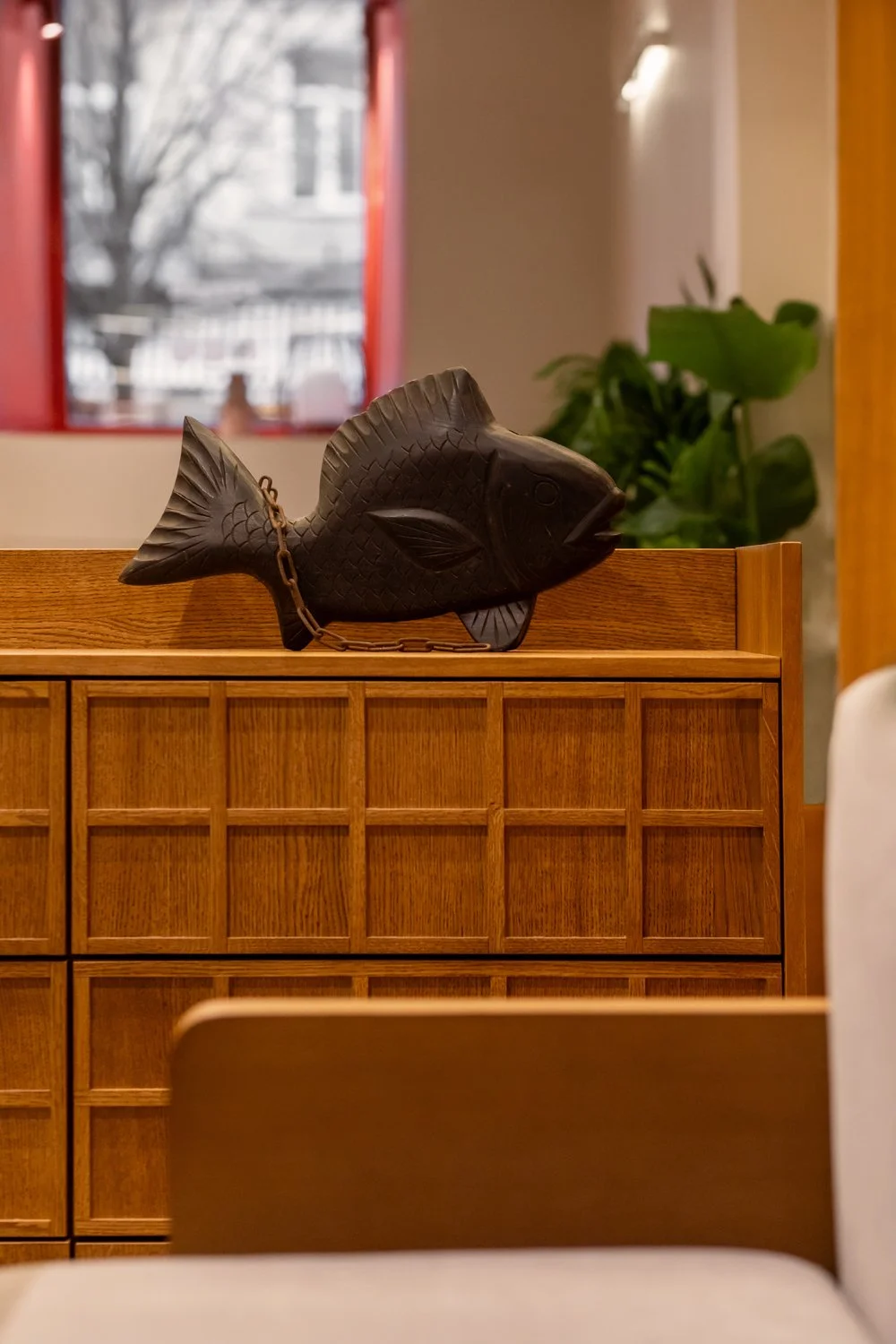
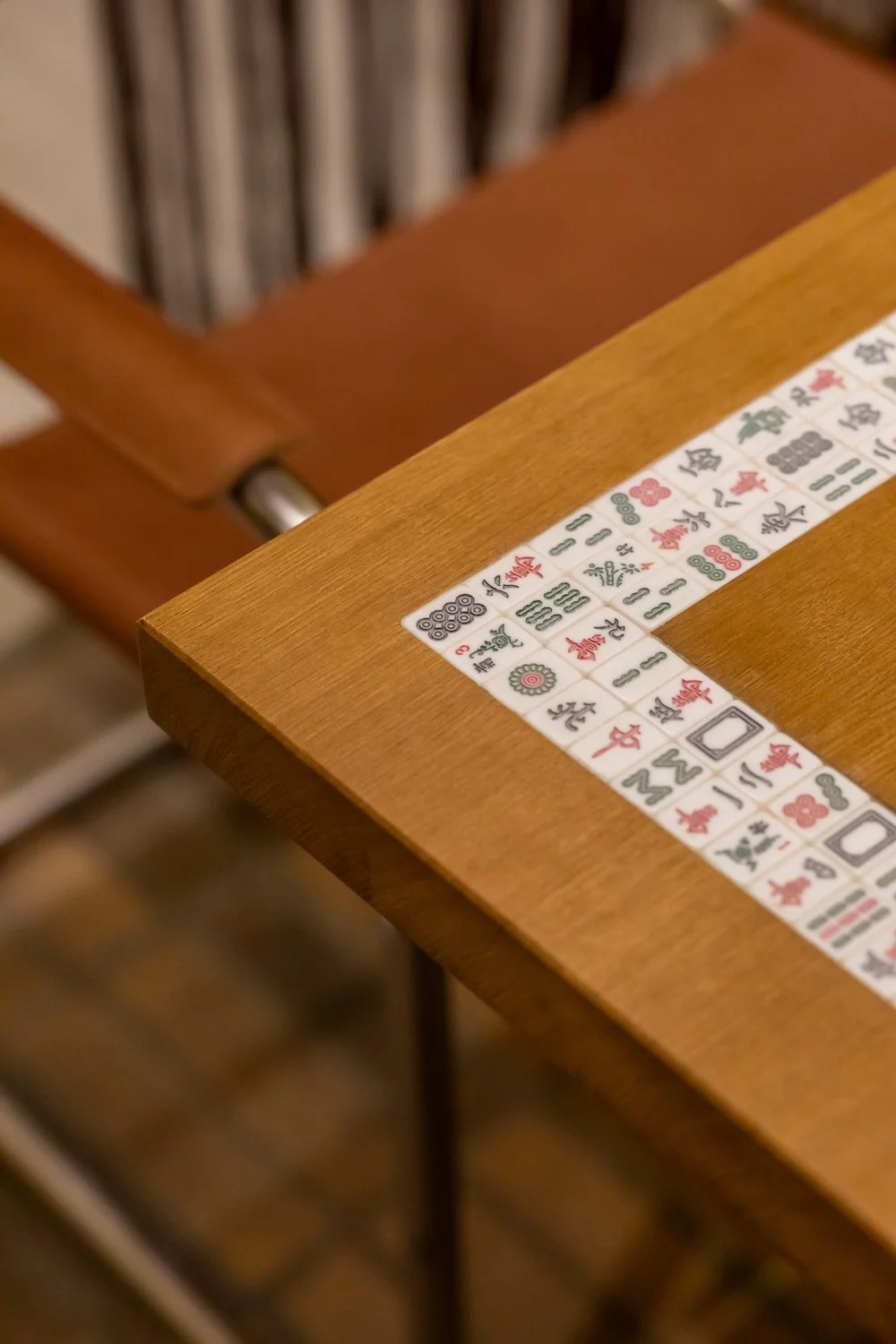
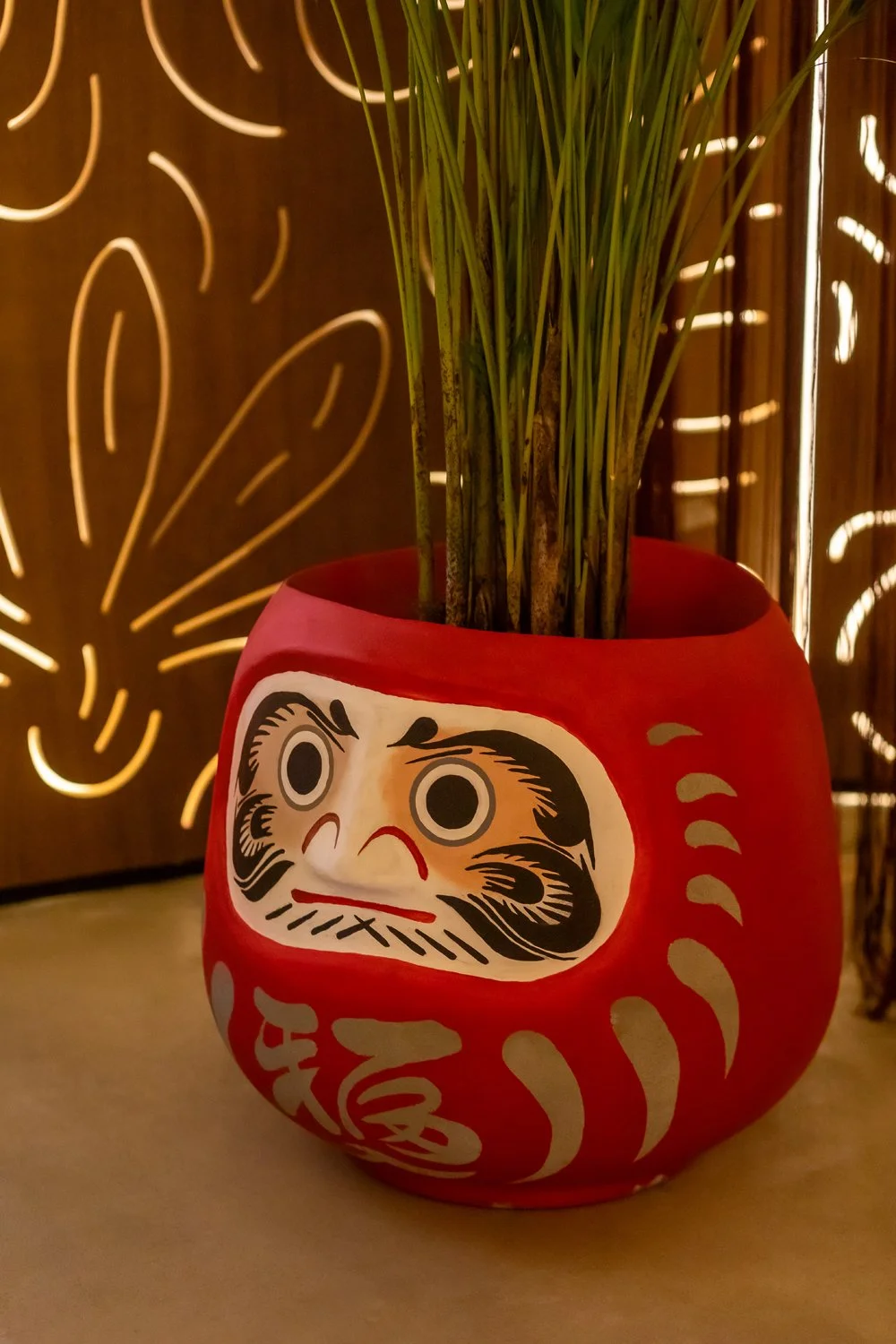
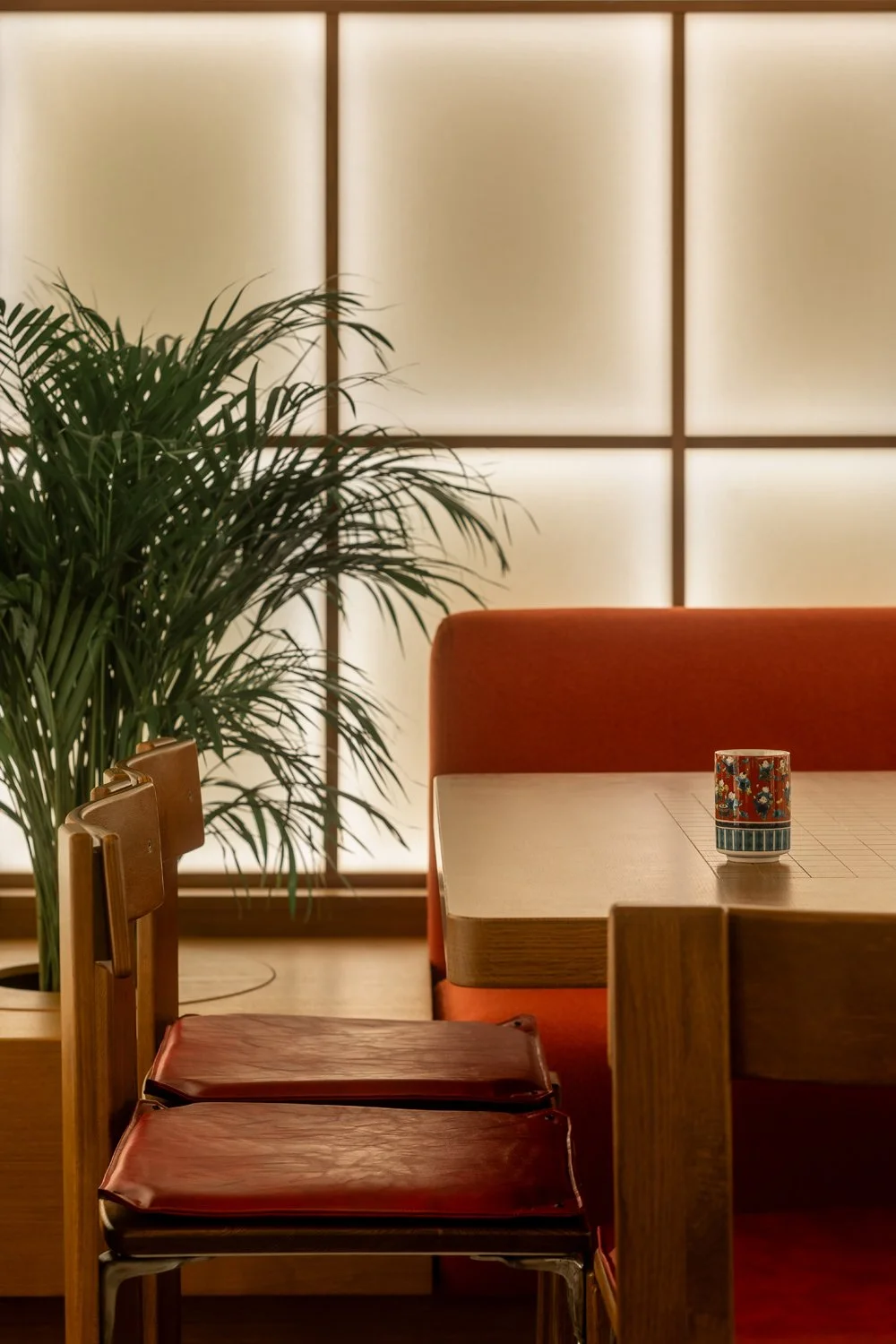
While researching Japanese hospitality culture, the design team sought to create an authentic atmosphere by incorporating sculptures, pottery, and furniture pieces sourced directly from Japanese vintage markets.
To simplify the process for the client, balbek bureau also provided procurement services, taking responsibility for the complete furnishing and styling of the restaurant.
Second Dining Room
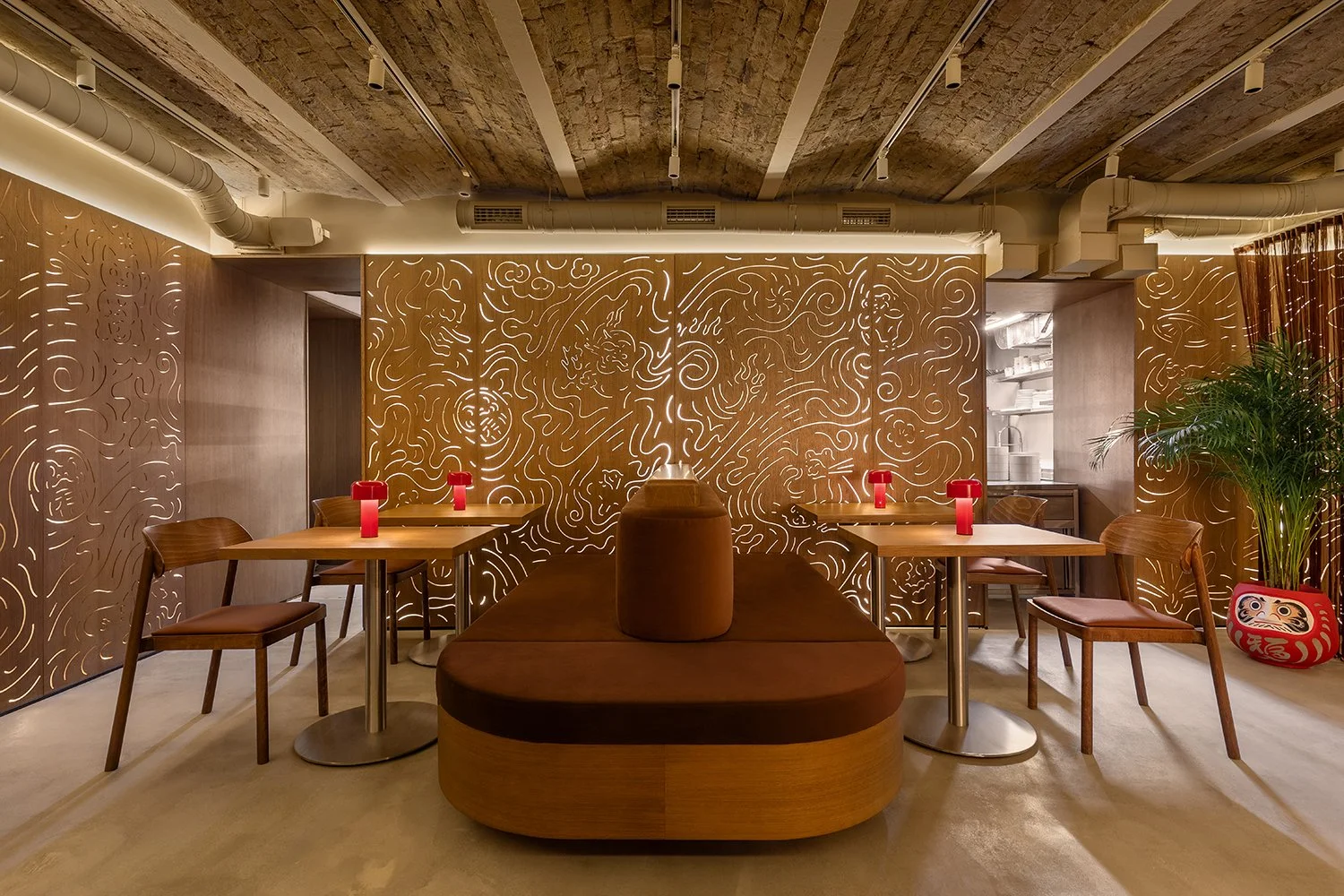
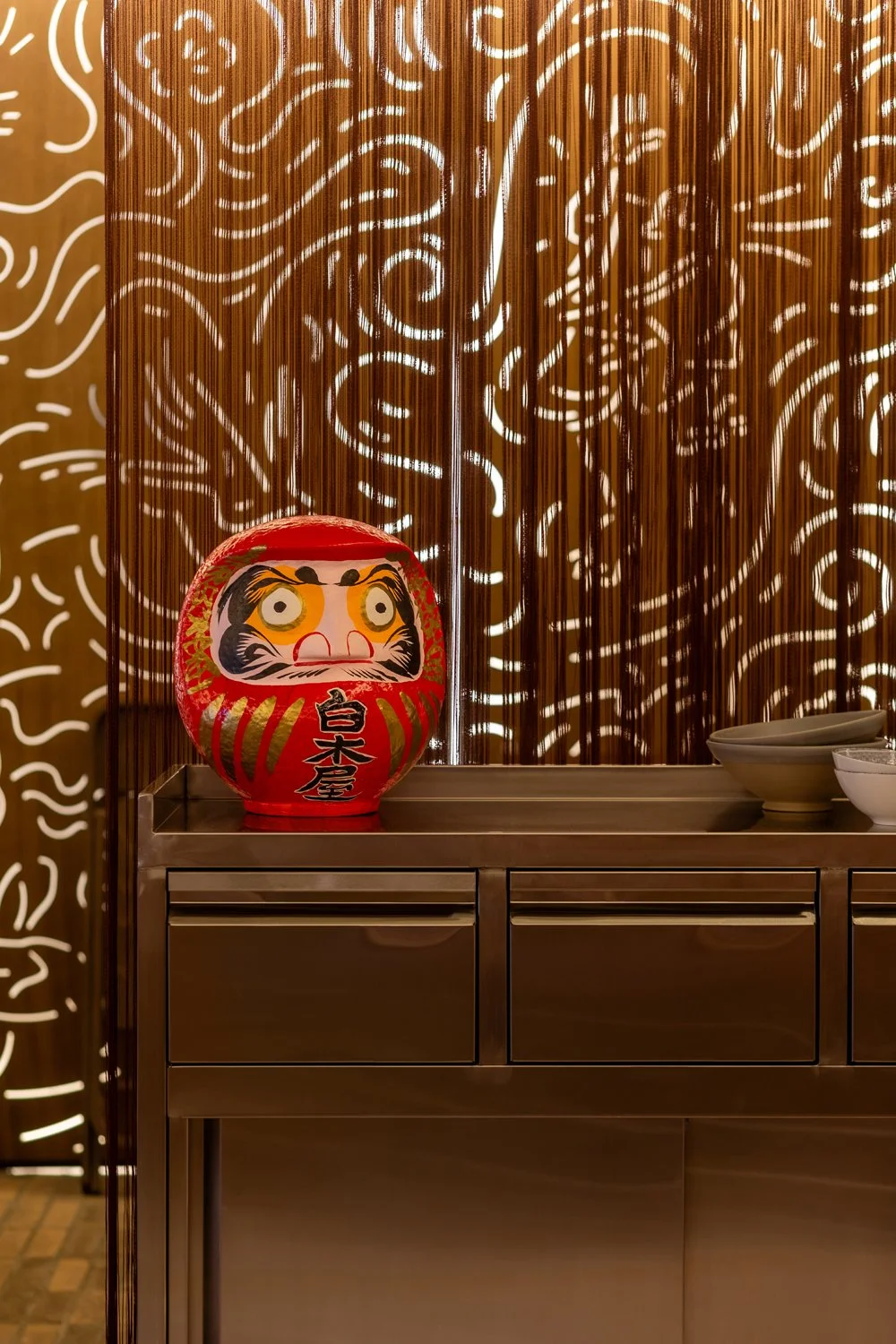
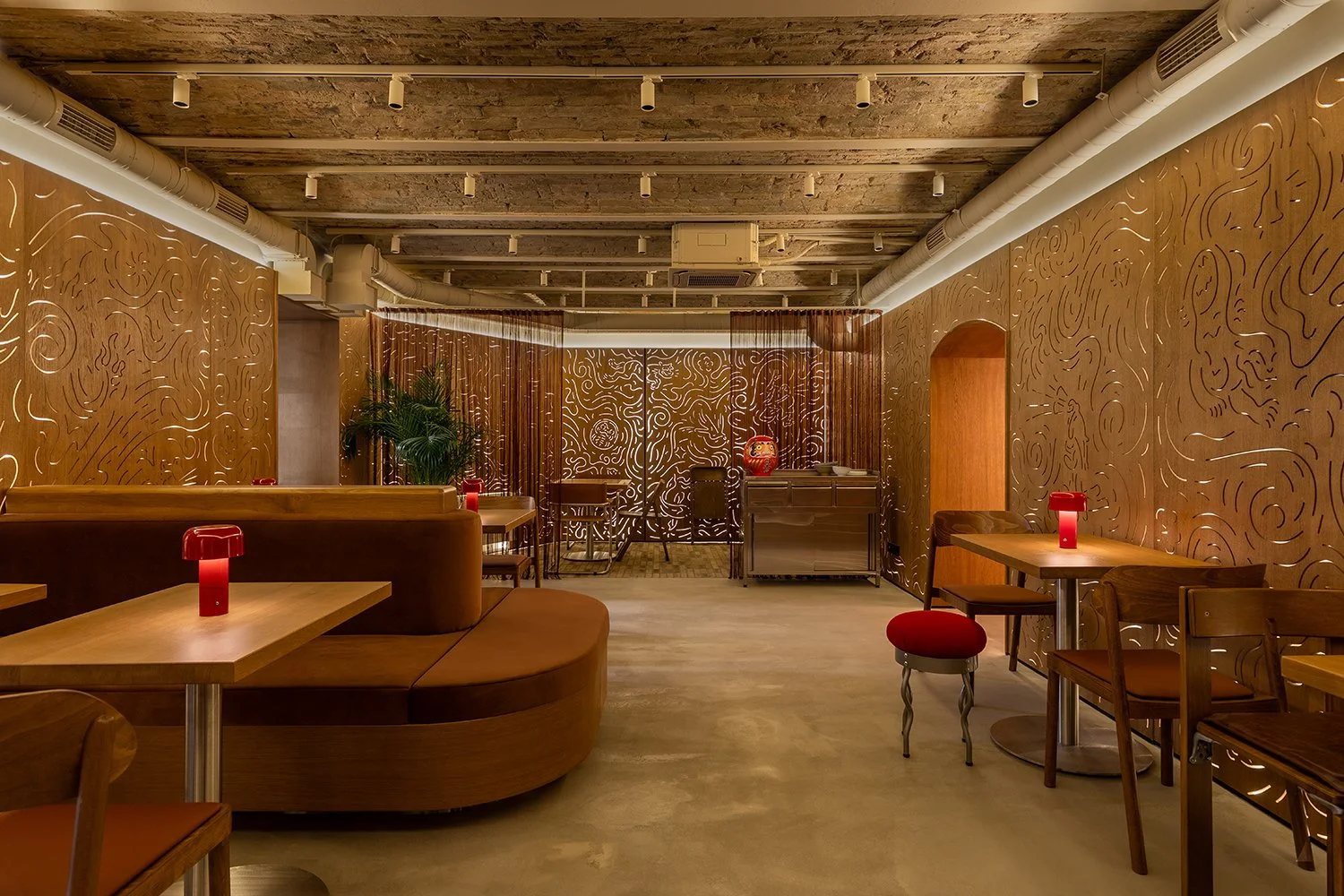
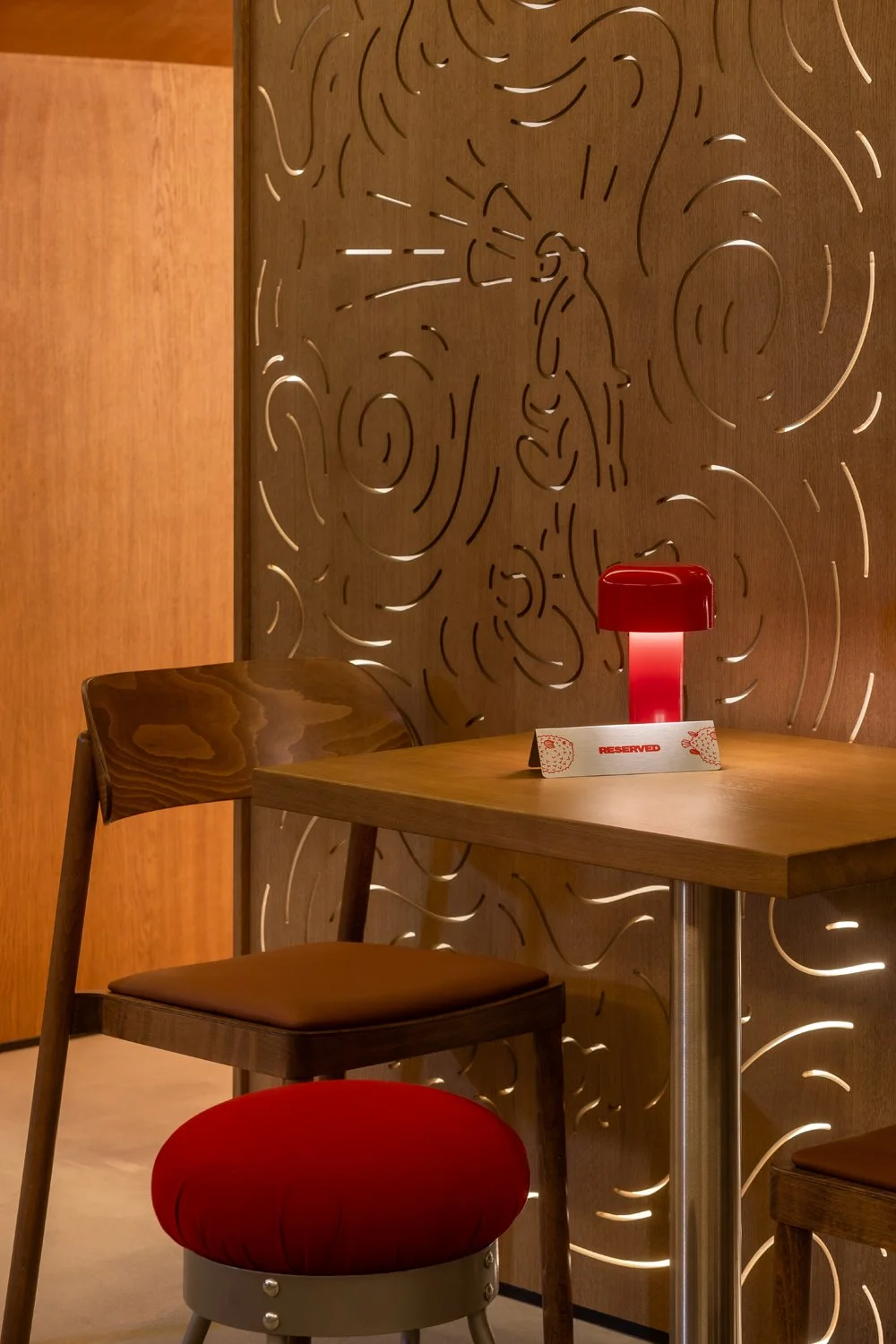
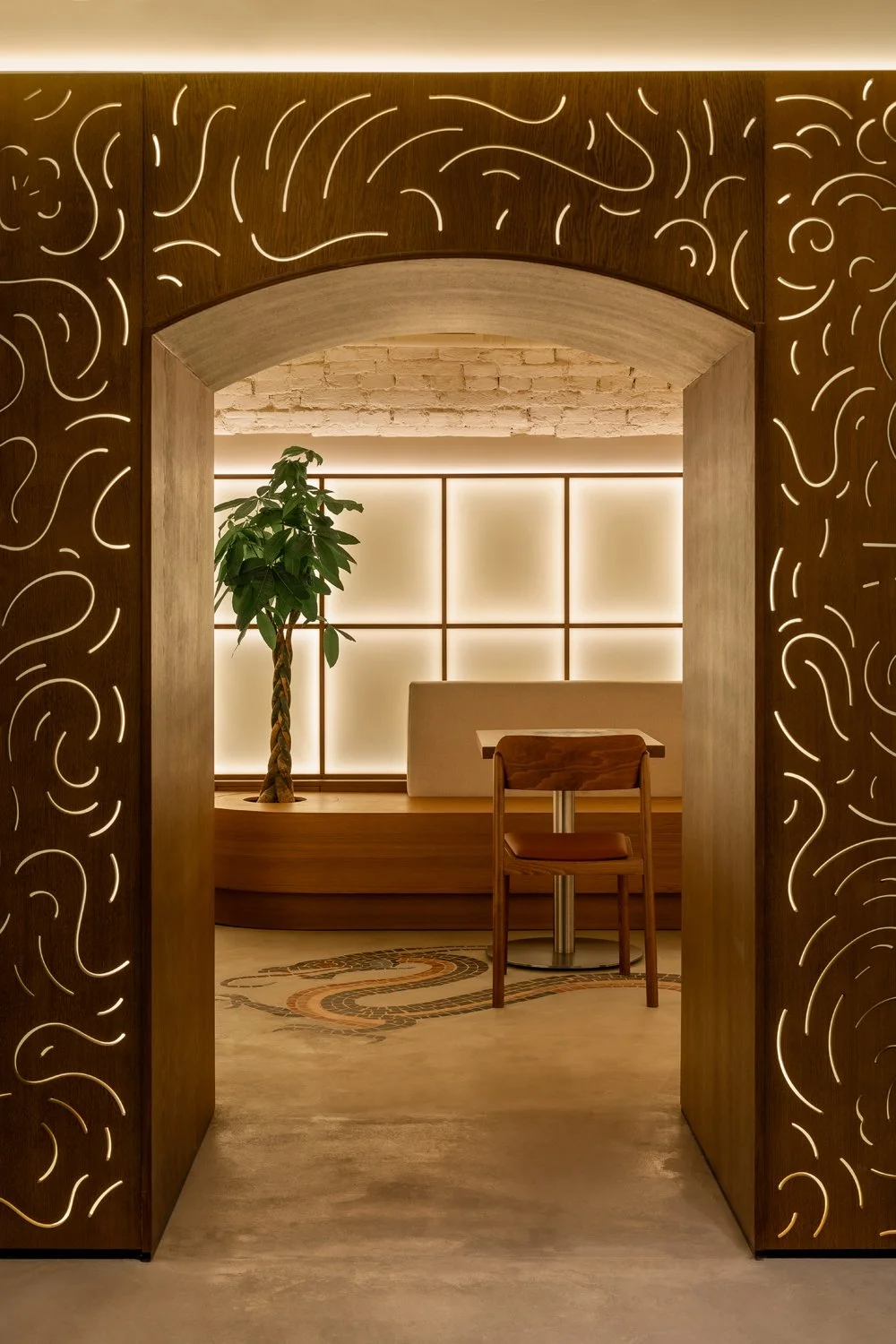
The walls are clad with custom-milled veneered MDF panels featuring original illustrations by Sofia Bylym, graphic designer at the bureau. The artwork depicts iconic characters from Japanese culture, including maneki-neko cats, Daruma dolls, and goldfish.
In the evening, accent lighting draws attention to these illustrations, encouraging guests to explore the details and contributing to a more intimate and atmospheric dining experience.