UA | ENG

 
LESI_hotel

LESI

HOTEL

Kyiv, Ukraine 2026 389м²

Architects: Lena Bryantseva, Vitalina Hoshovska, Yevhenii Kuchmin, Khrystyna Vus, Viktoriia Taradai, Olena Dobrovolska, Yurii Riabets | Creative supervision: Slava Balbek, Lena Bryantseva | Project manager: Ivan Sukhomlyn | 3D Artists: Lena Bryantseva, Khrystyna Vus | Photo credits: Iryna Bunakova, Maryan Beresh


10

• apartments

• unique interior concepts

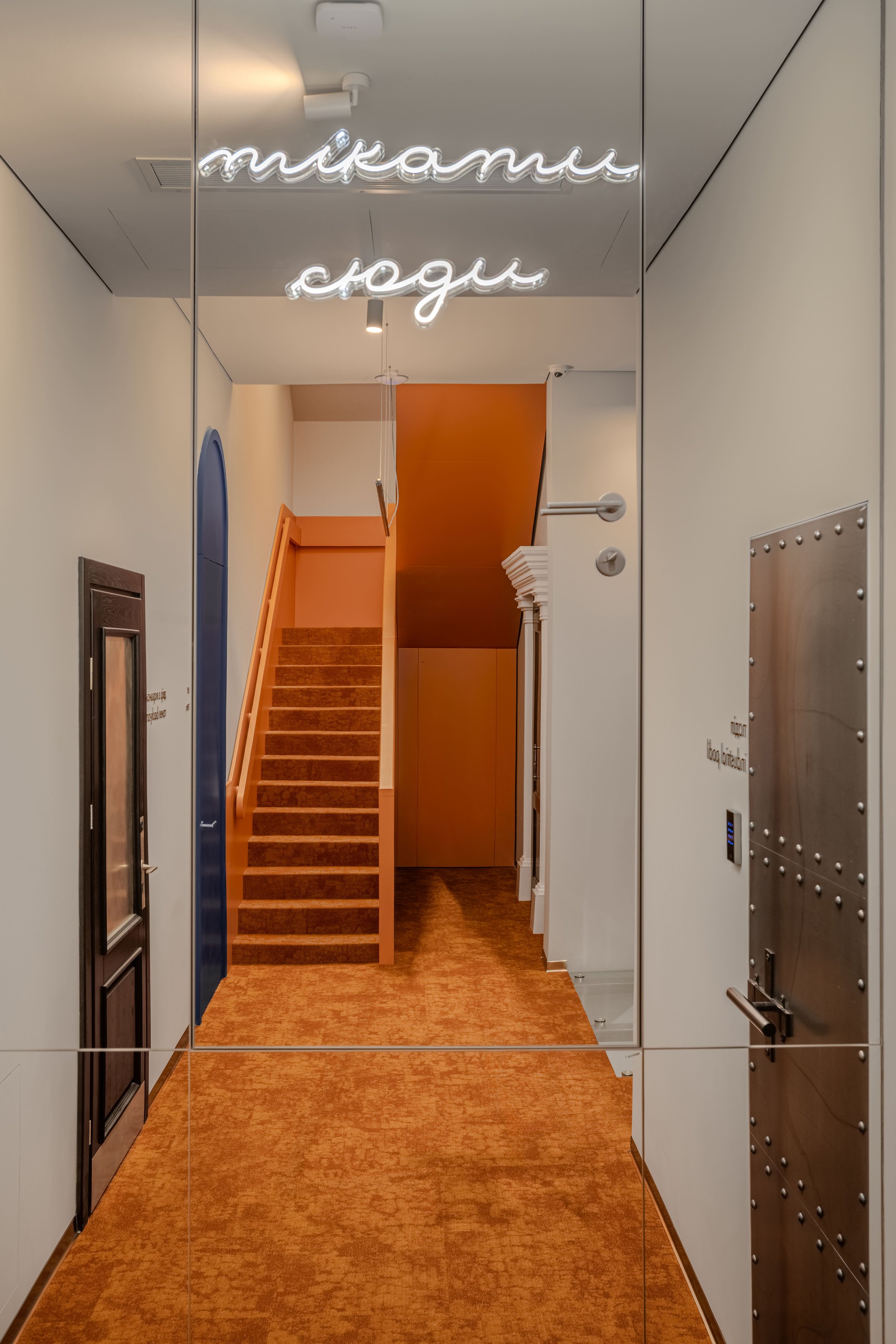
• custom entrance doors, each reflecting the identity of its apartment

3

• floors and a mezzanine level

• terraces

1

elevator

43,8 m²

largest apartment

[Book Market]

19,7 m²

smallest apartment

[Velodrome]


Main Idea

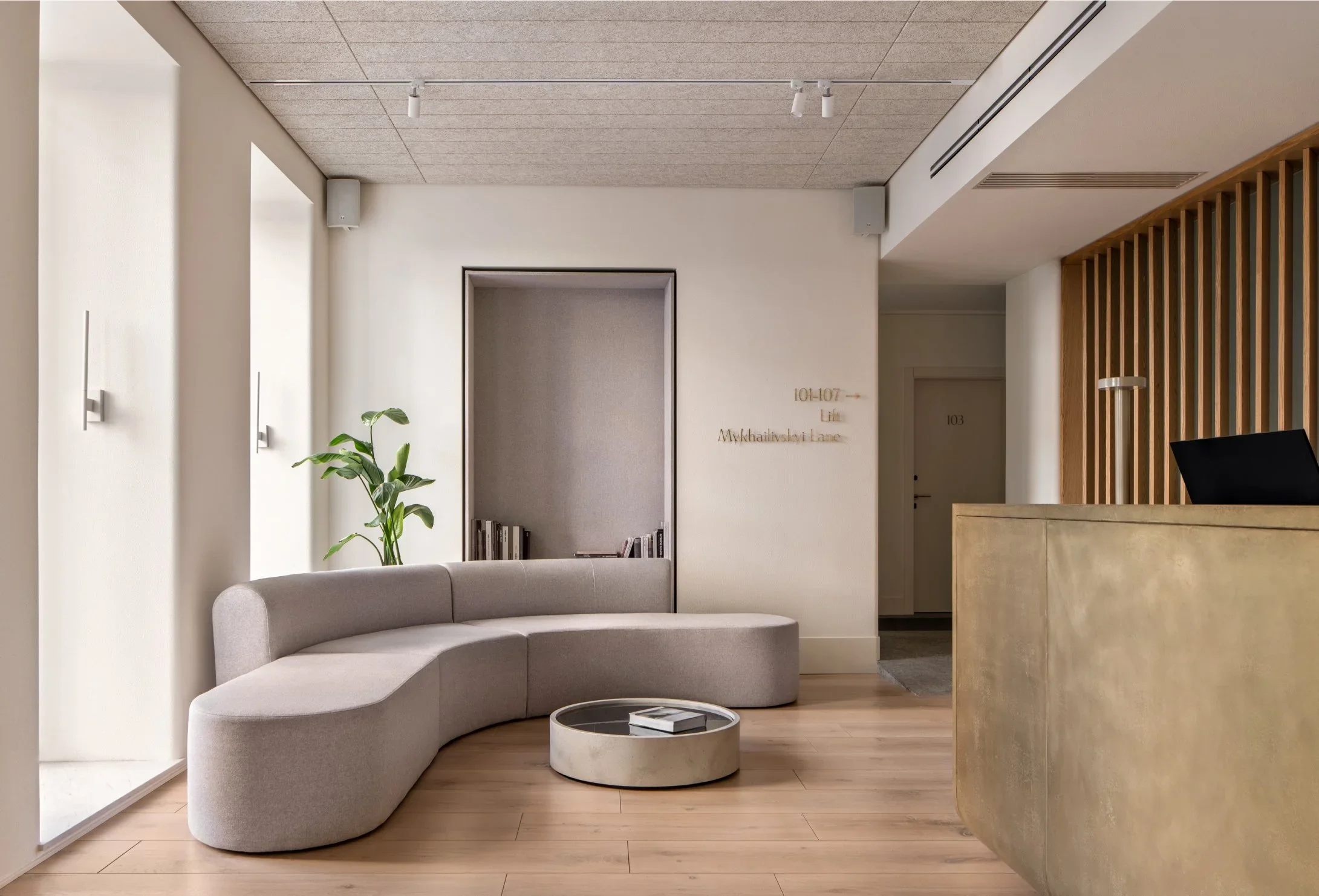
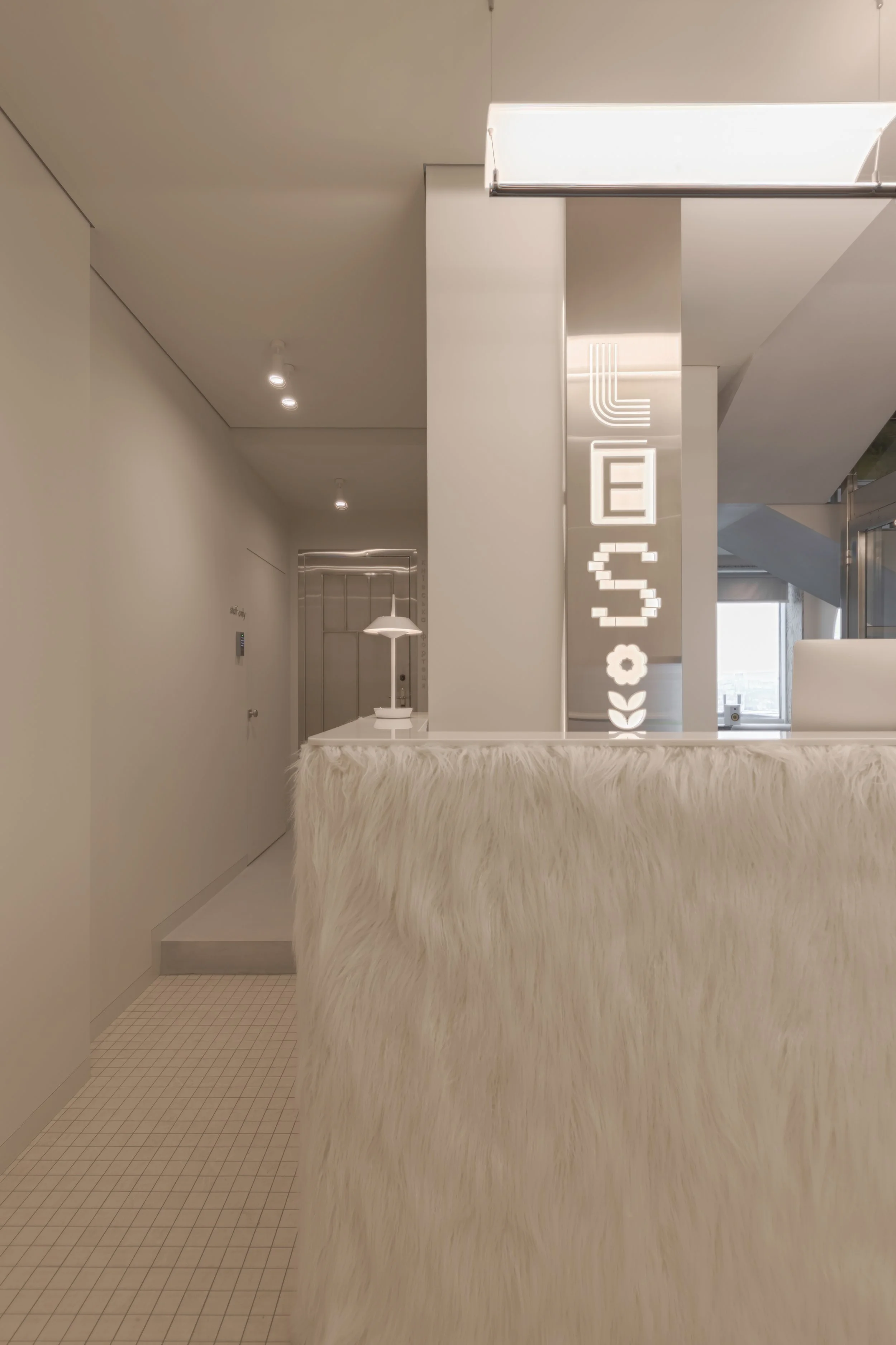
LESI is a conceptual apartment hotel located on the upper floors of a residential building on Lesi Ukrainky Boulevard in central Kyiv. The project interprets the city through interior design, transforming iconic Kyiv locations into immersive spatial experiences — from the Catacombs and the Velodrome to Mystetskyi Arsenal and the Botanical Garden.

Thanks to its elevated location and panoramic glazing, the hotel maintains a direct visual connection with the city. Several apartments overlook the very landmarks that inspired their design, creating a dialogue between the real Kyiv outside the window and its interpretation inside the space. As a result, the interior becomes more than a backdrop — it becomes another way to experience and read the city.


The Myth


There is a common belief that tourists often know more about a city than its residents. They read forums, join guided tours, and explore new places with genuine curiosity.

What if LESI were a museum of Kyiv designed for travelers? And what if it were also a place for Kyiv residents to rediscover their own city through a series of unique hotel apartments inspired by its most recognizable locations?


Challenges
1.

Designing Ten Independent Concepts Within One Hotel

One of the project's key challenges was creating not one residential concept, but ten distinct interior identities within a single hotel.

Each apartment was inspired by a specific location in Kyiv and developed as a standalone design concept, complete with its own furniture selection, lighting strategy, and decorative elements.

The attention to detail begins before guests even enter the rooms. The team carefully sourced and adapted a unique entrance door for each apartment, turning it into a visual introduction to the concept inside.

2.

Integrating Contemporary Architecture Into an Existing Residential Building

Another challenge was incorporating modern architectural solutions into the structure of an existing residential property.

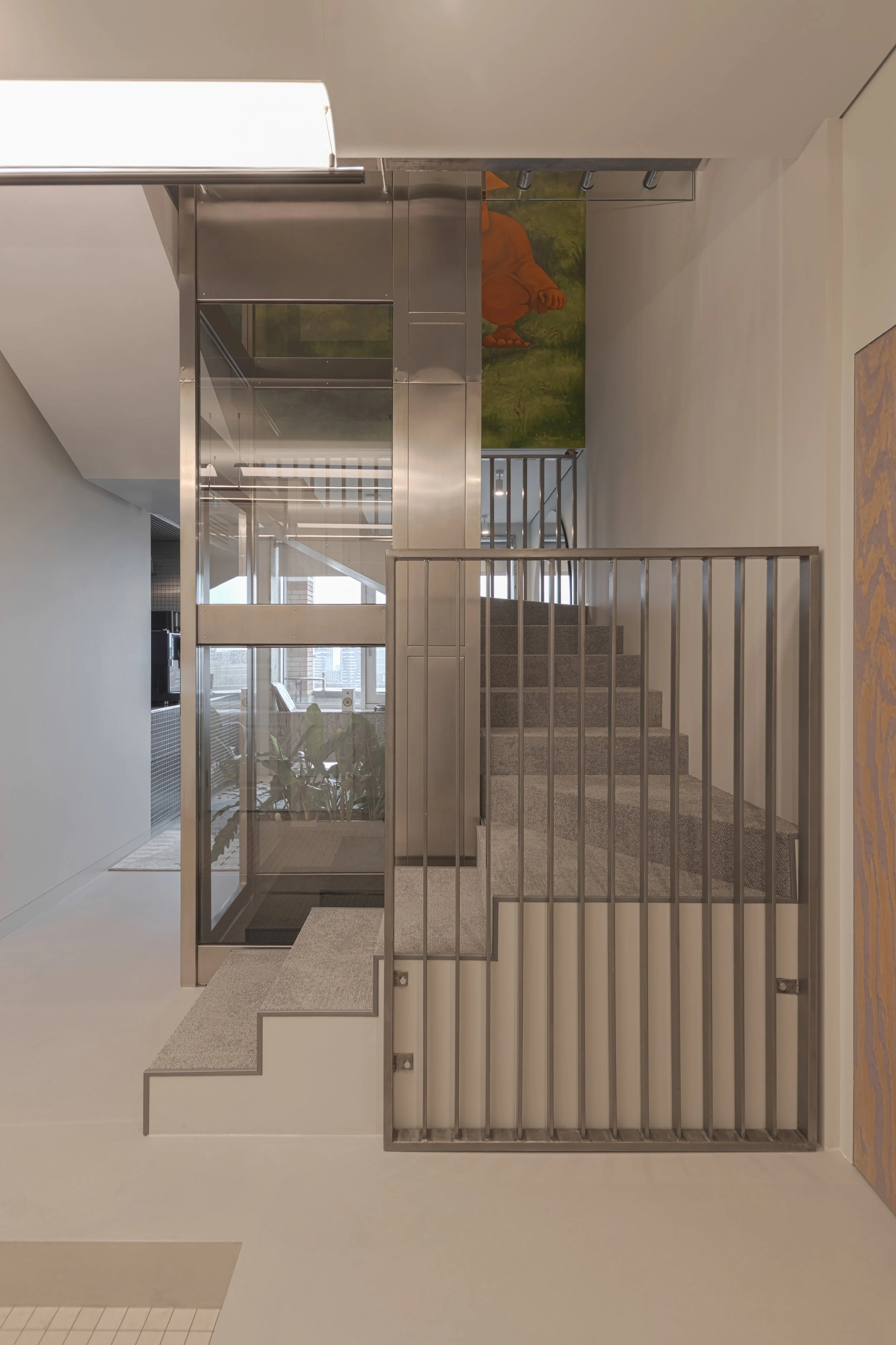
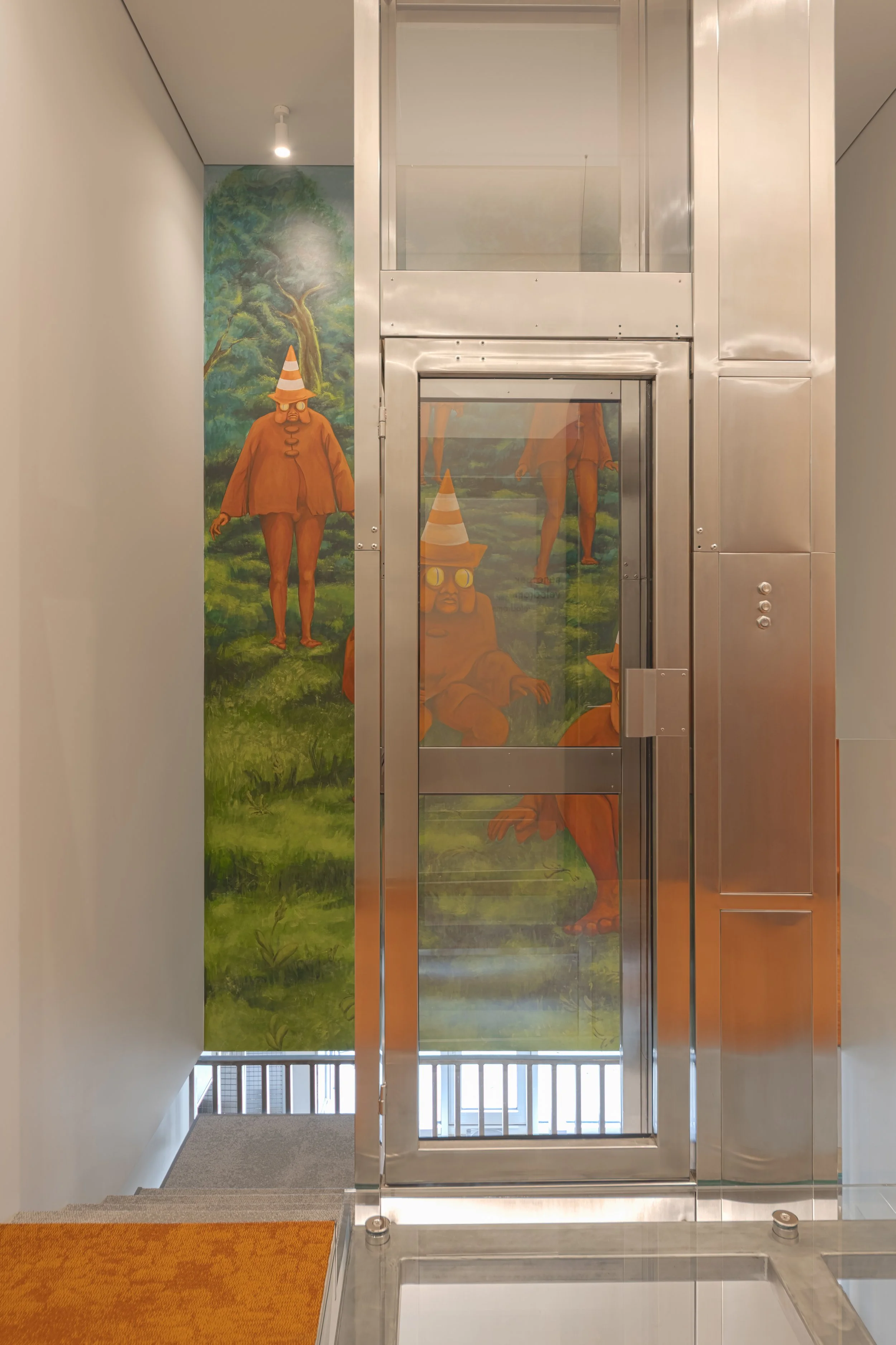
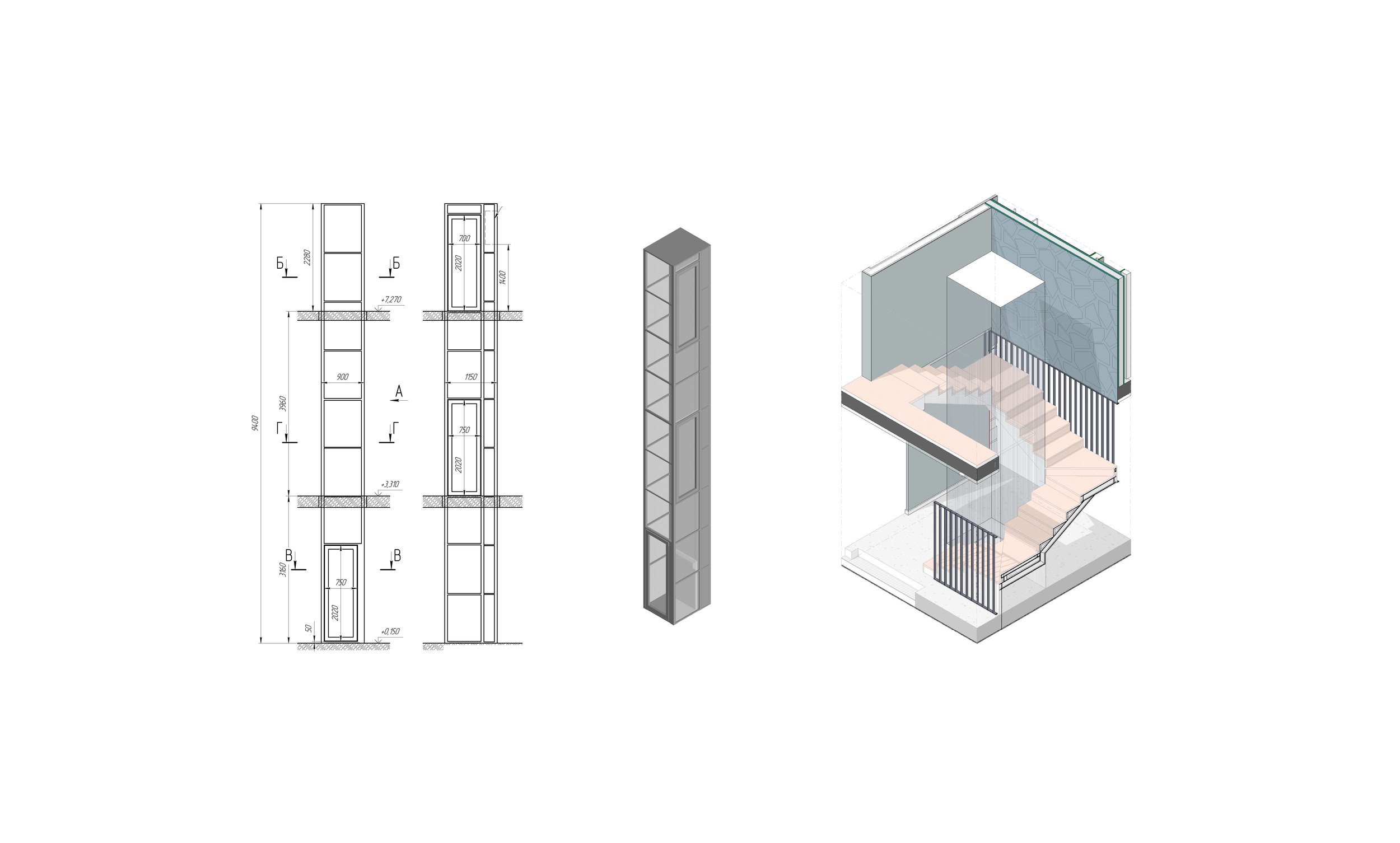
The team introduced a dedicated freight elevator that delivers guests' luggage directly to the hotel floors. The intervention was carefully integrated into the building's existing architecture, preserving its integrity while working within the space's technical constraints.

3.

Adapting Existing Materials and Working With Complex Geometry

By the time the project began, some materials and finishes had already been purchased for a different design concept. Rather than replacing them entirely, the team conducted a detailed audit of available items, preserving and reinterpreting those that could be successfully incorporated into the new vision.

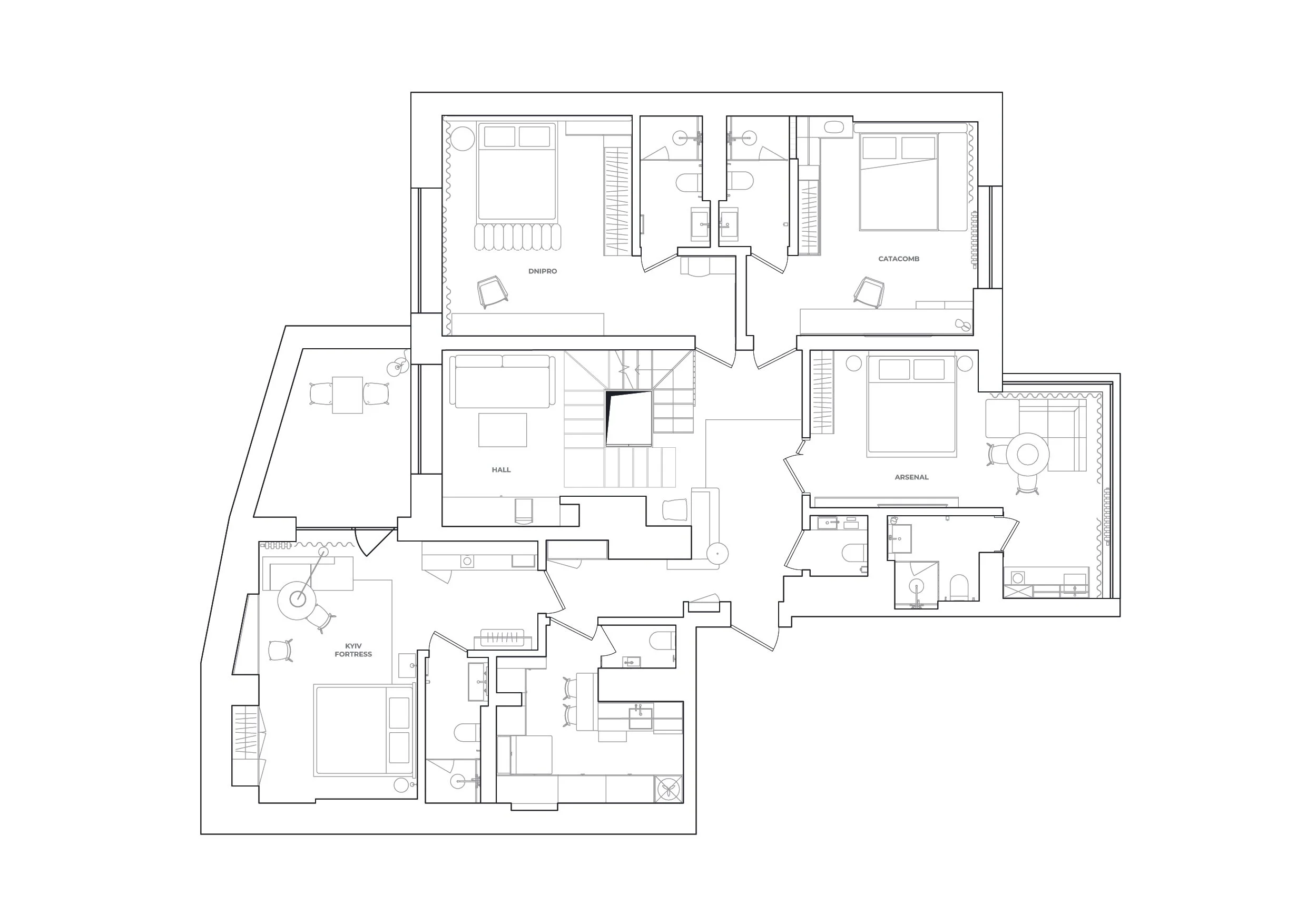
The architecture of the floors presented additional complexity. Irregular room layouts, numerous niches, and unconventional wall configurations required highly customized planning solutions. Instead of concealing these features, the team embraced them as part of the spatial experience, transforming constraints into design opportunities while maintaining comfort, functionality, and ergonomics in every apartment.


FIRST FLOOR


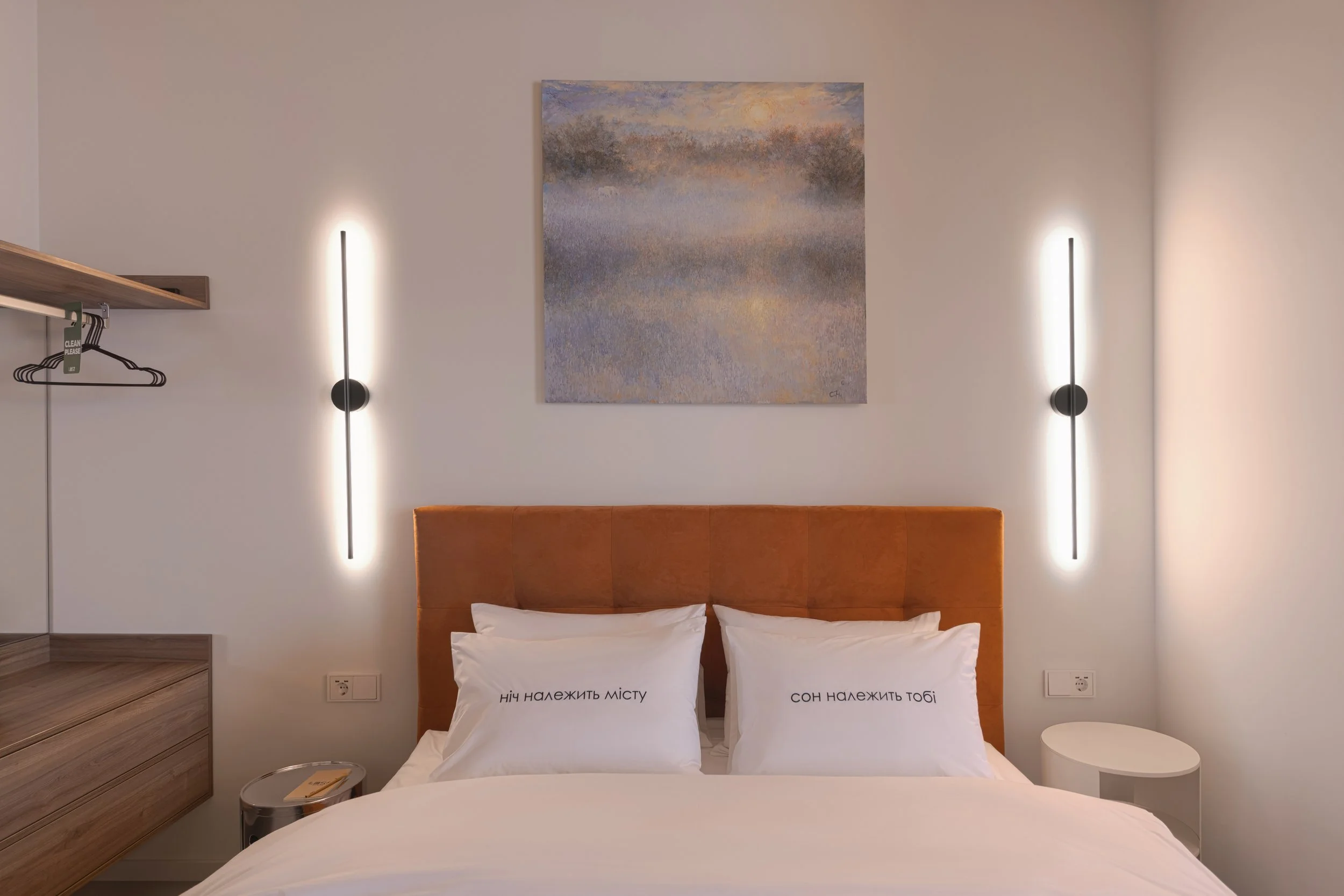
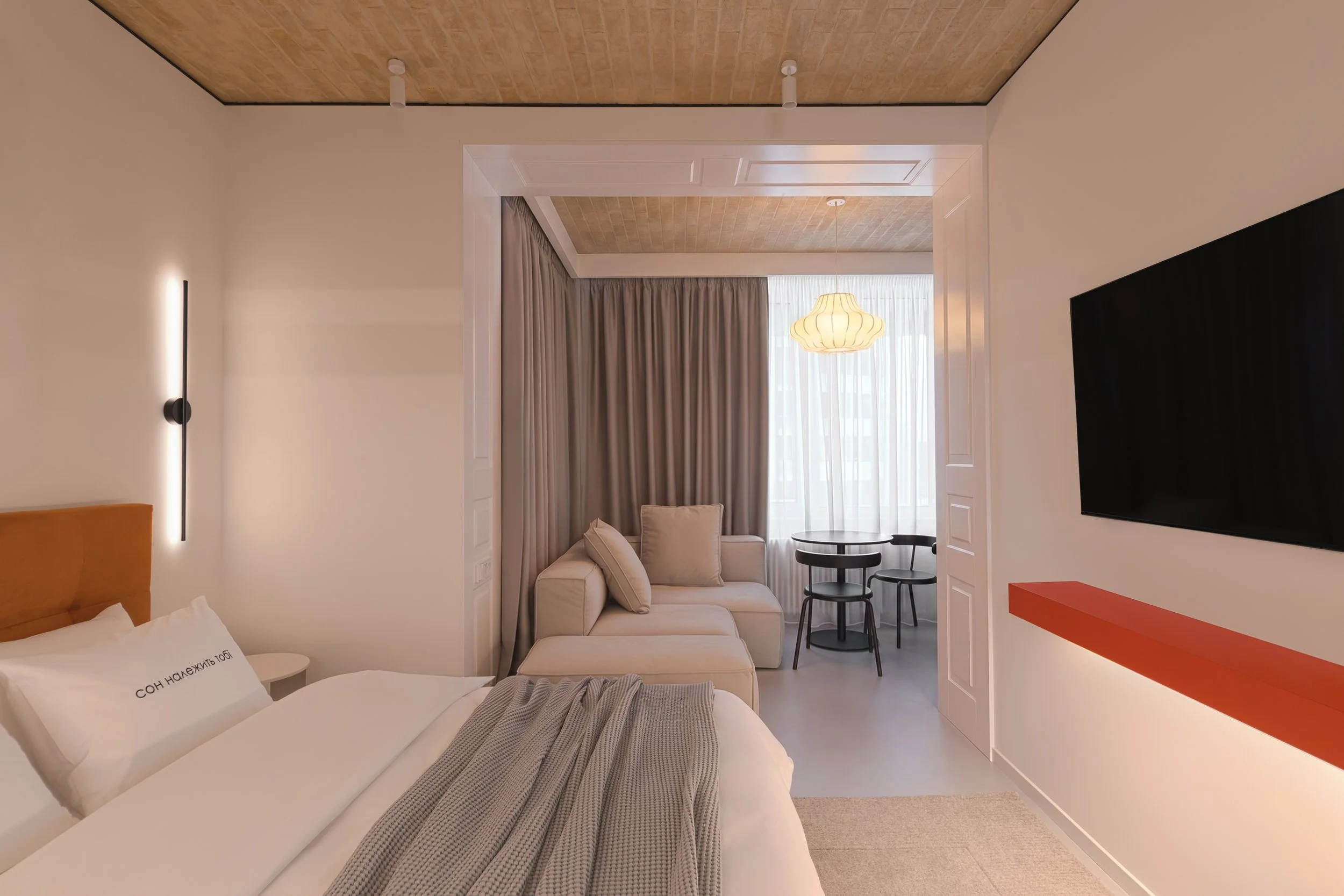
MYSTETSKYI ARSENAL

[art, culture, light, installations, inspiration, open space.]

Why We Chose It:

Mystetskyi Arsenal is one of the best examples of the transformation of historic industrial architecture into a contemporary cultural venue. As one of Ukraine's leading cultural institutions, it brings together different creative disciplines — from visual art and literature to music and theatre.

Form

A combination of clean geometric lines and abstract compositions.

Design Features:

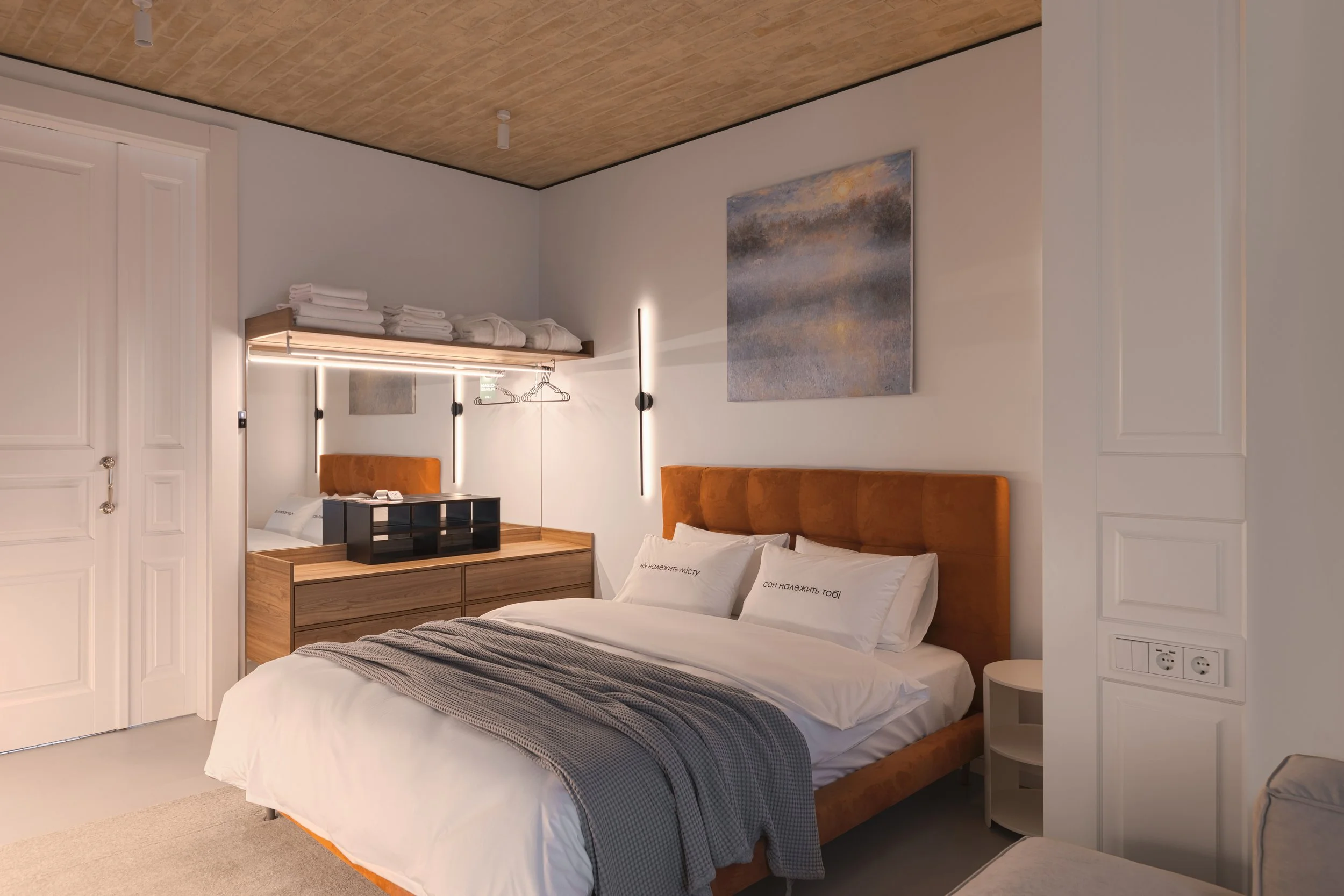
  • a brick-vault ceiling interpretation inspired by the architecture of the Arsenal building;
  • light-colored walls serving as a neutral backdrop for artwork and statement pieces;
  • integration of art into the interior, where furniture and decor function as exhibition elements;
  • artworks by Ukrainian, particularly Kyiv-based, artists;
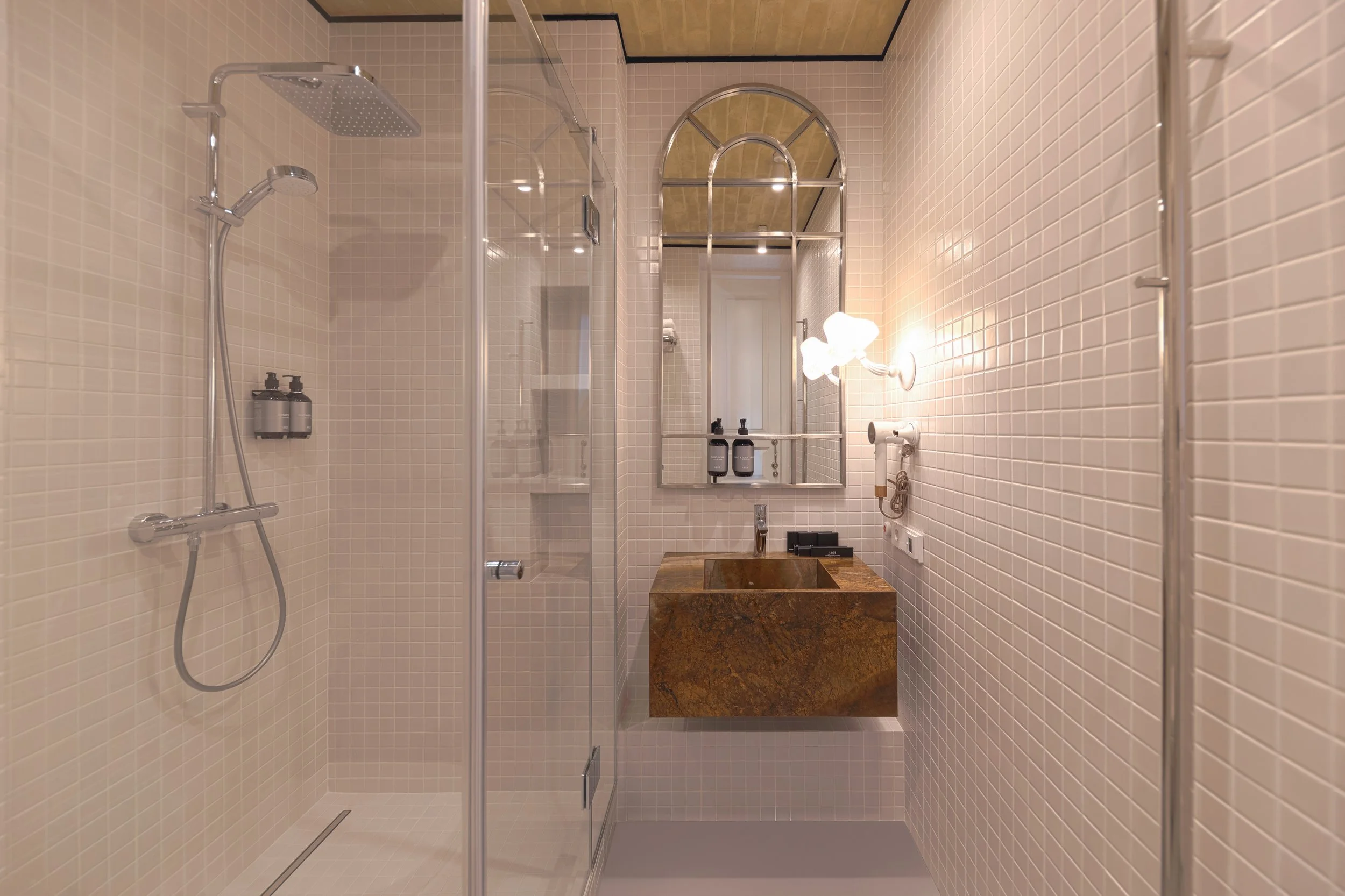
  • microcement flooring and white surfaces inspired by gallery spaces;
  • tall classic doors referencing the architecture of the historic building.
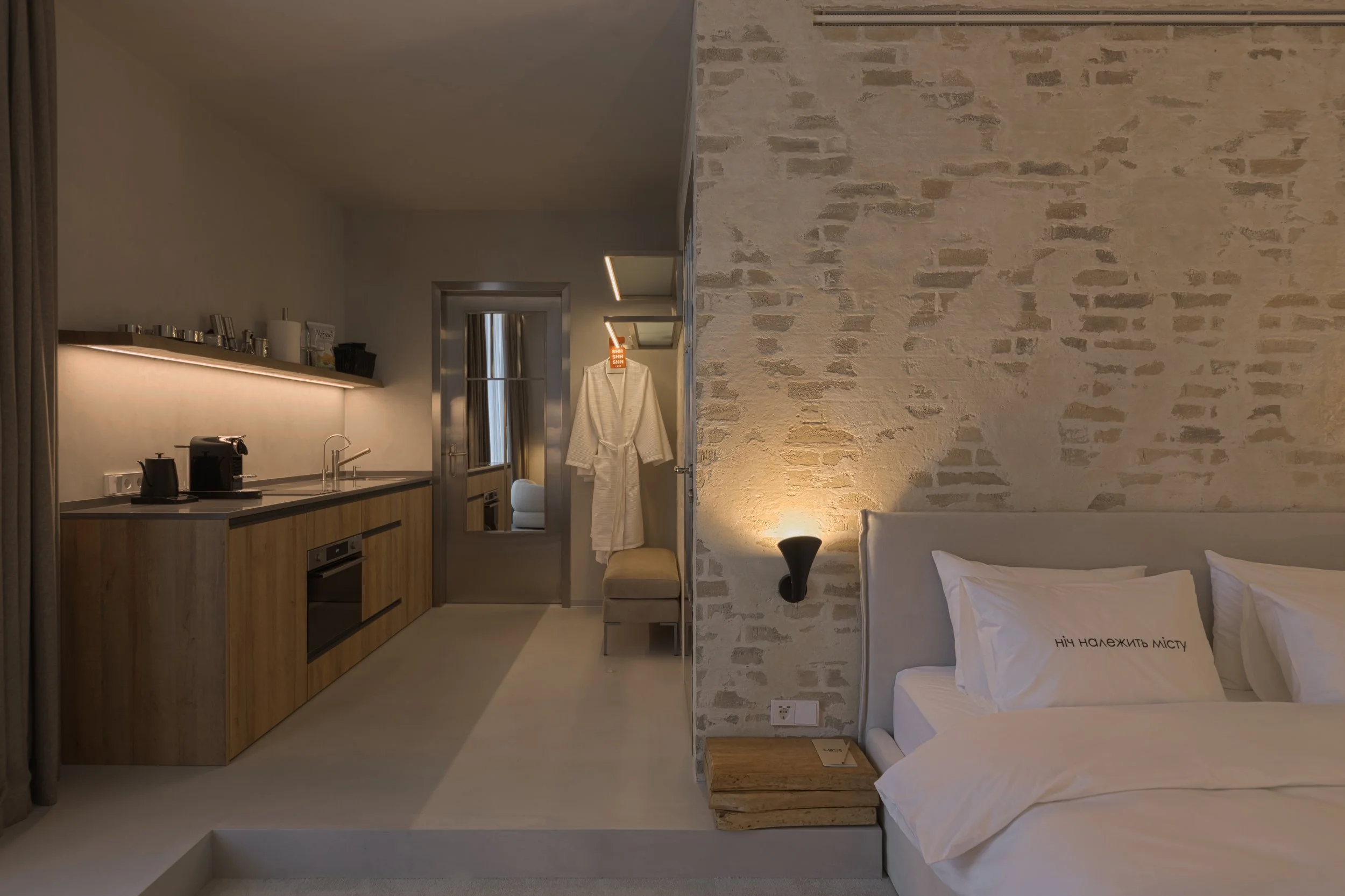
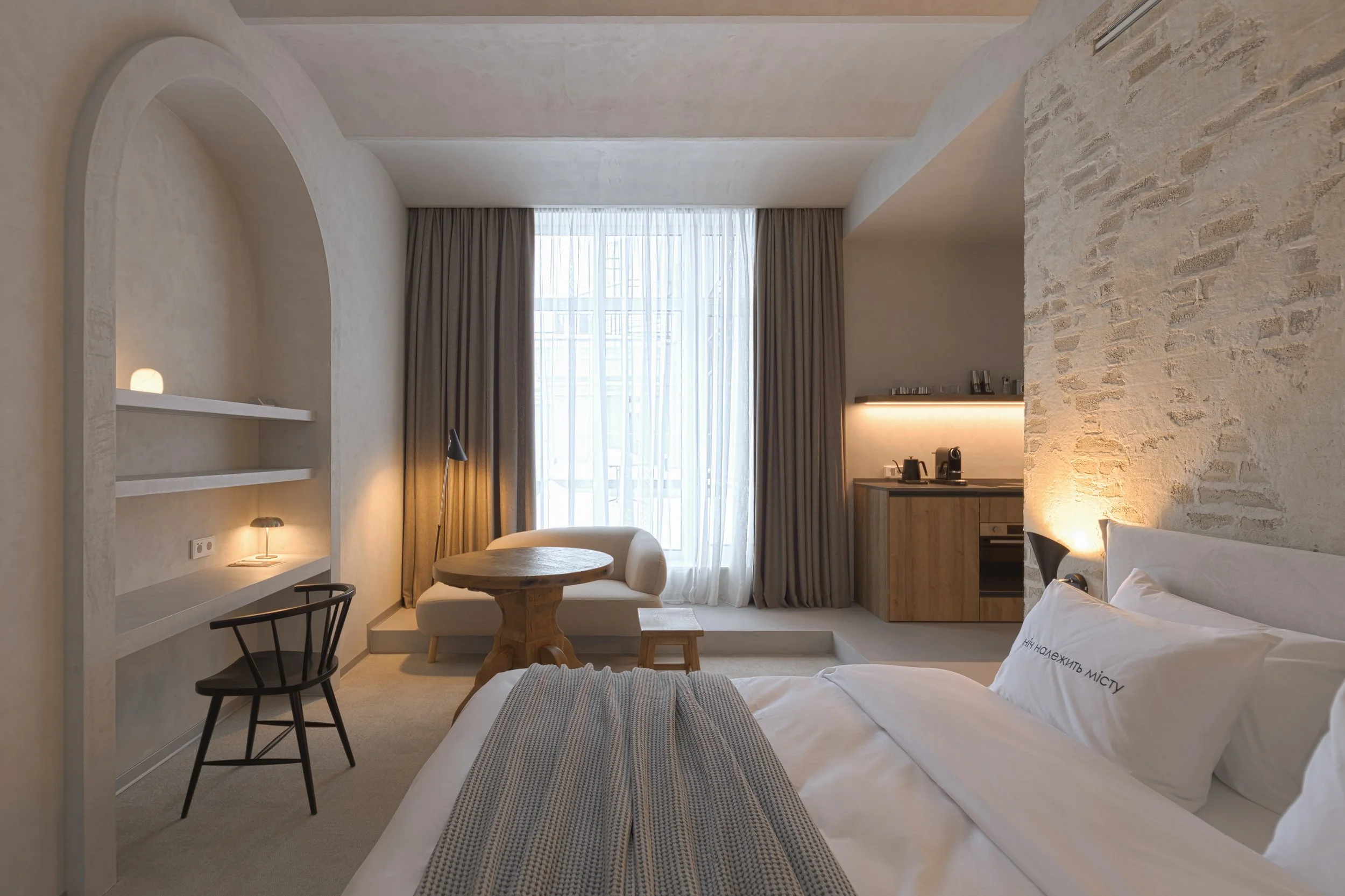
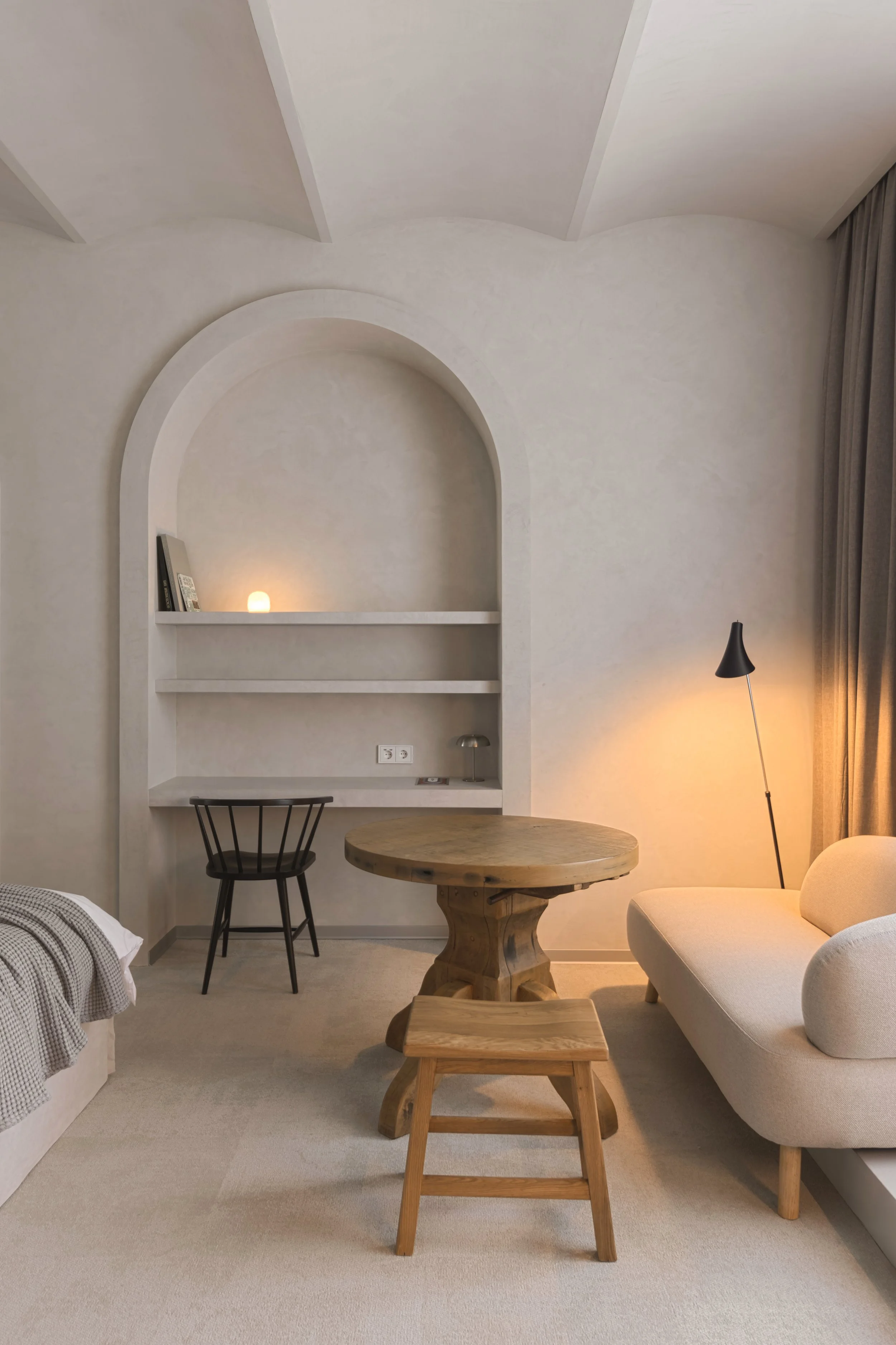
Фото 1
Фото 2
Фото 3

KYIV
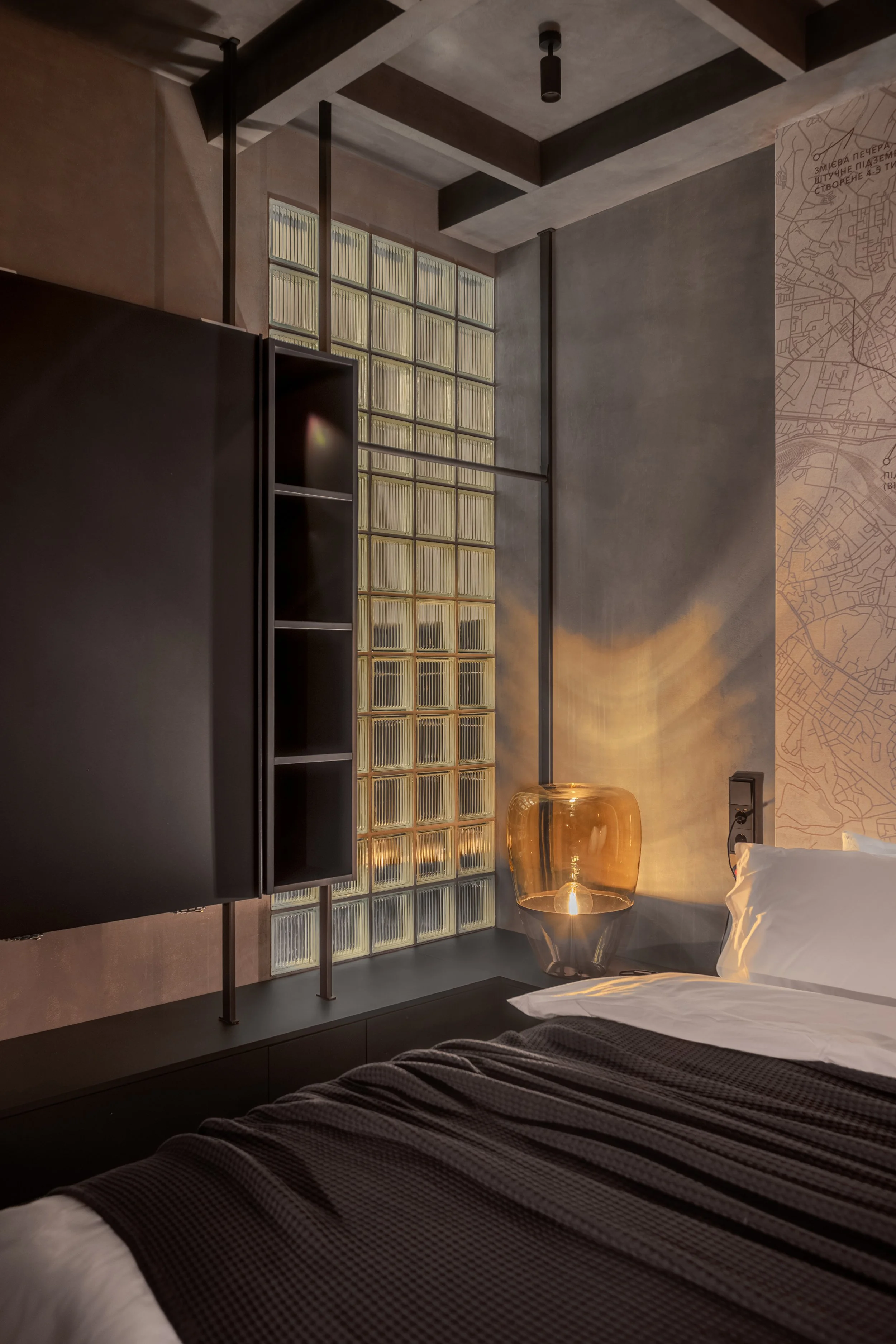
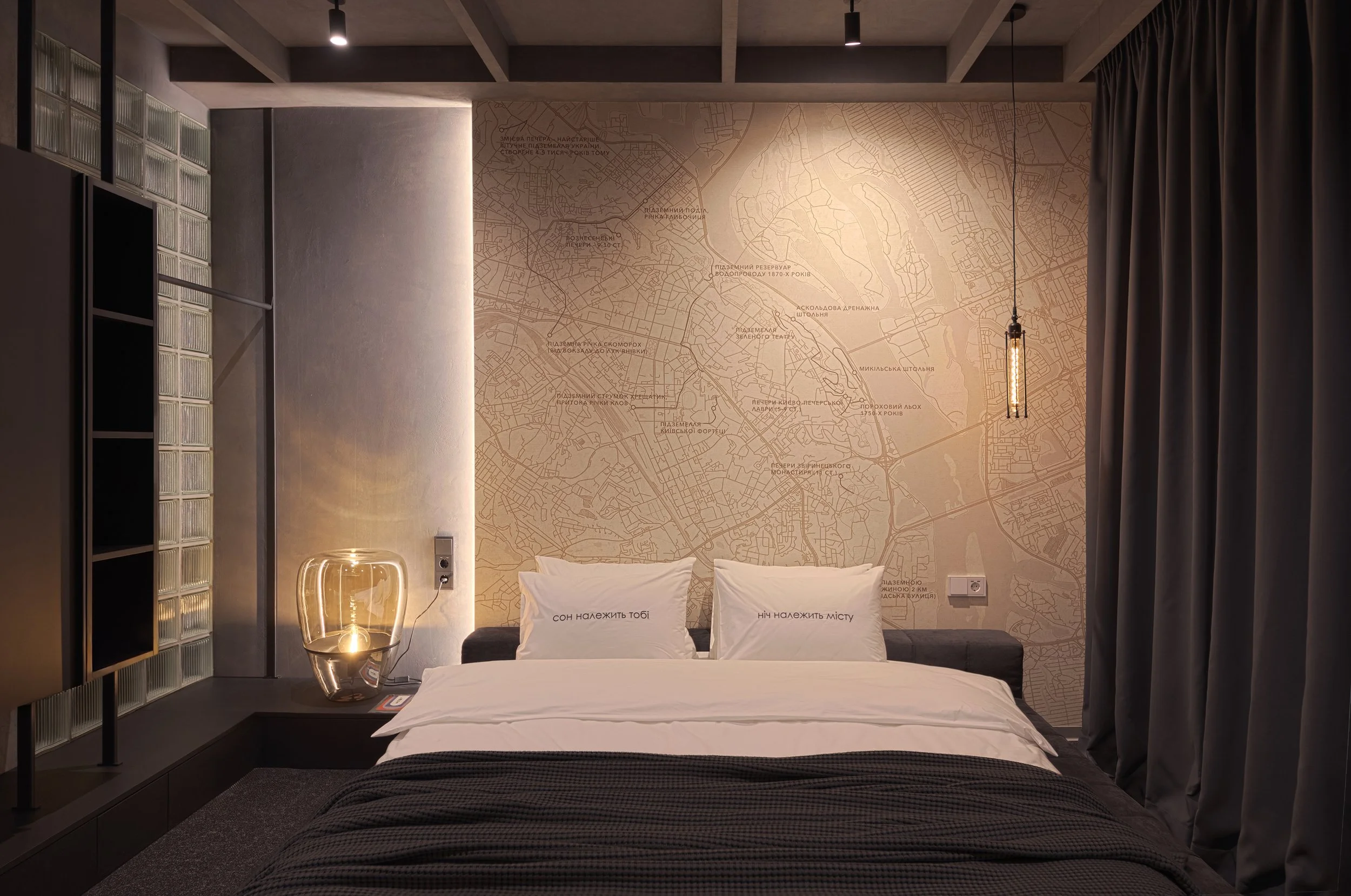
CATACOMBS

[underground passages, caves, labyrinths, hidden Kyiv, underground culture.]

Why We Chose It:

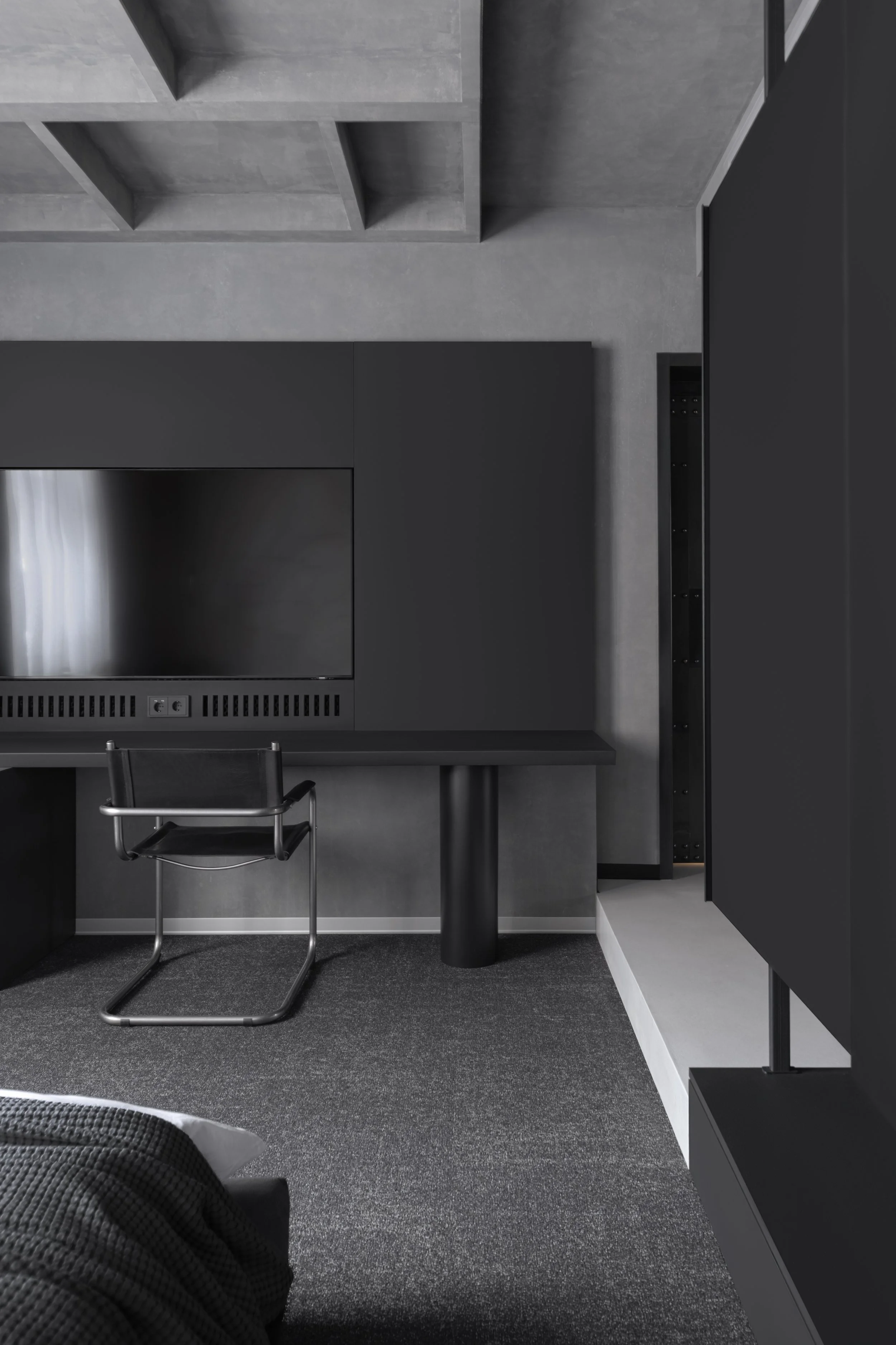
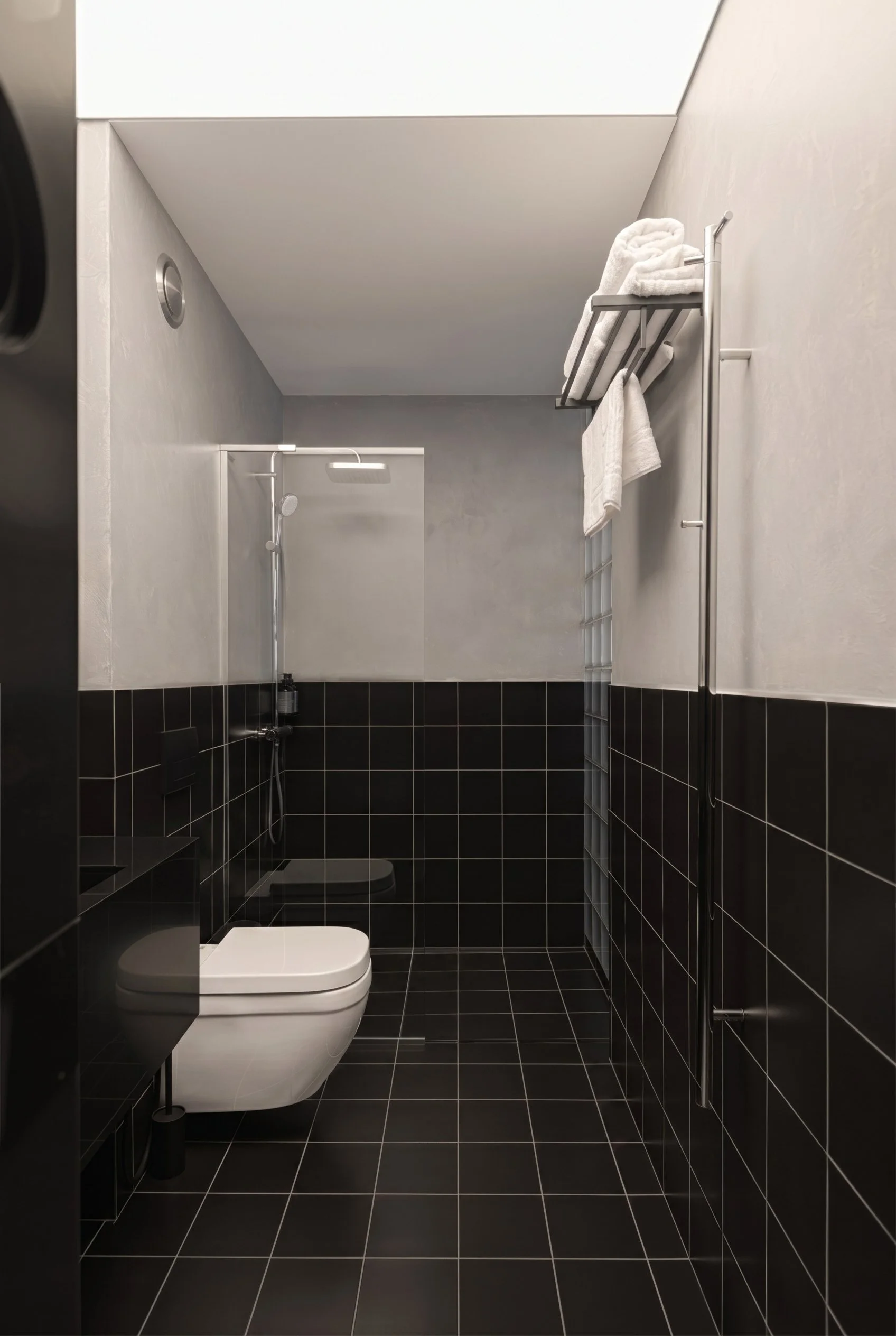
The Kyiv Catacombs are among the city's least explored and most mysterious layers. Their dark and atmospheric character perfectly matched the mood of this apartment. The main challenge was to reinterpret the image of an underground space as a comfortable, welcoming place to stay.

Form:

Clear geometry and a strict composition built around rhythmic lines.

Design Features:

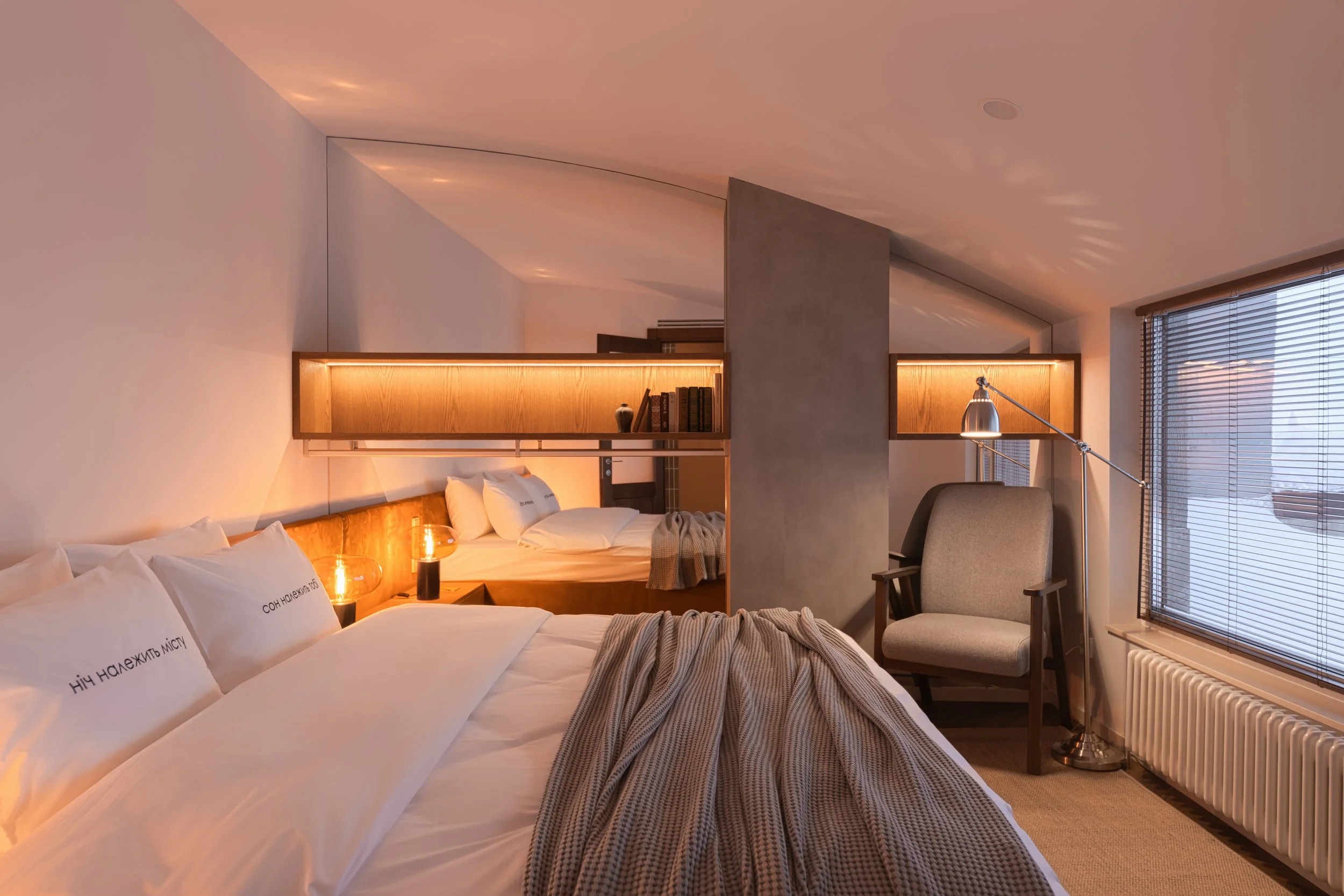
  • layered, low-level lighting;
  • a dark natural color palette;
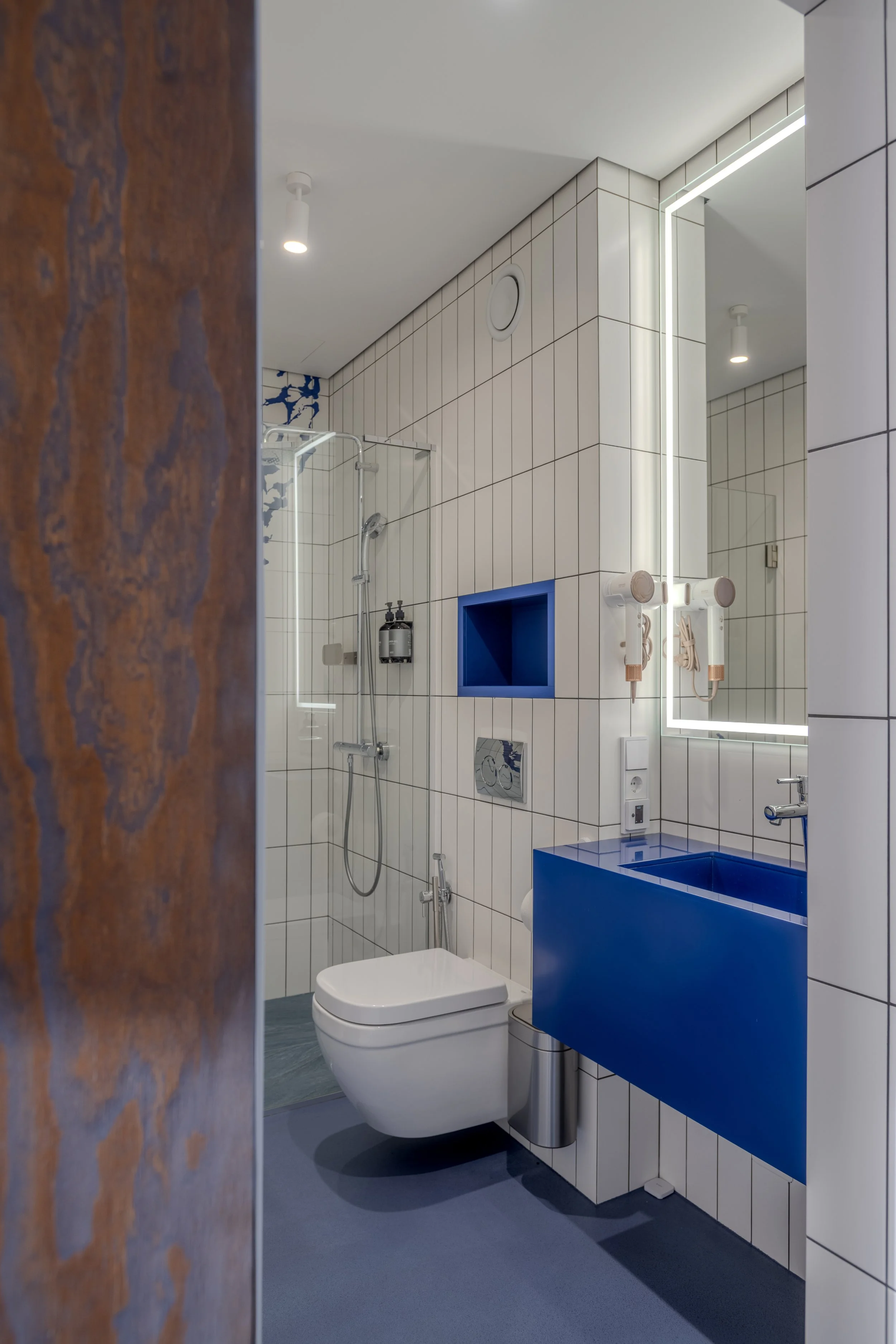
  • concrete, metal, and microcement as the primary materials;
  • textured surfaces inspired by underground formations;
  • graphic elements based on maps of Kyiv and underground tunnel networks;
  • industrial pendant lights referencing the technical aesthetic of the catacombs.

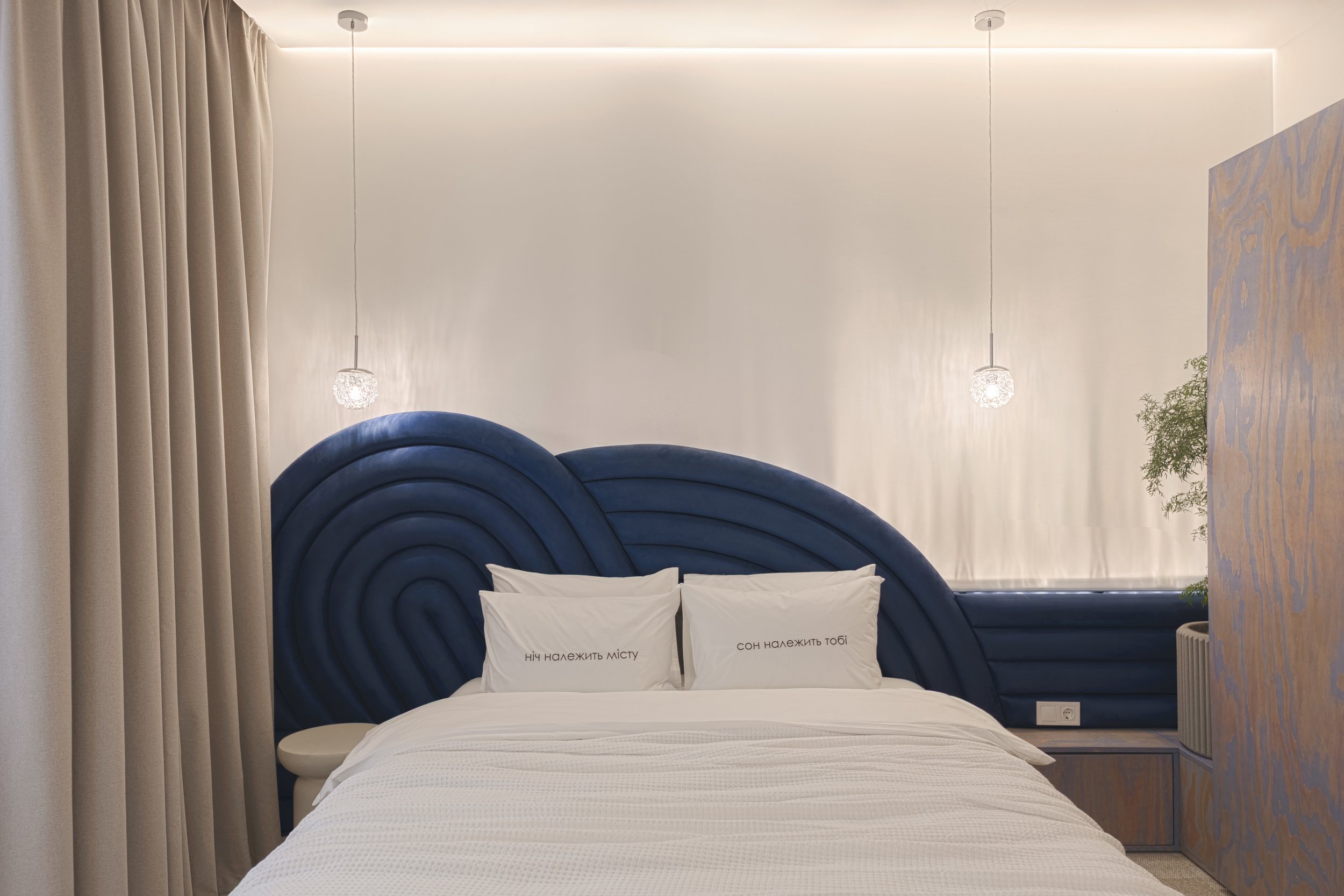
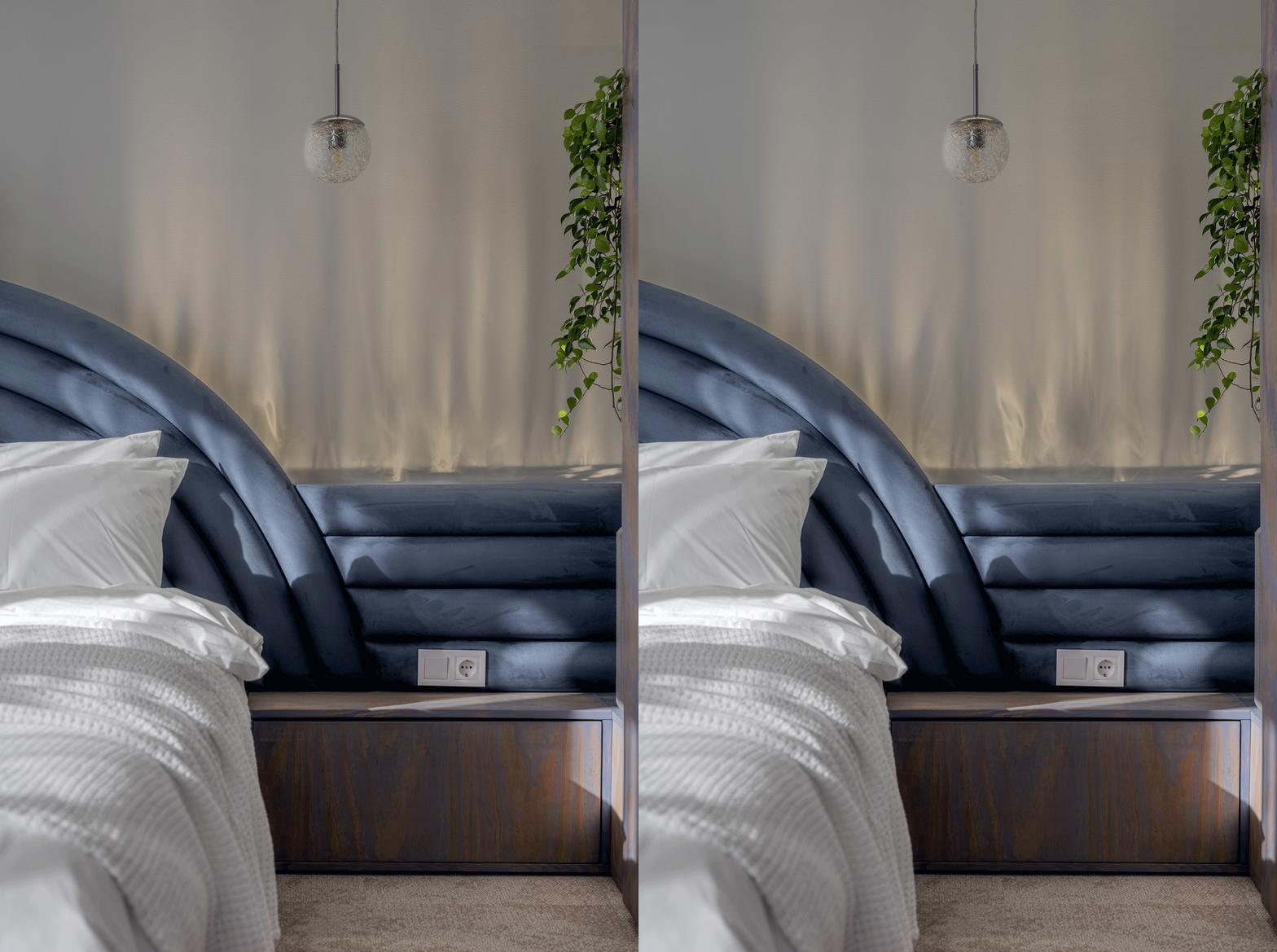
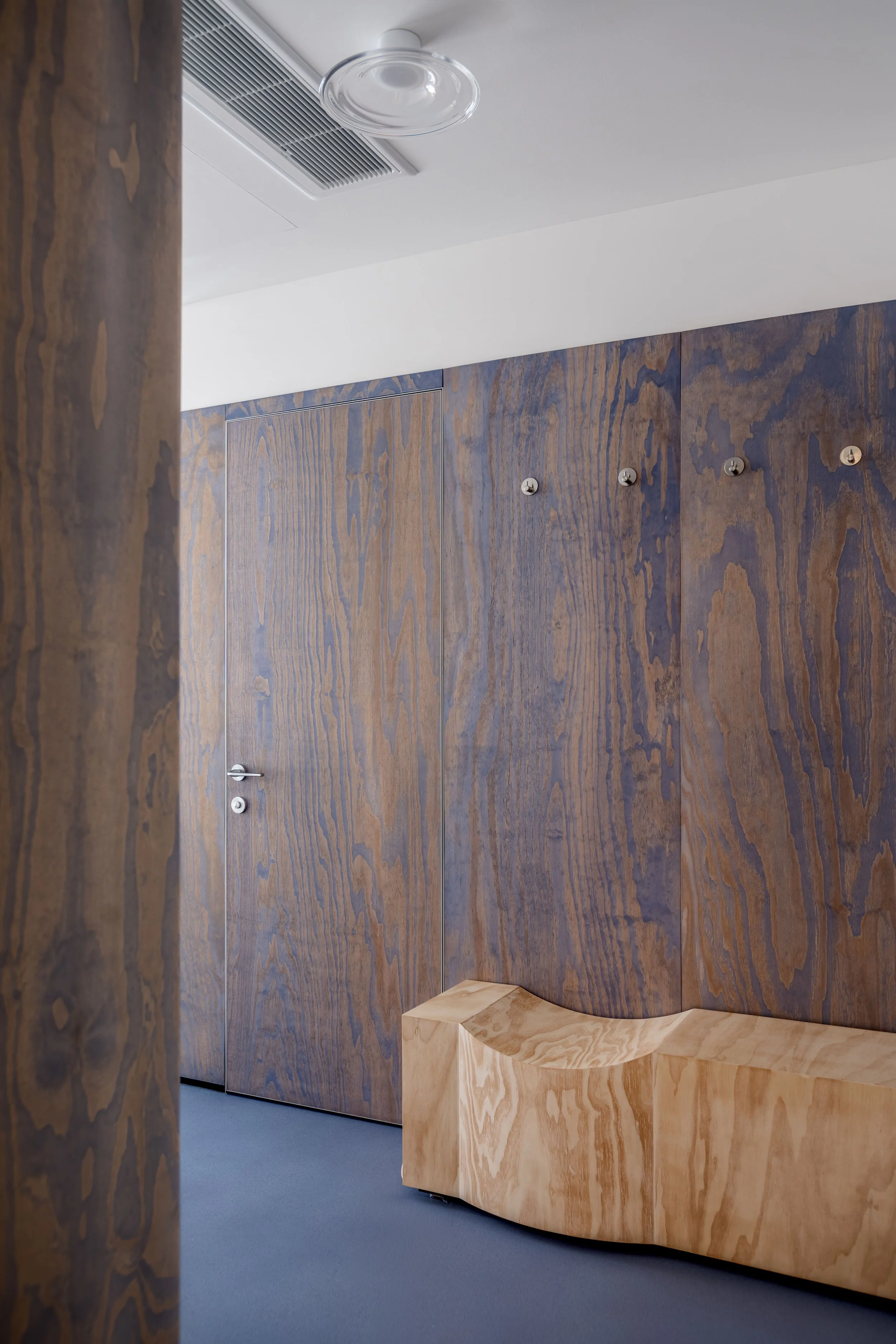
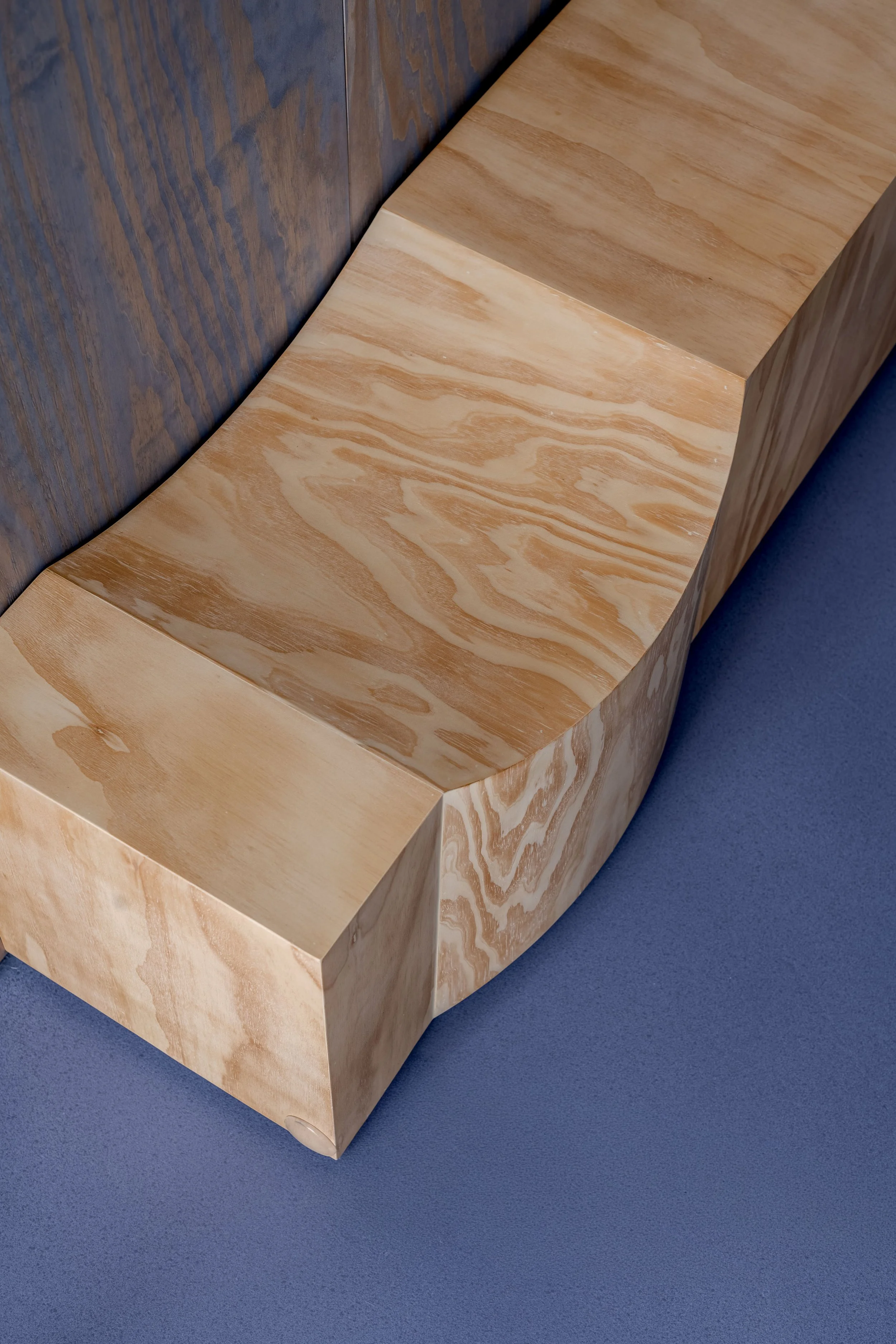
DNIPRO RIVER

[water surface, depth, reflections, caustics, calmness, restoration, life.]

Why We Chose It:

The Dnipro is the main waterway of both Kyiv and Ukraine. This apartment explores the role of a natural element within the city — one that shapes its rhythm, brings balance, and softens the urban environment. Conceptually, it also creates a dialogue with the Catacombs apartment, forming two contrasting yet complementary experiences.

Form:

Fluid, wave-like, and rhythmic.

Design Features:

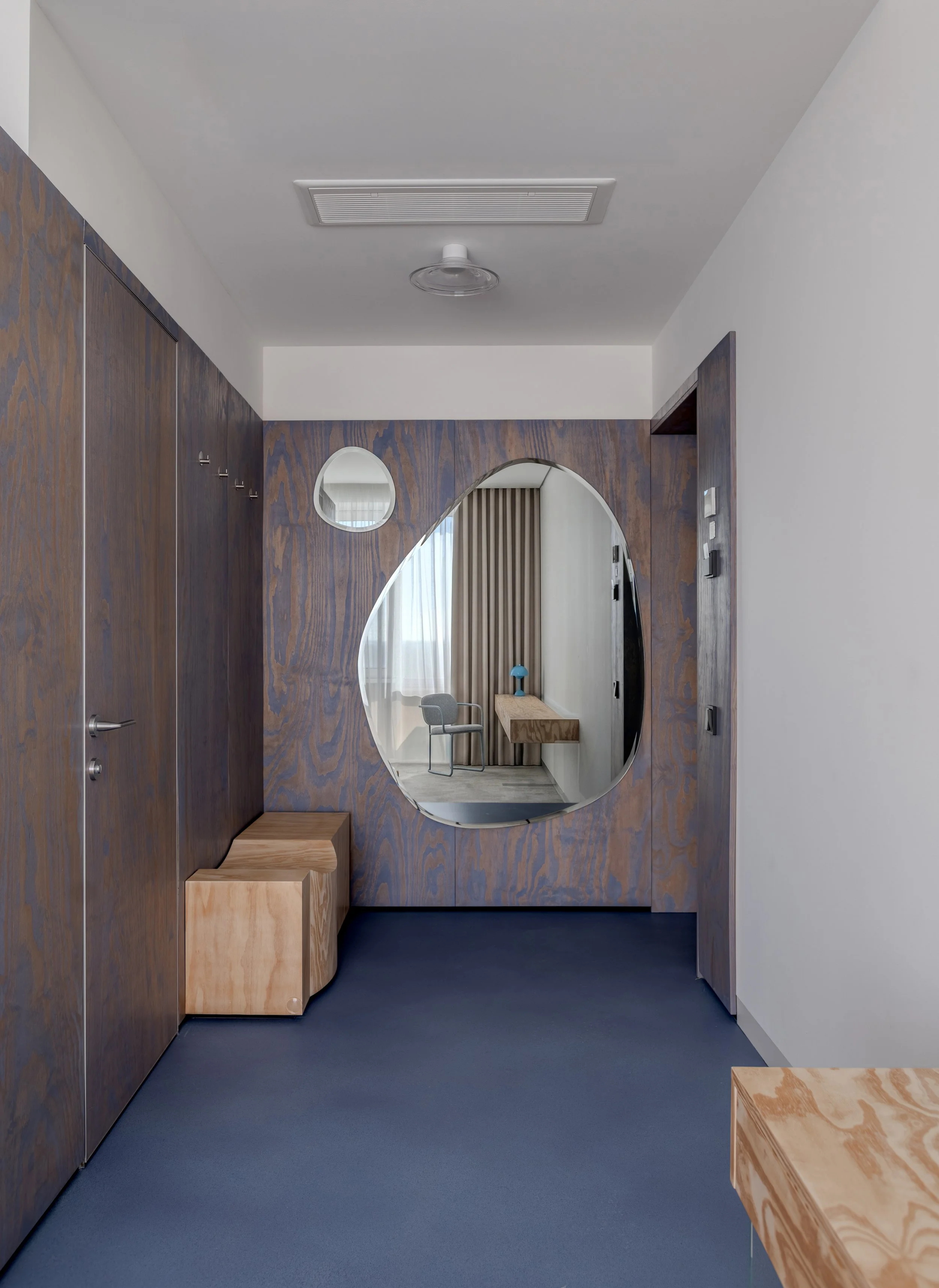
  • tinted plywood with a water-like visual effect;
  • light caustics projected onto the walls, recreating the movement of reflected water;
  • furniture with soft, rounded forms;
  • organic mirror surfaces inspired by water droplets on glass.

KYIV FORTRESS

[history, protection, resilience, time, continuity, and the connection between past and present.]

Why We Chose It:

Kyiv Fortress is a complex of defensive structures developed over several centuries. This apartment reflects the strength of the city, its historical continuity, and a sense of permanence through time. The terrace offers direct views of the fortress itself, establishing a visual connection with the place that inspired the concept.

Form:

Radial compositions, arches, and vaulted forms.

Design Features:

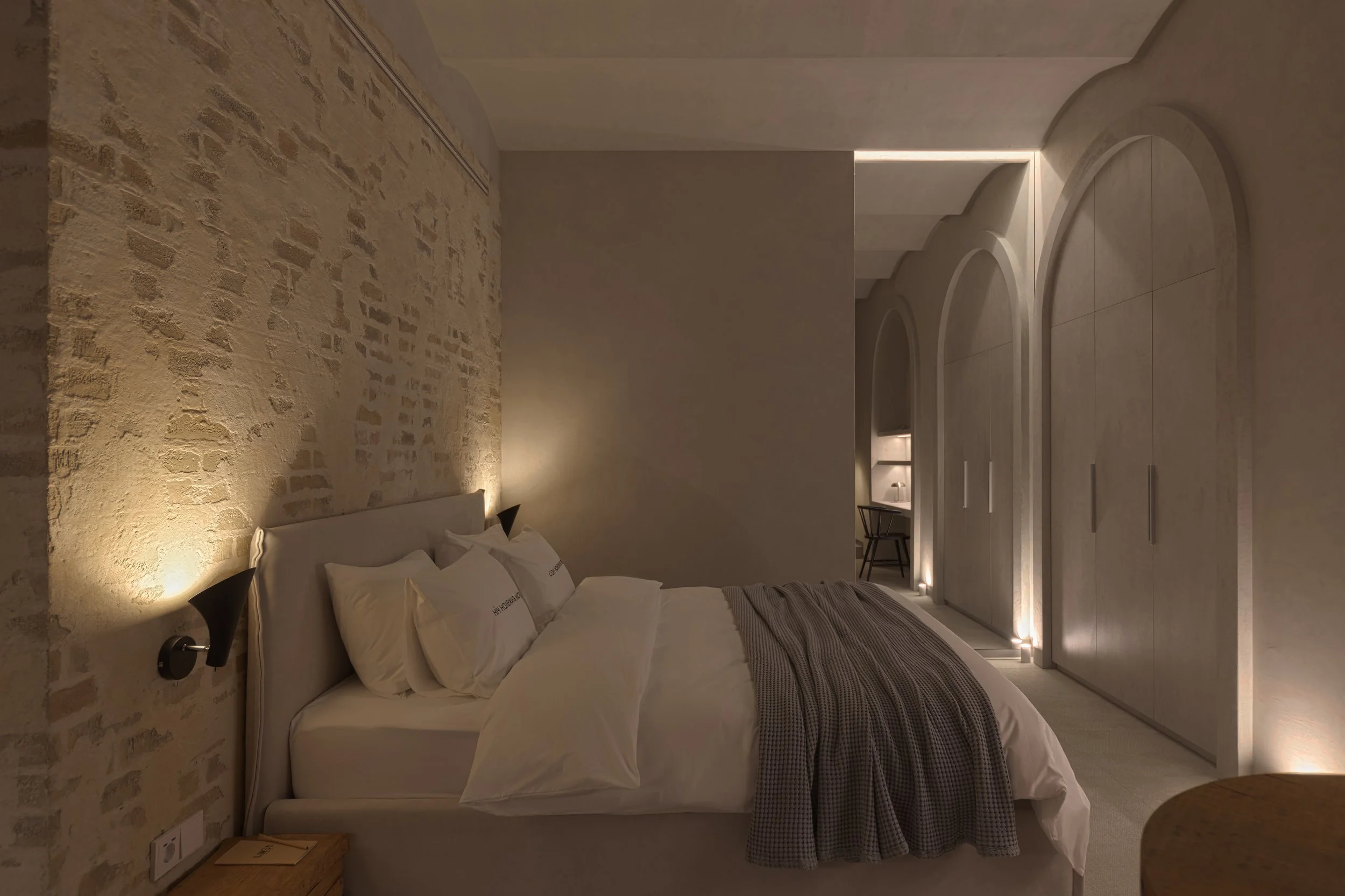
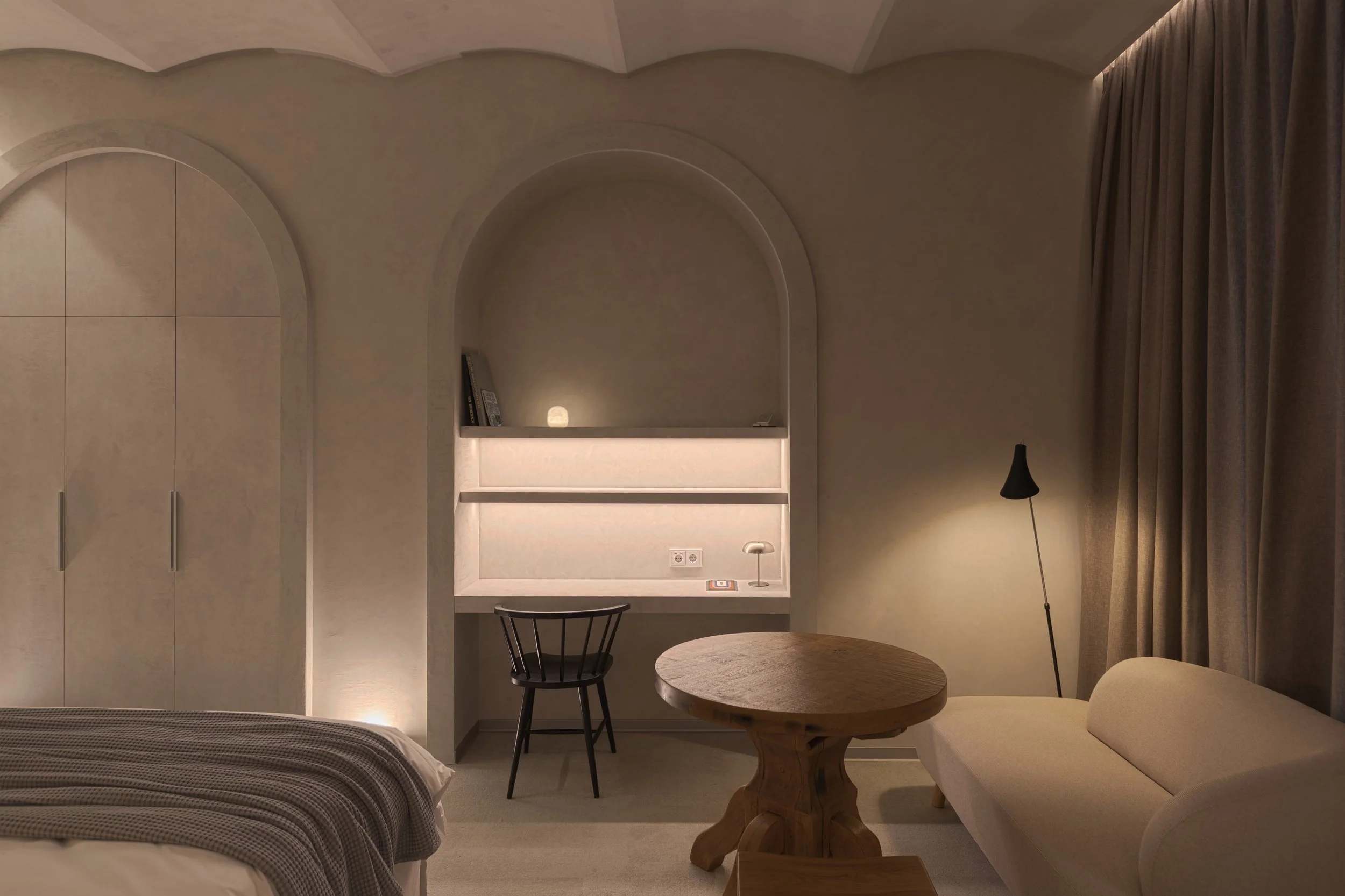
  • textured plaster and microcement used as the primary finishing materials;
  • vintage furniture referencing the historical layers of the site;
  • natural wood elements;
  • integrated arches and a vaulted ceiling serving as key architectural features;
  • subdued lighting with no ceiling fixtures, relying instead on concealed illumination and accent lighting to evoke the atmosphere of a fortress interior.


SECOND FLOOR


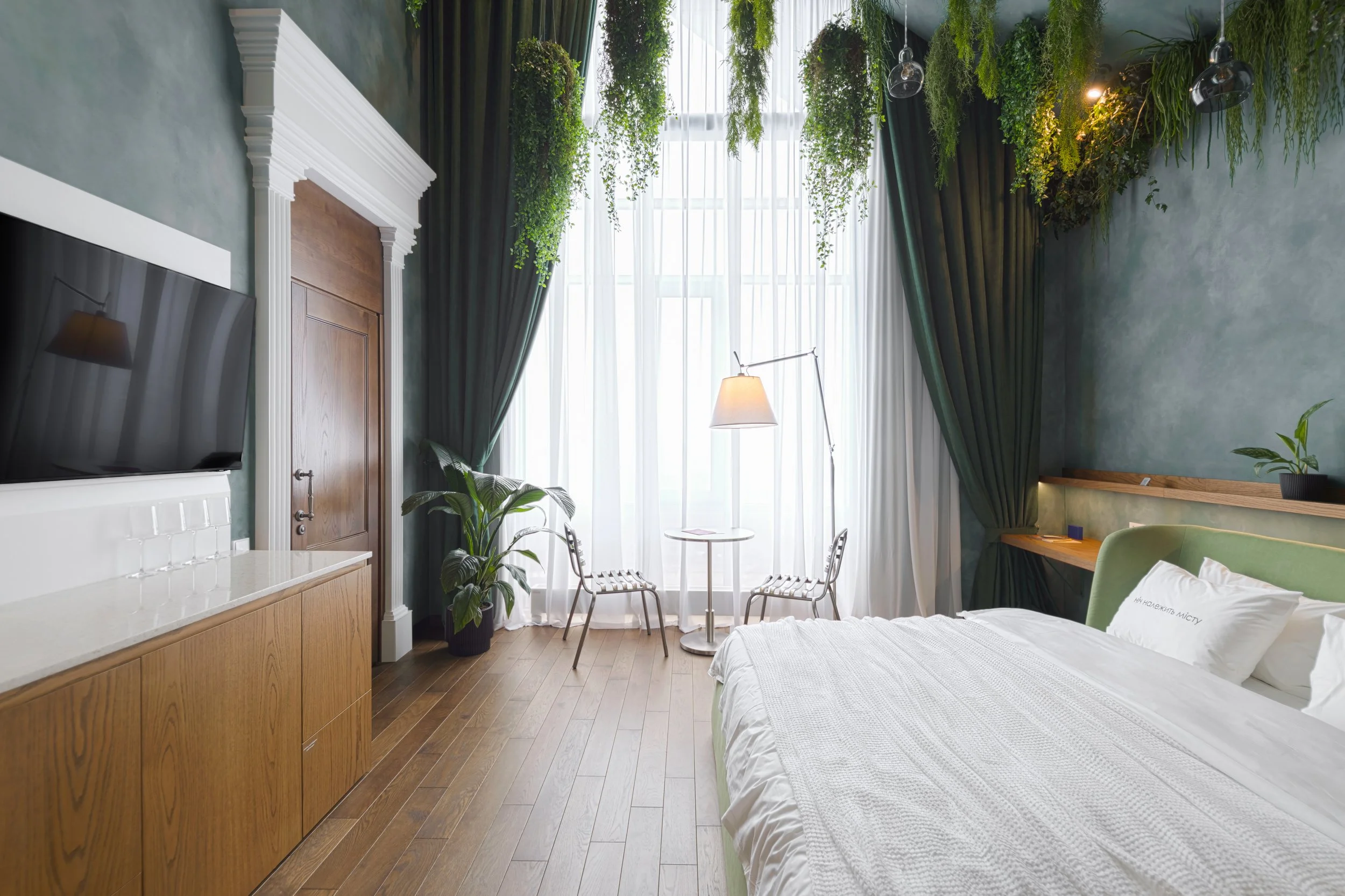
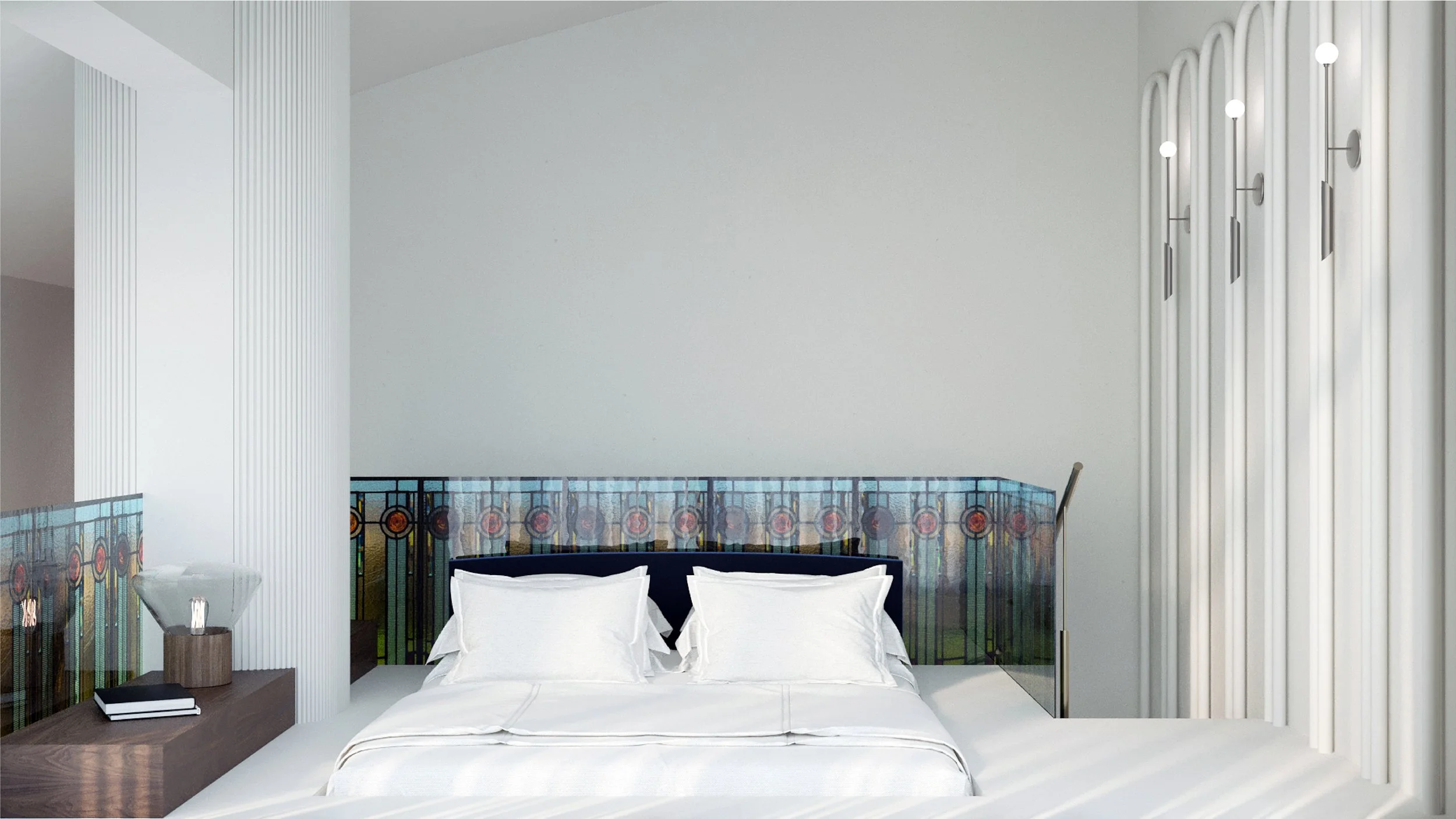
BOTANICAL GARDEN

[greenery, greenhouse, light, height, glass, nature within the city.]

Why We Chose It:

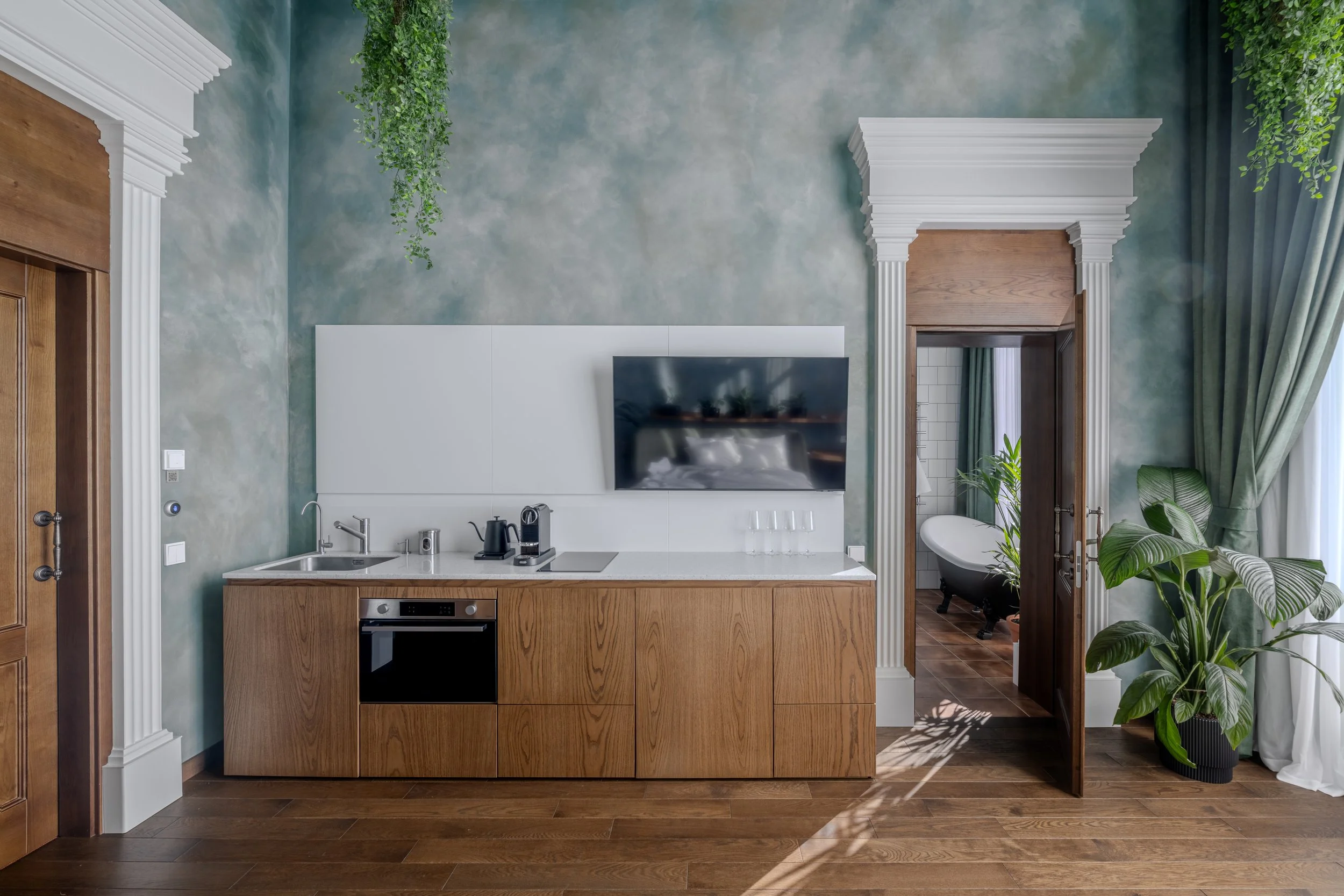
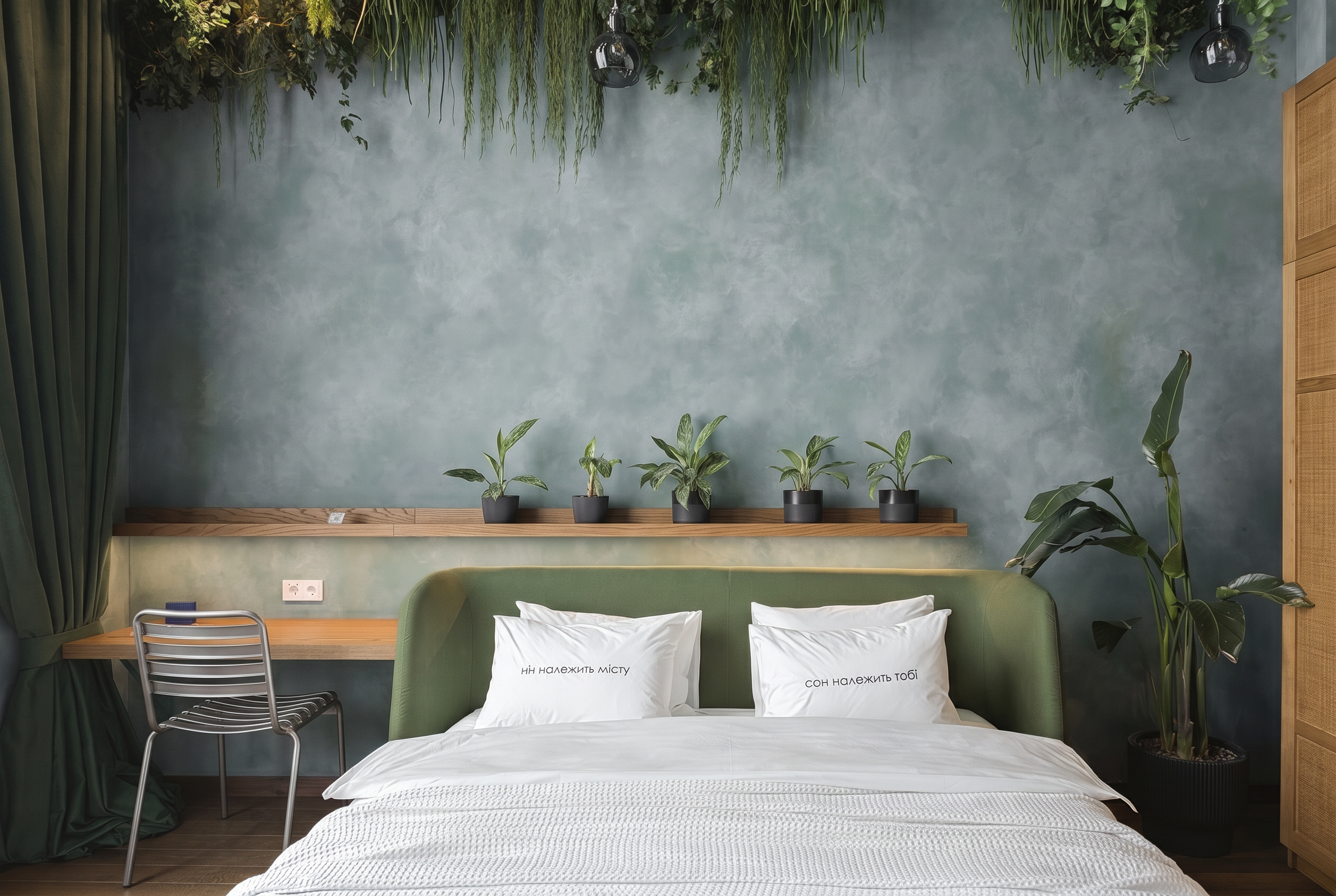
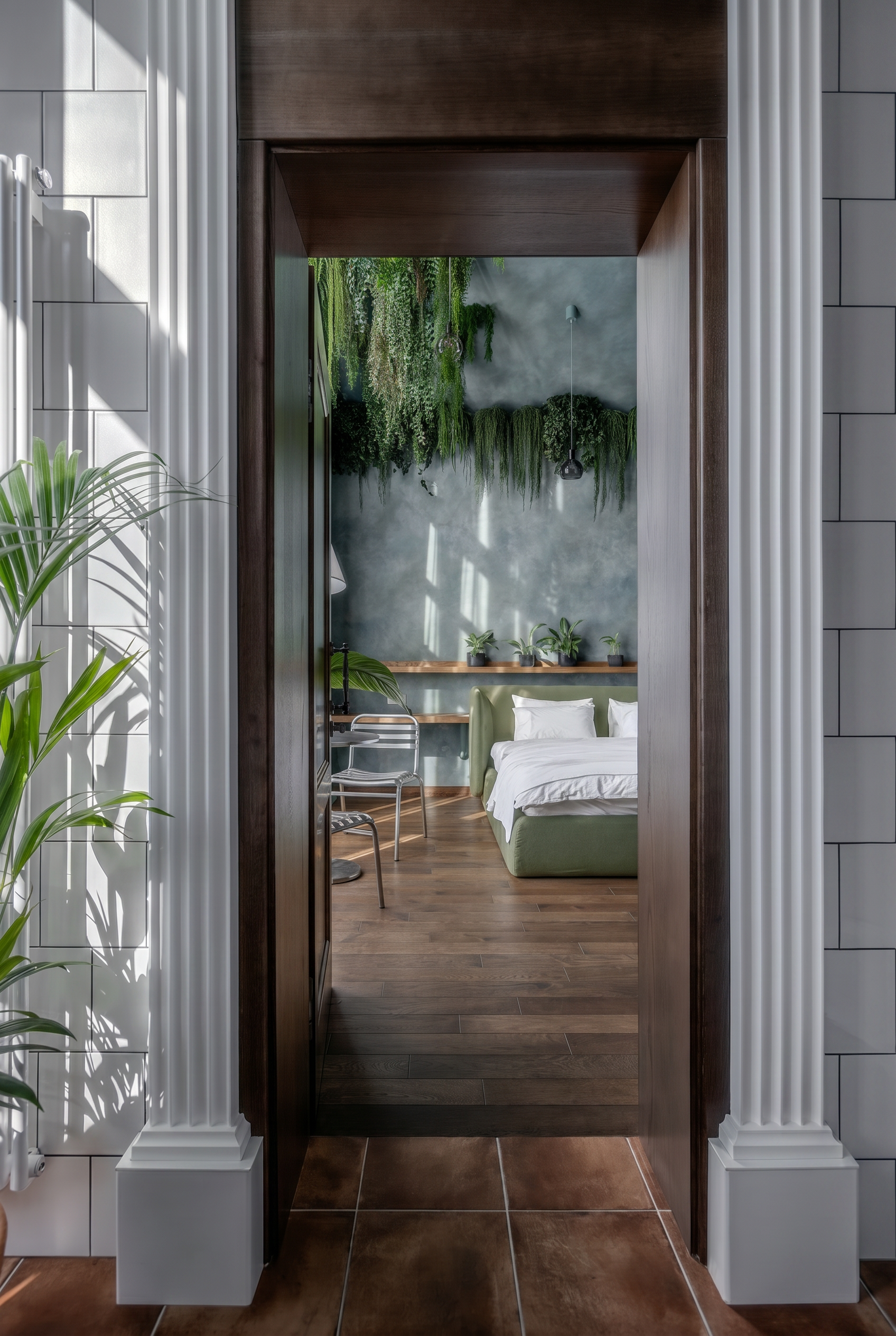
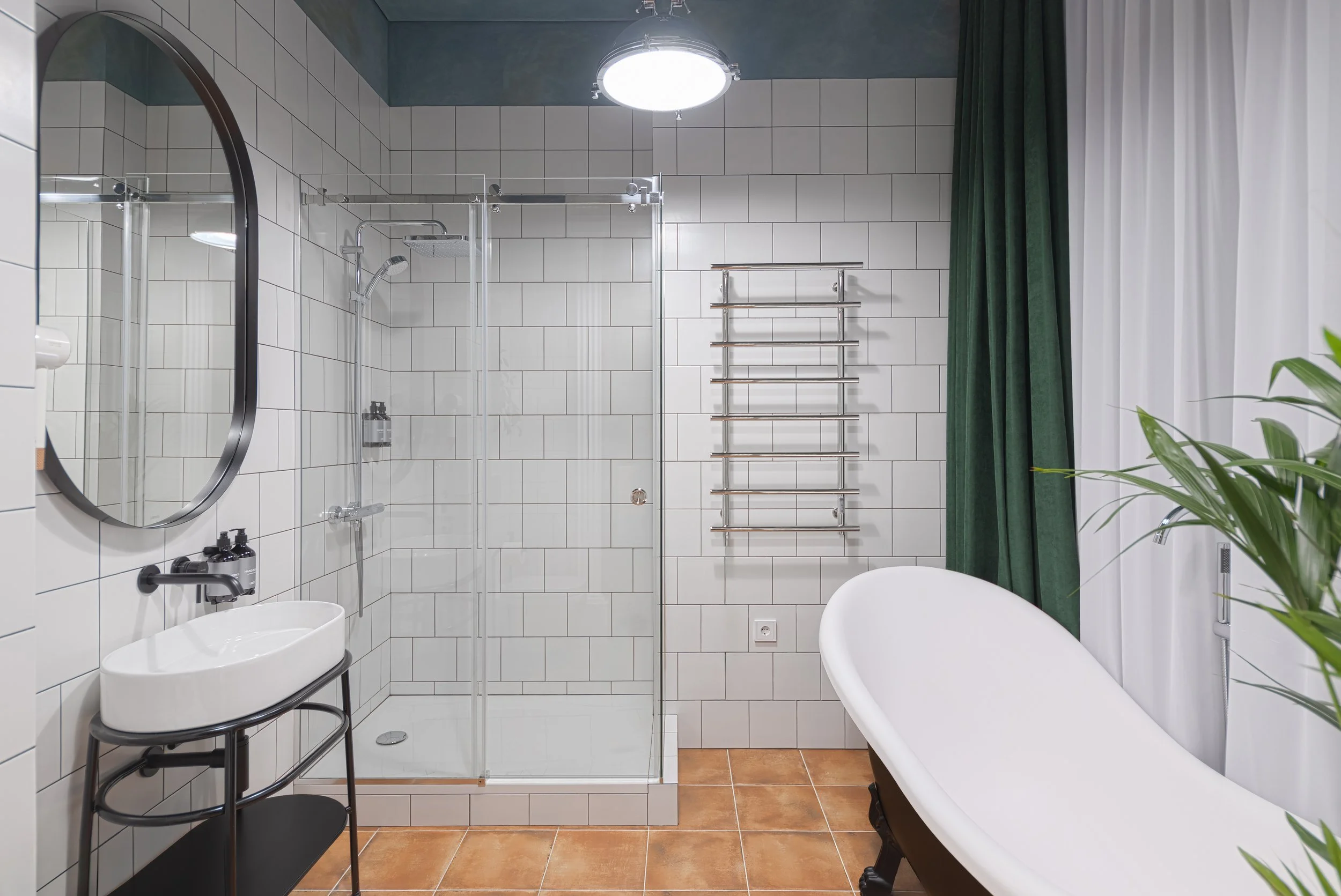
The Hryshko National Botanical Garden is a unique urban landscape with an extensive plant collection and an important role in preserving biodiversity. This apartment became a natural extension of that idea: the largest unit in the hotel, featuring high ceilings and expansive glazing that evokes the atmosphere of a greenhouse.

Form:

Soft, natural, and timeless.

Design Features:

  • an abundance of plants, some integrated into the upper levels of the space to create the feeling of an indoor greenhouse microclimate;
  • a layered palette of green tones expressed through various materials and textures;
  • a large stained-glass window acting as the main connection to the city outside;
  • a bathtub positioned beside a panoramic window overlooking Kyiv;
  • architectural portals inspired by the entrance to the greenhouse at VDNG.

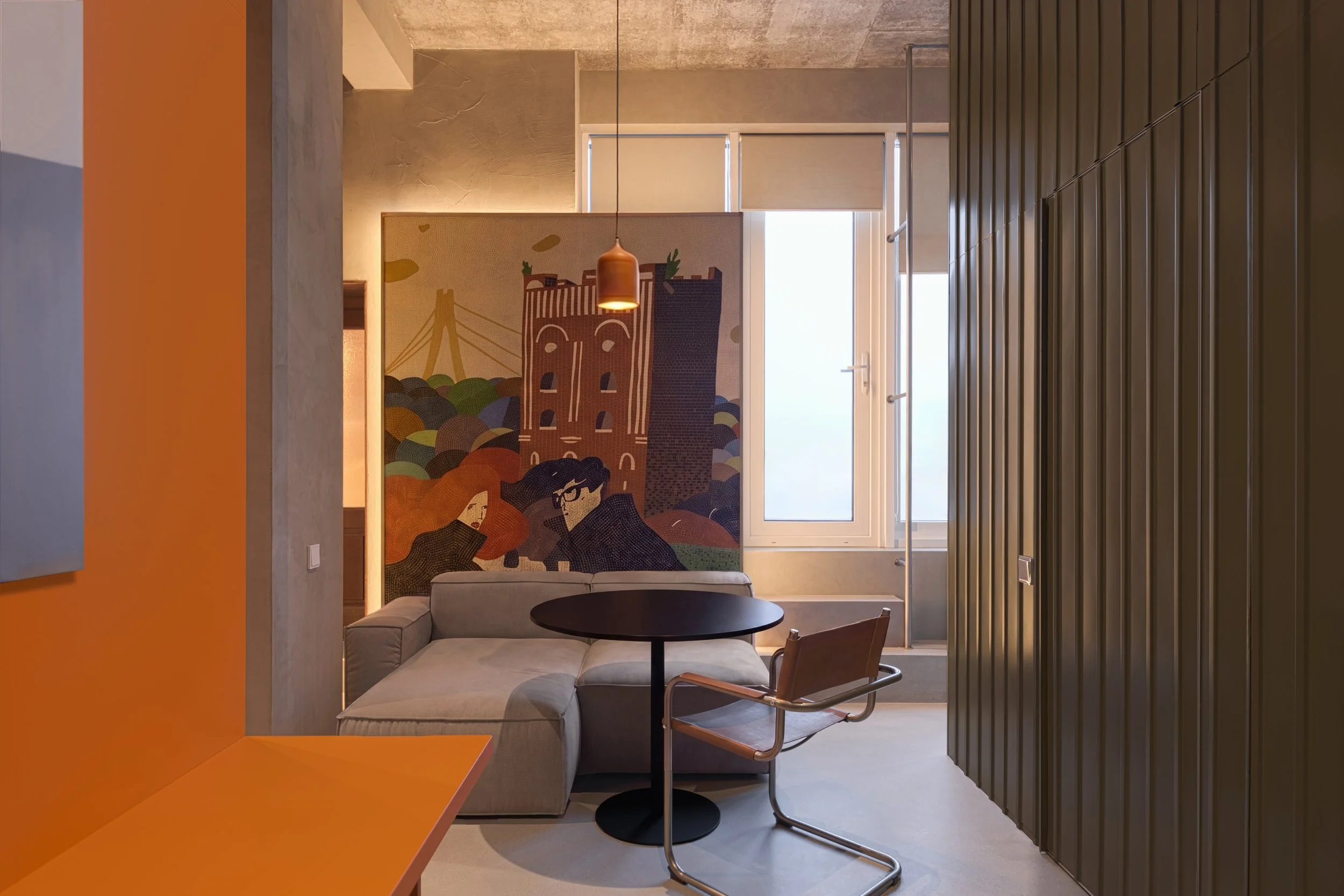
INDUSTRIAL PODIL

[industrial heritage, factory district, loft aesthetics, brick, monumental volumes, structure.]

Why We Chose It:

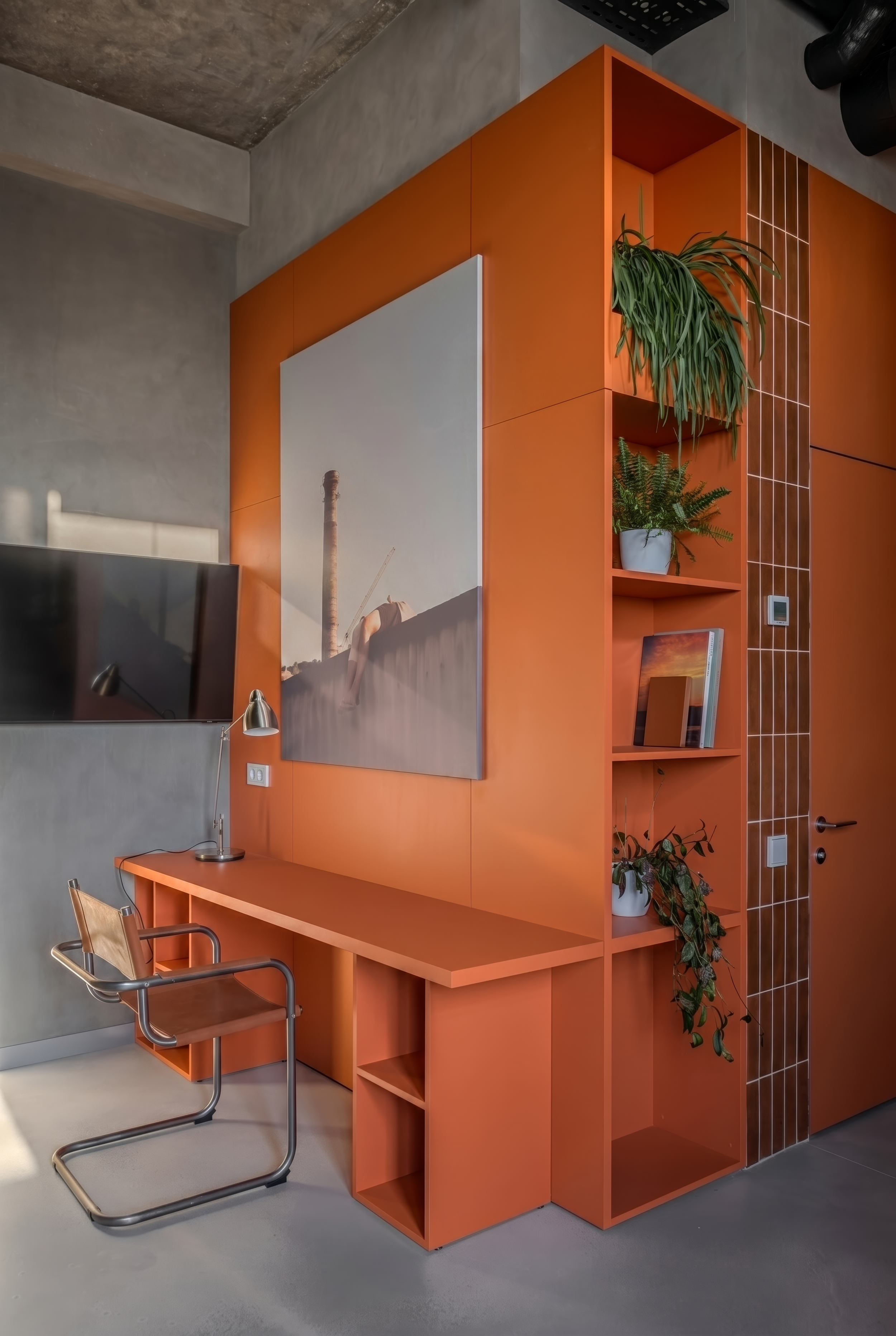
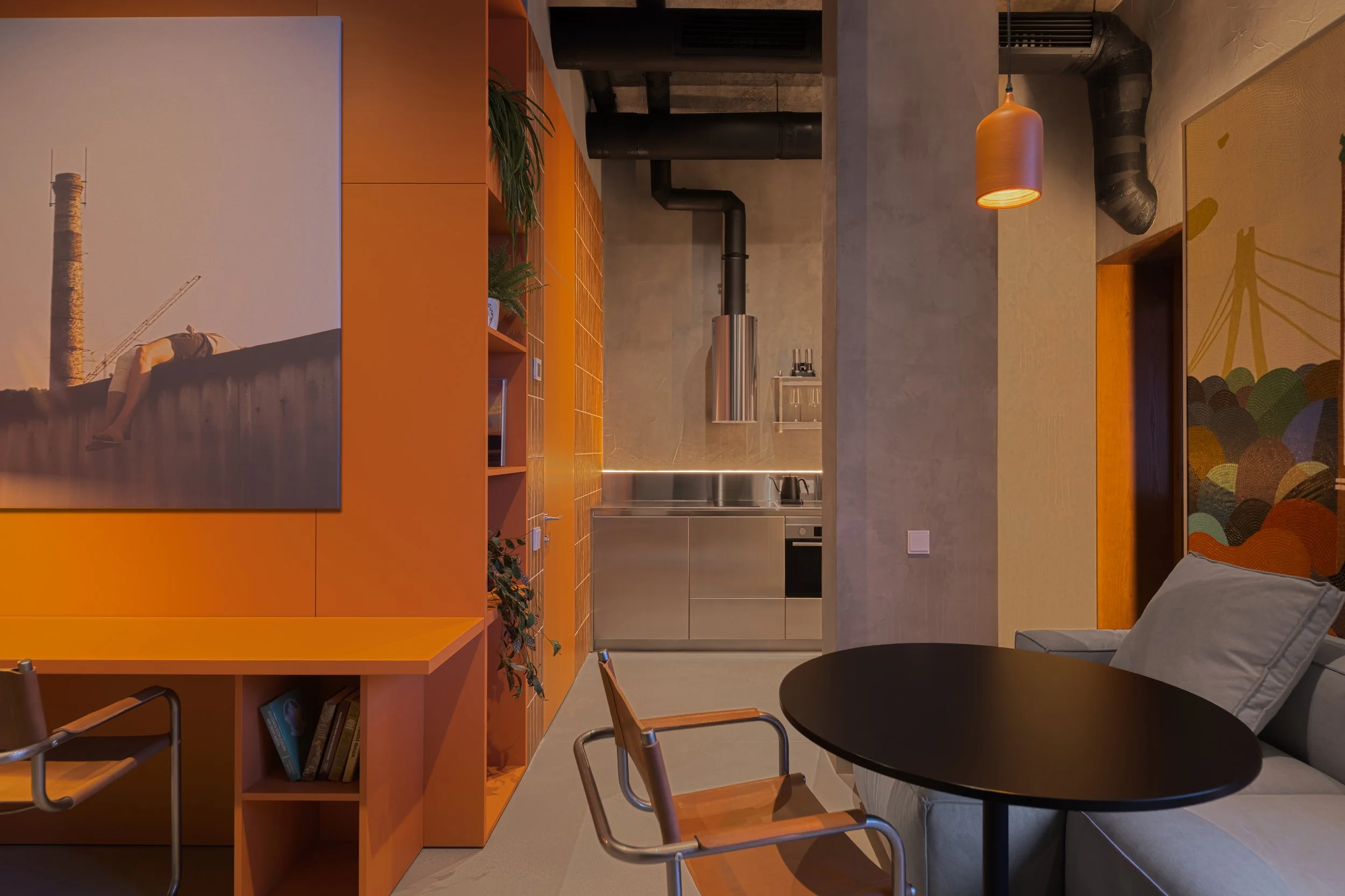
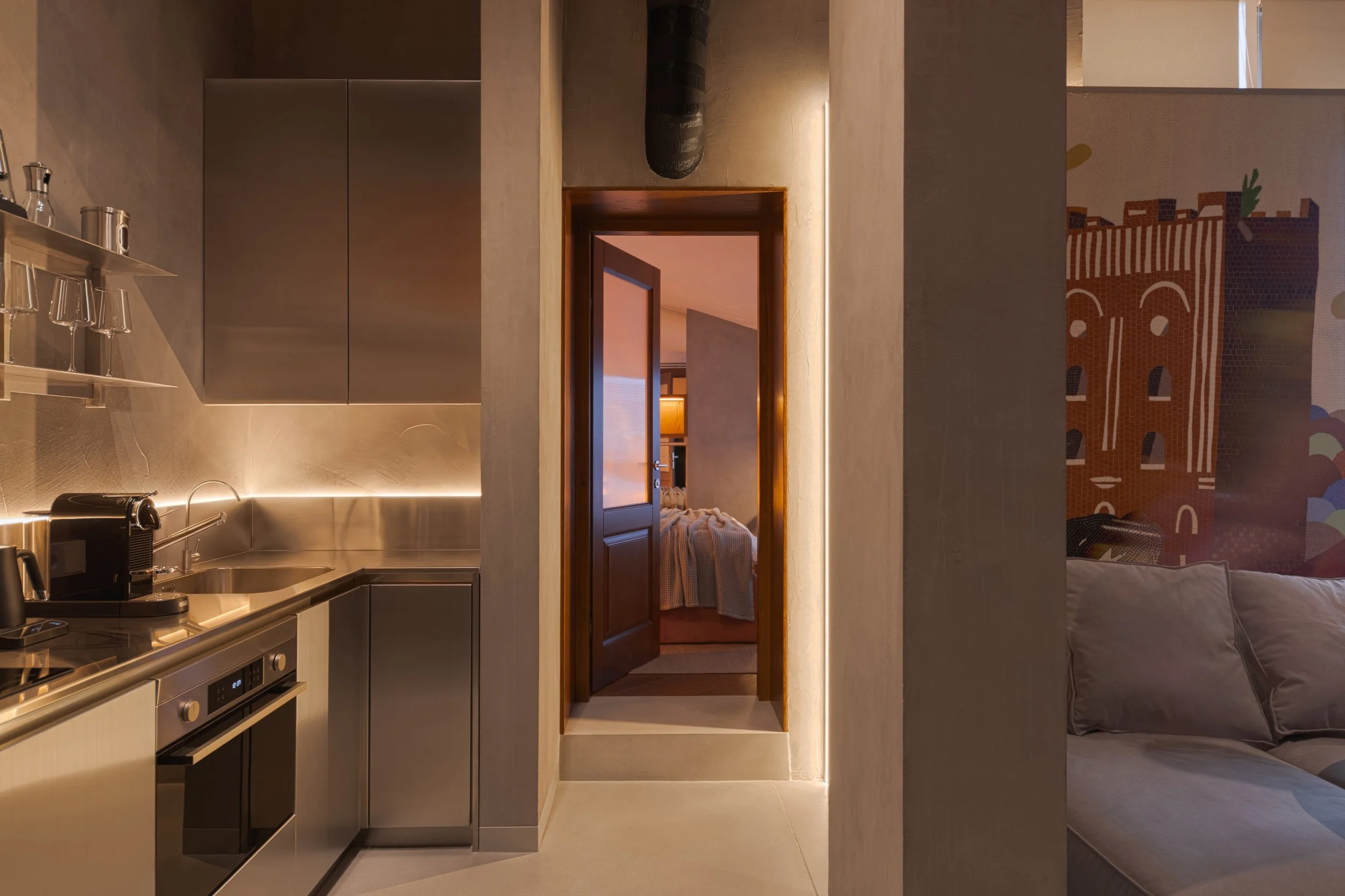
Industrial Podil is a layered and unconventional part of Kyiv, where historic architecture coexists with active factories, techno clubs, and revitalized urban spaces. This apartment reflects the district's complexity and rhythm. Its split-level layout, exposed beams, and zoning strategy provided the ideal framework for interpreting Podil as a structural map of the city.

Form:

A metric composition with clear geometry, inspired by the urban grid.

Design Features:

  • brick, concrete, microcement, and metal as the core industrial material palette;
  • a mosaic mural referencing the area's urban heritage;
  • a profiled metal wardrobe inspired by the garage structures typical of Podil;
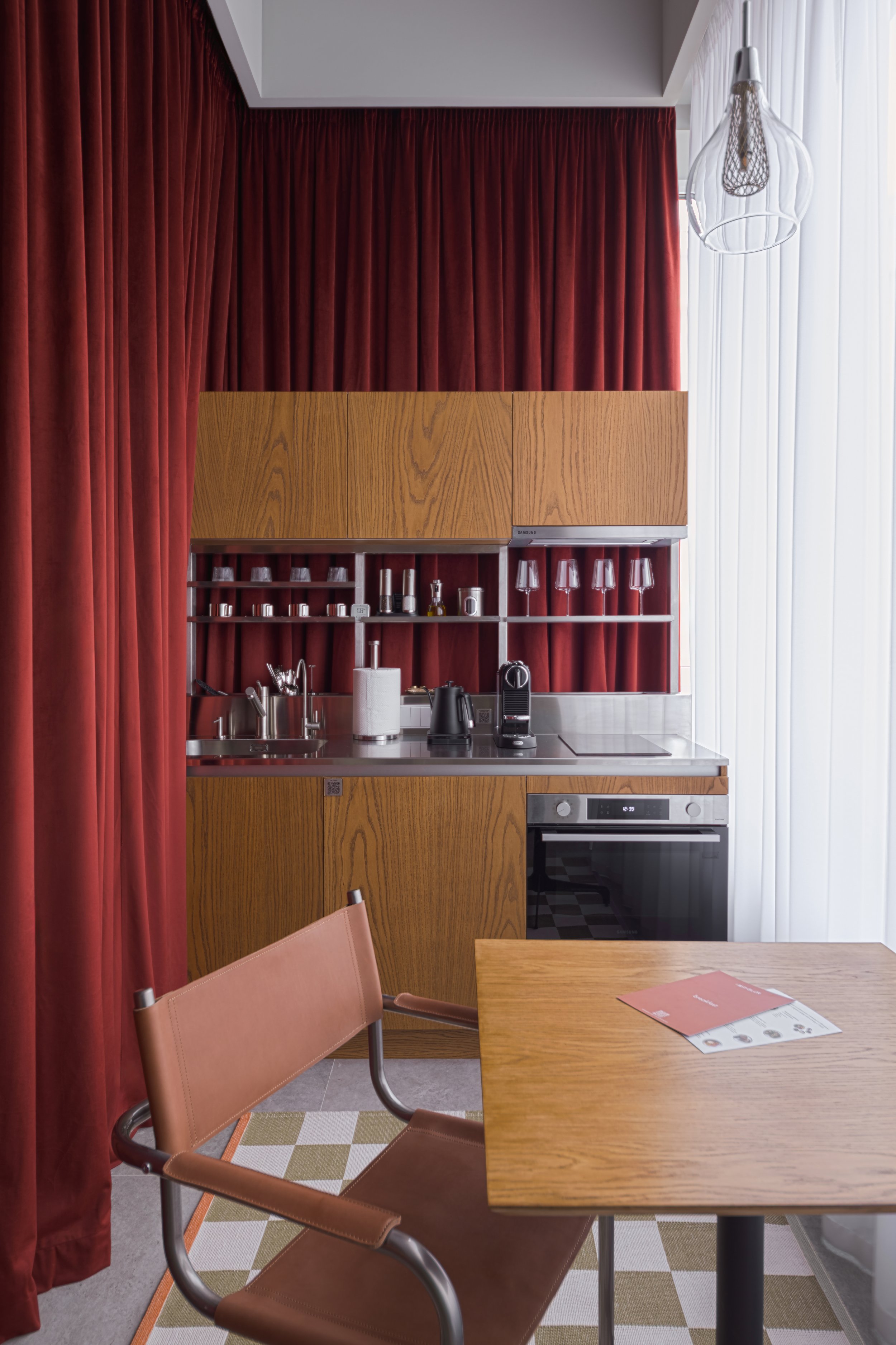
  • a stainless-steel kitchen as an interpretation of industrial production processes;
  • a large photographic composition featuring the industrial landscape of Podil.

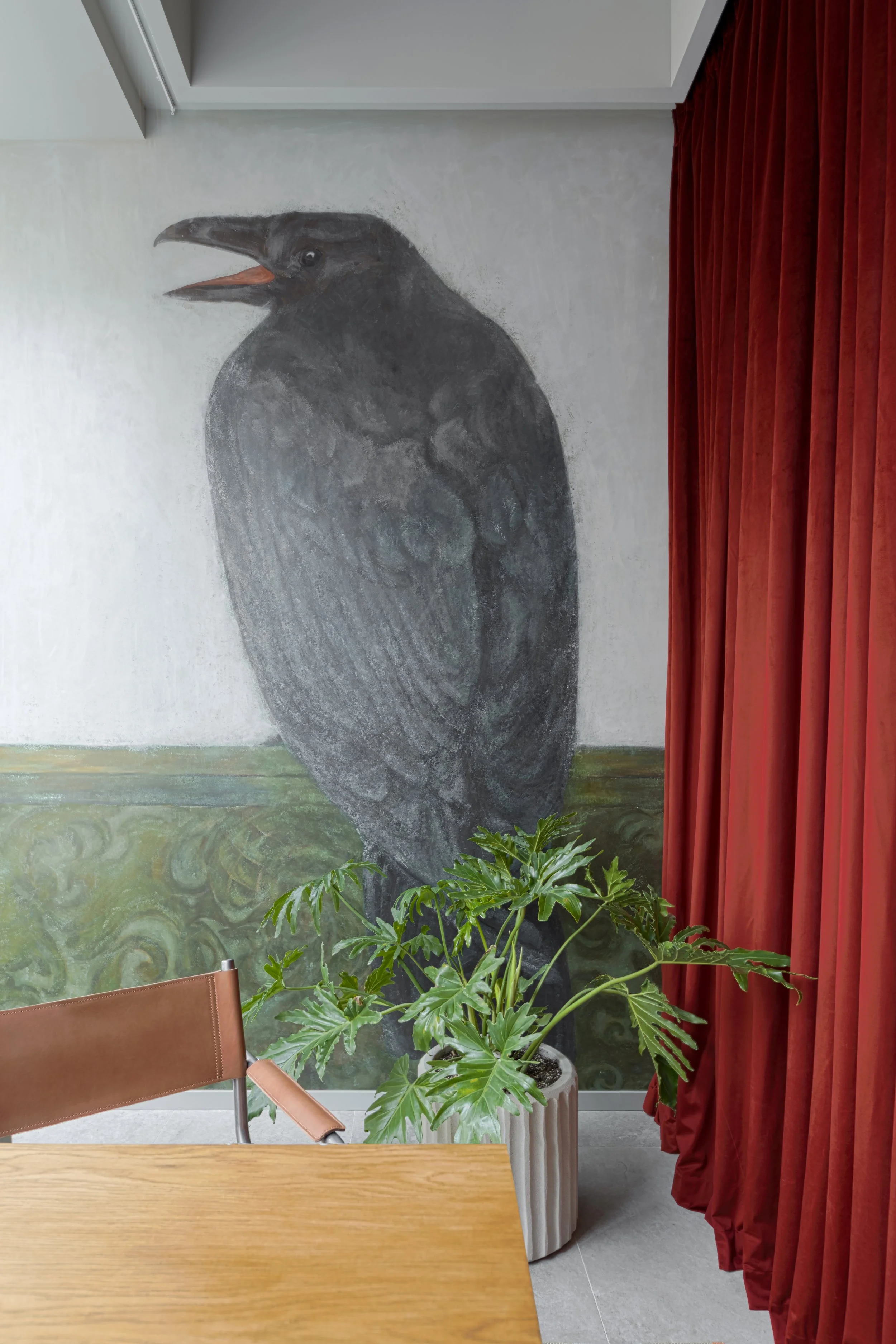
RAVEN BACKYARD

[ravens, urban courtyard, community, food culture, local gathering places.]

Why We Chose It:

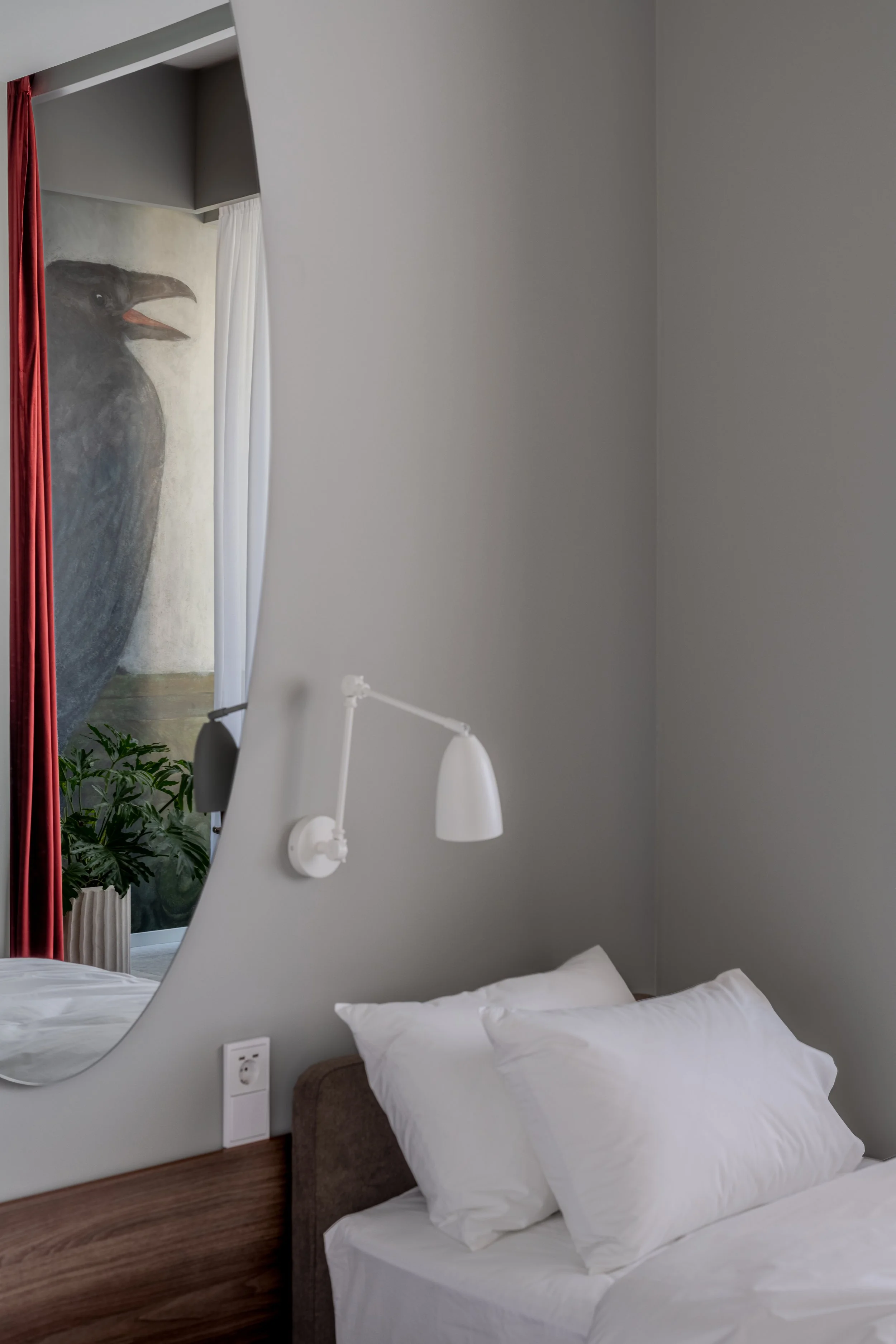
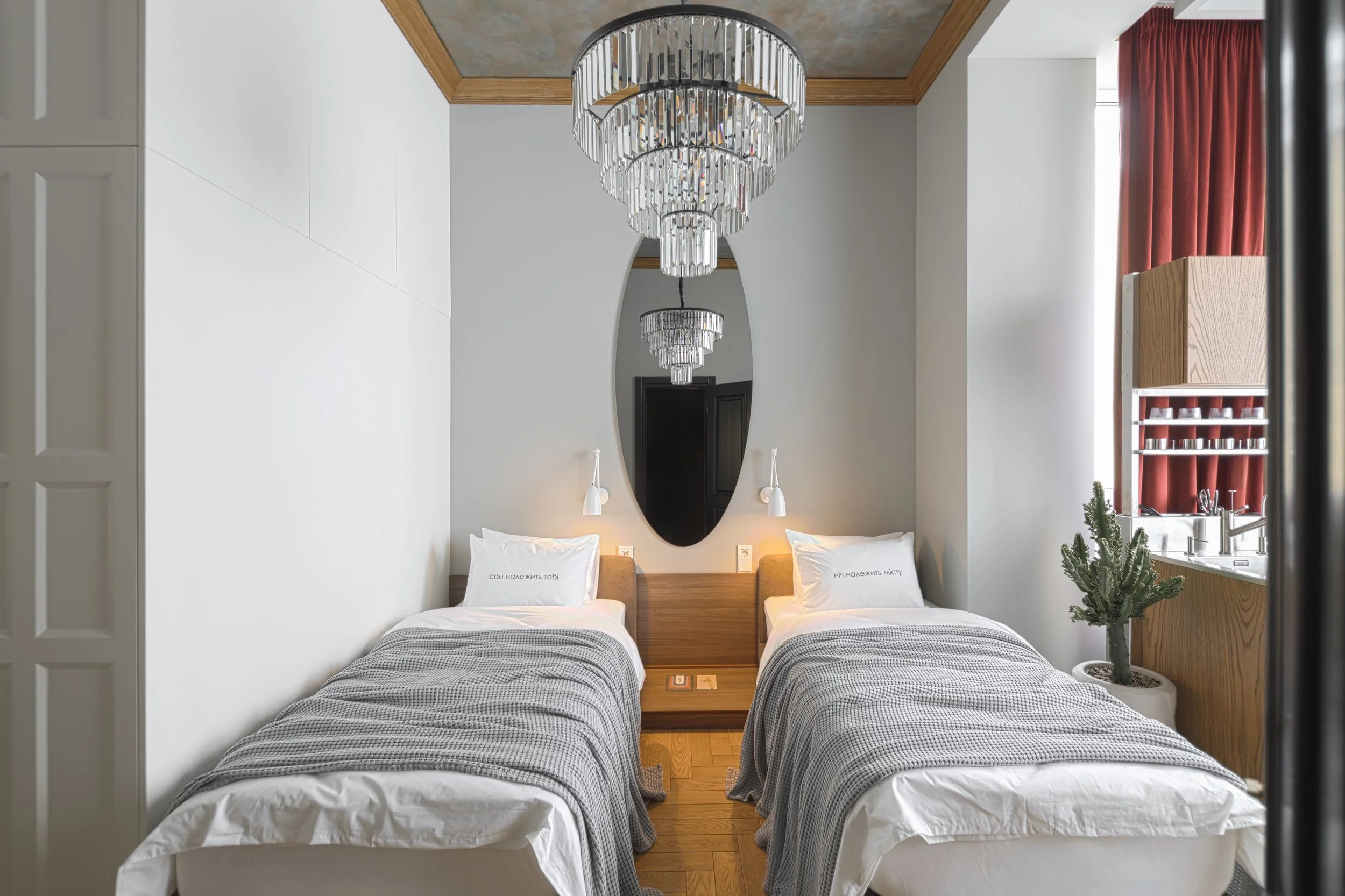
The courtyard at 9 Reitarska Street is one of Kyiv's most recognizable urban spaces, bringing together cafés, local communities, and the iconic ravens that have become part of its identity. This apartment celebrates the informal side of city life and the hidden social spaces that shape Kyiv's character.

Form:

Clear geometry inspired by the structure of an enclosed urban courtyard.

Design Features:

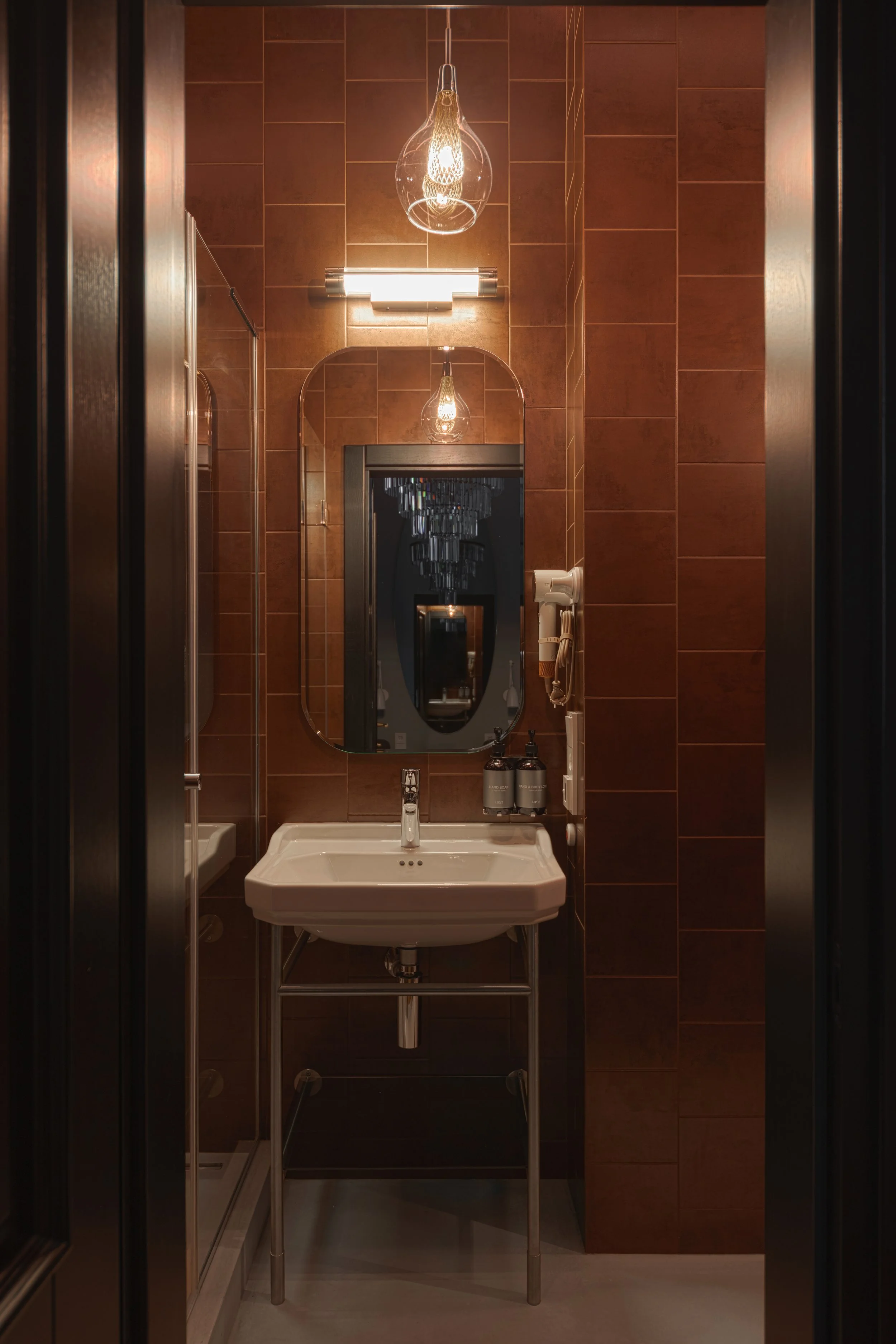
  • a crystal chandelier and decorative wooden moldings referencing recognizable elements of the original courtyard;
  • a wall art featuring the iconic raven;
  • wood, parquet flooring, and velvet, creating a balance between urban character and domestic comfort;
  • a contrast between the openness of the courtyard and the intimacy of the interior.

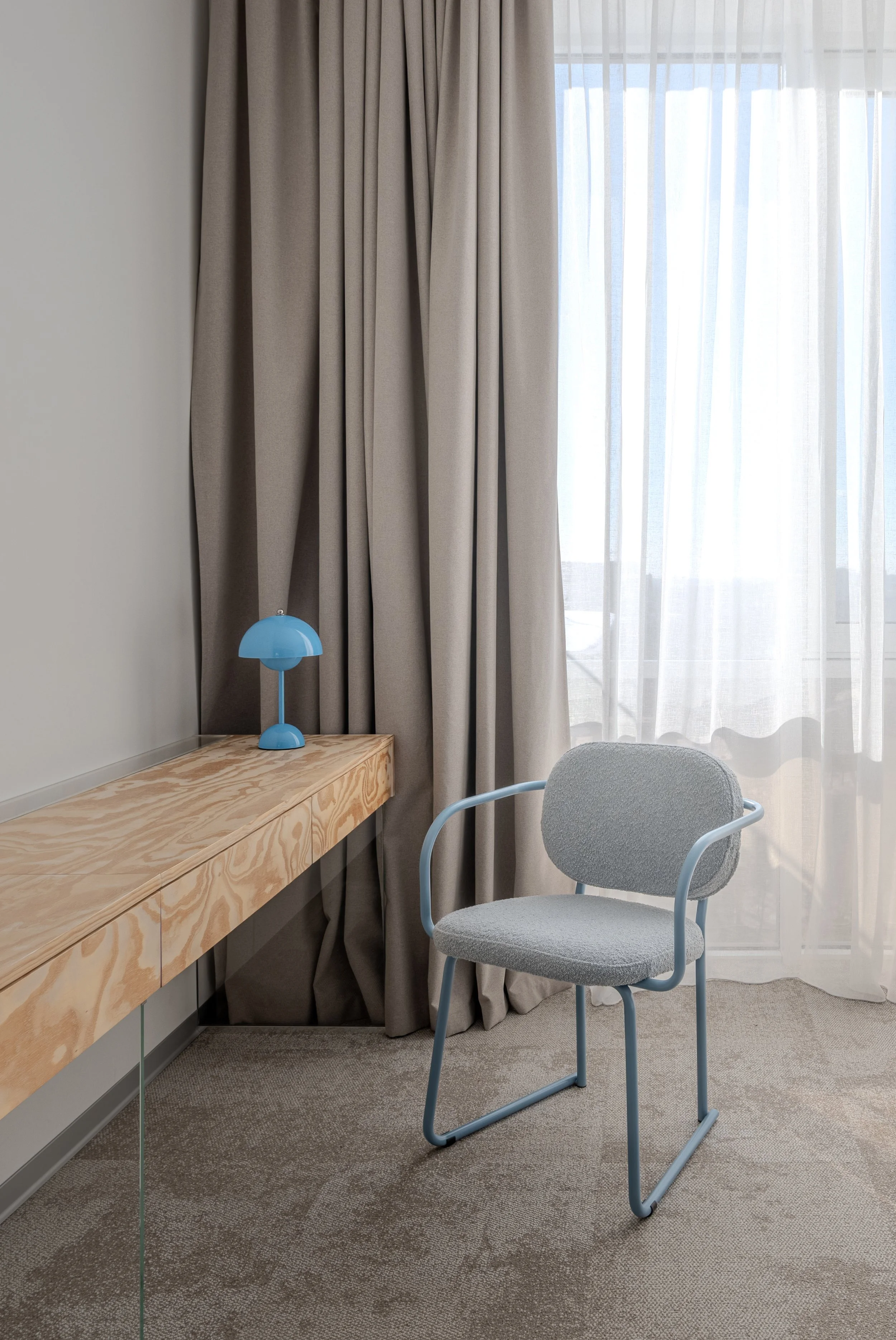
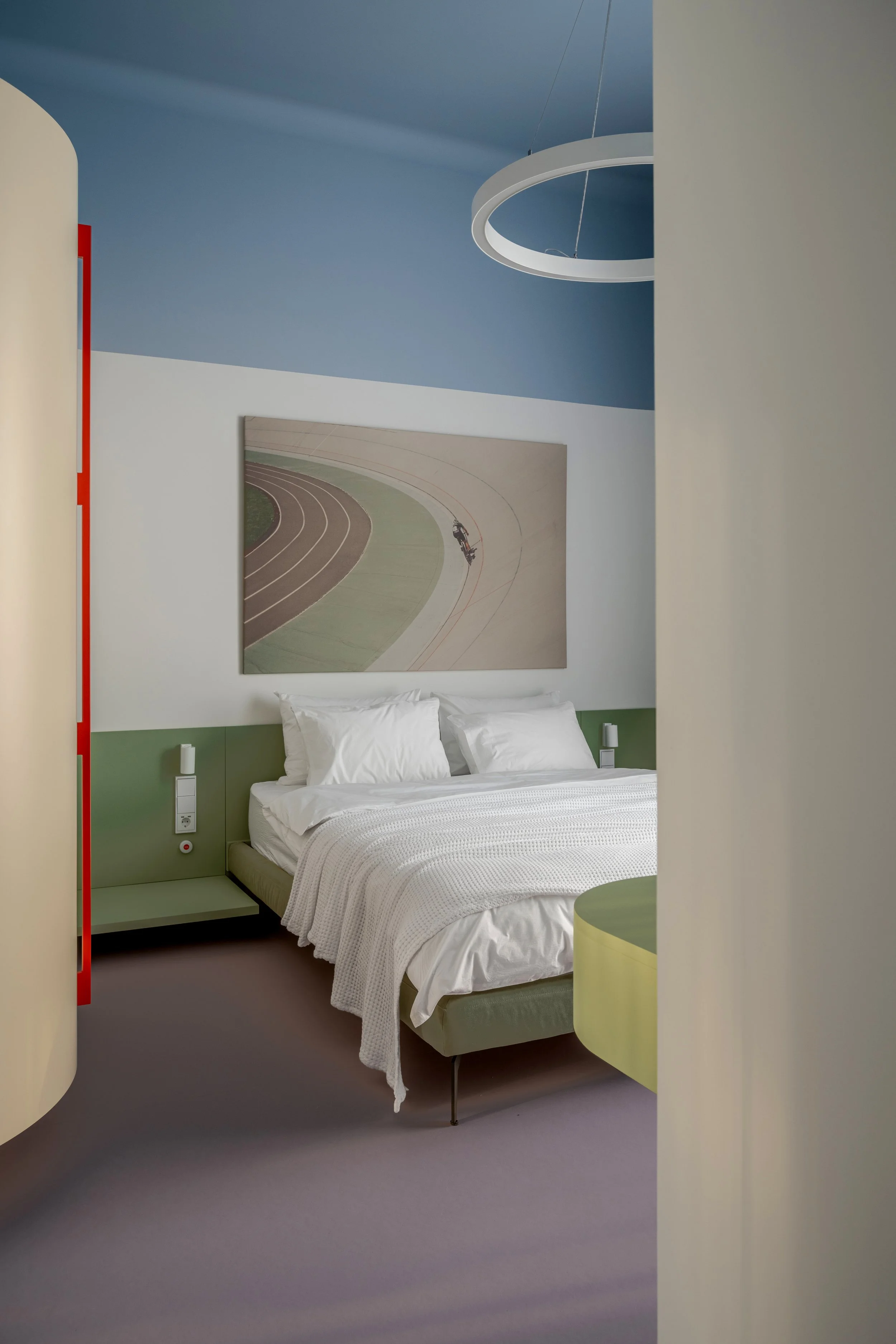
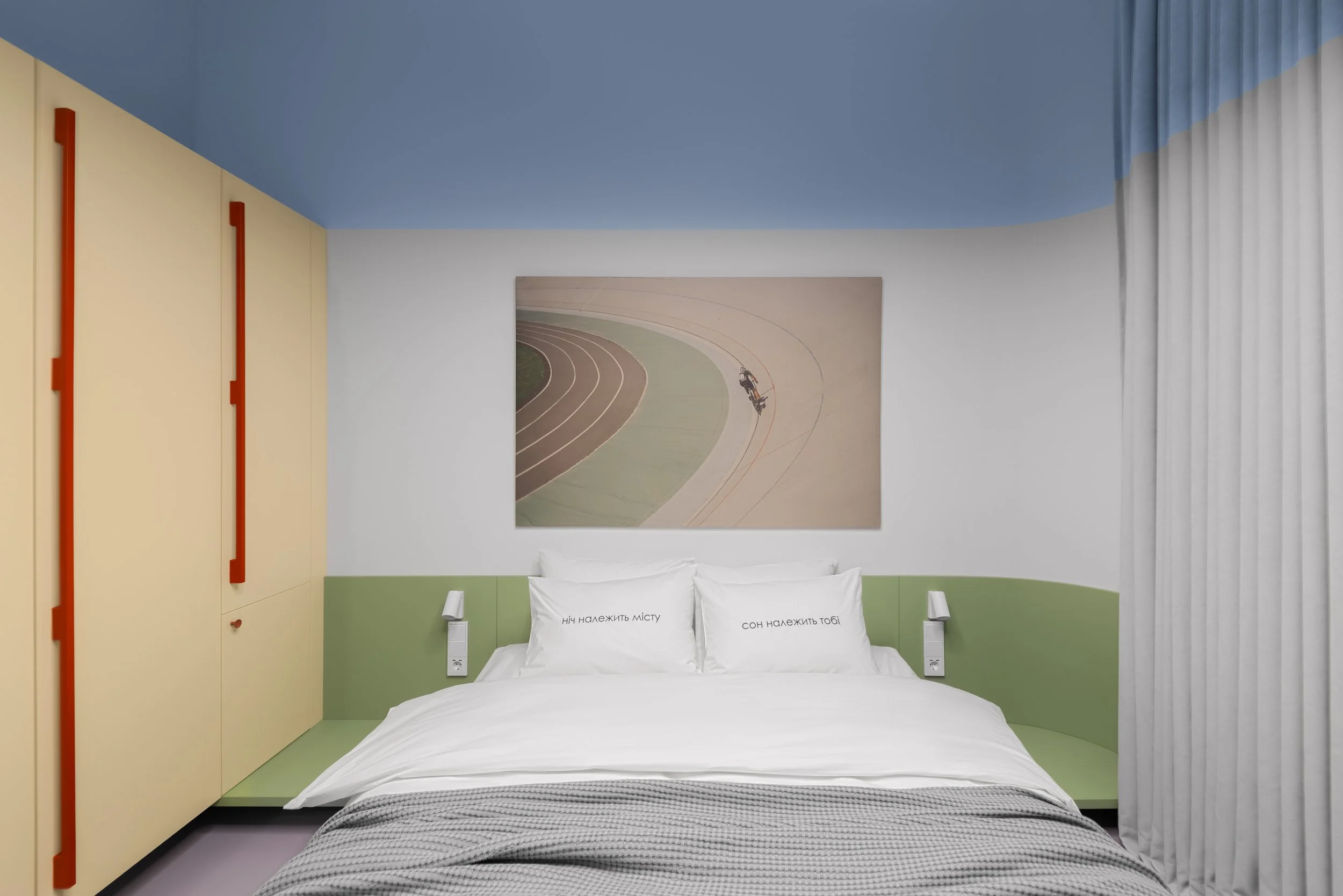
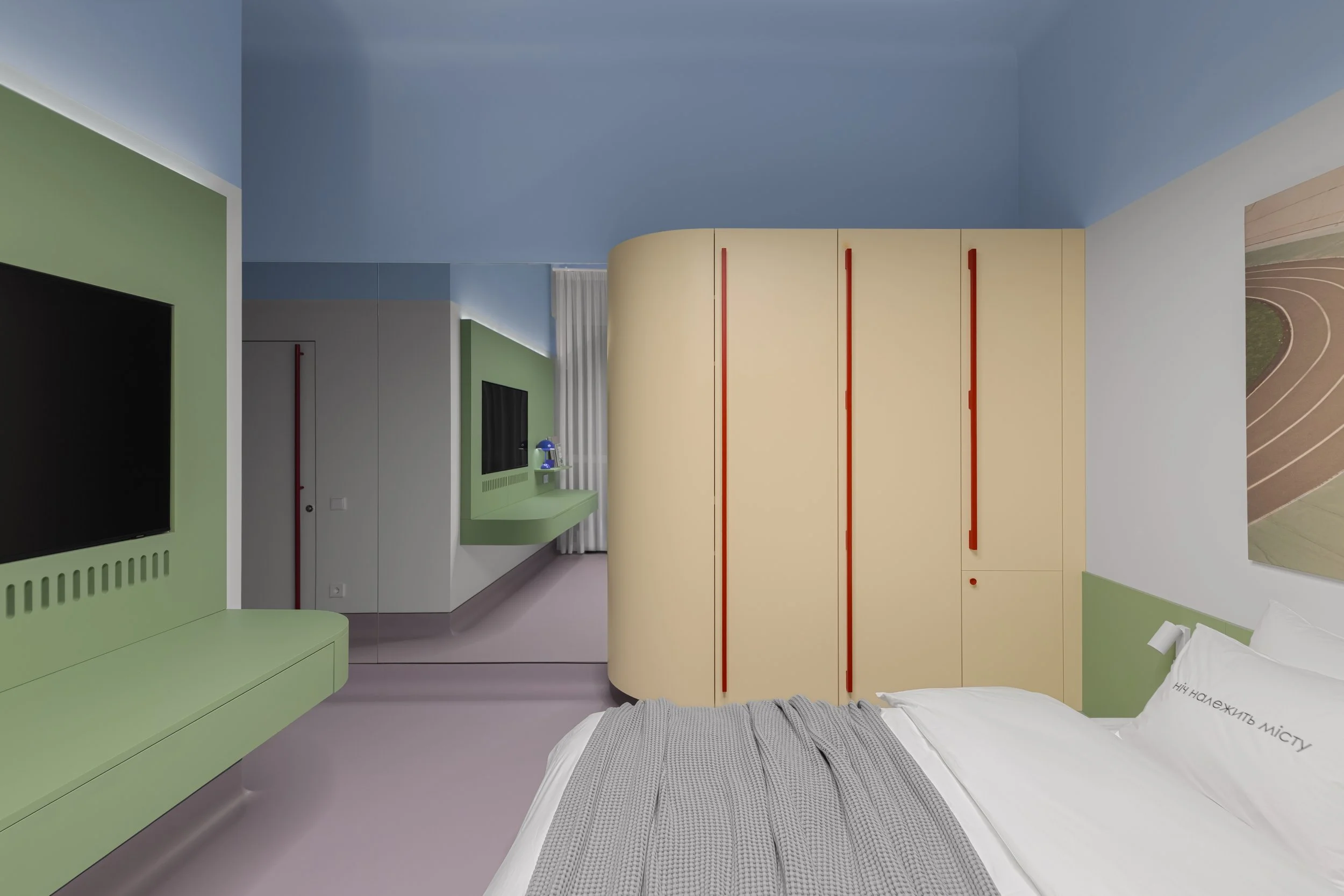
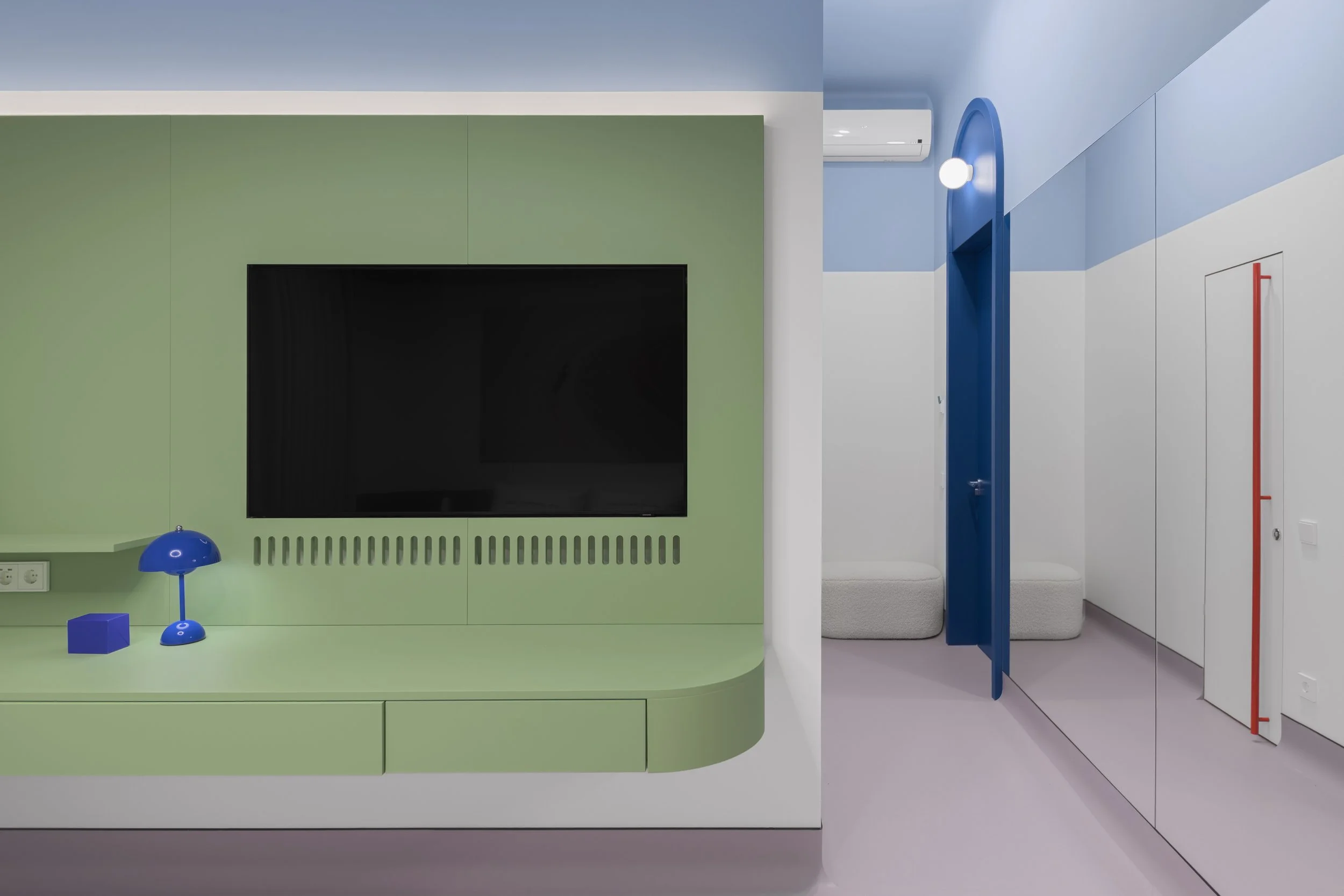
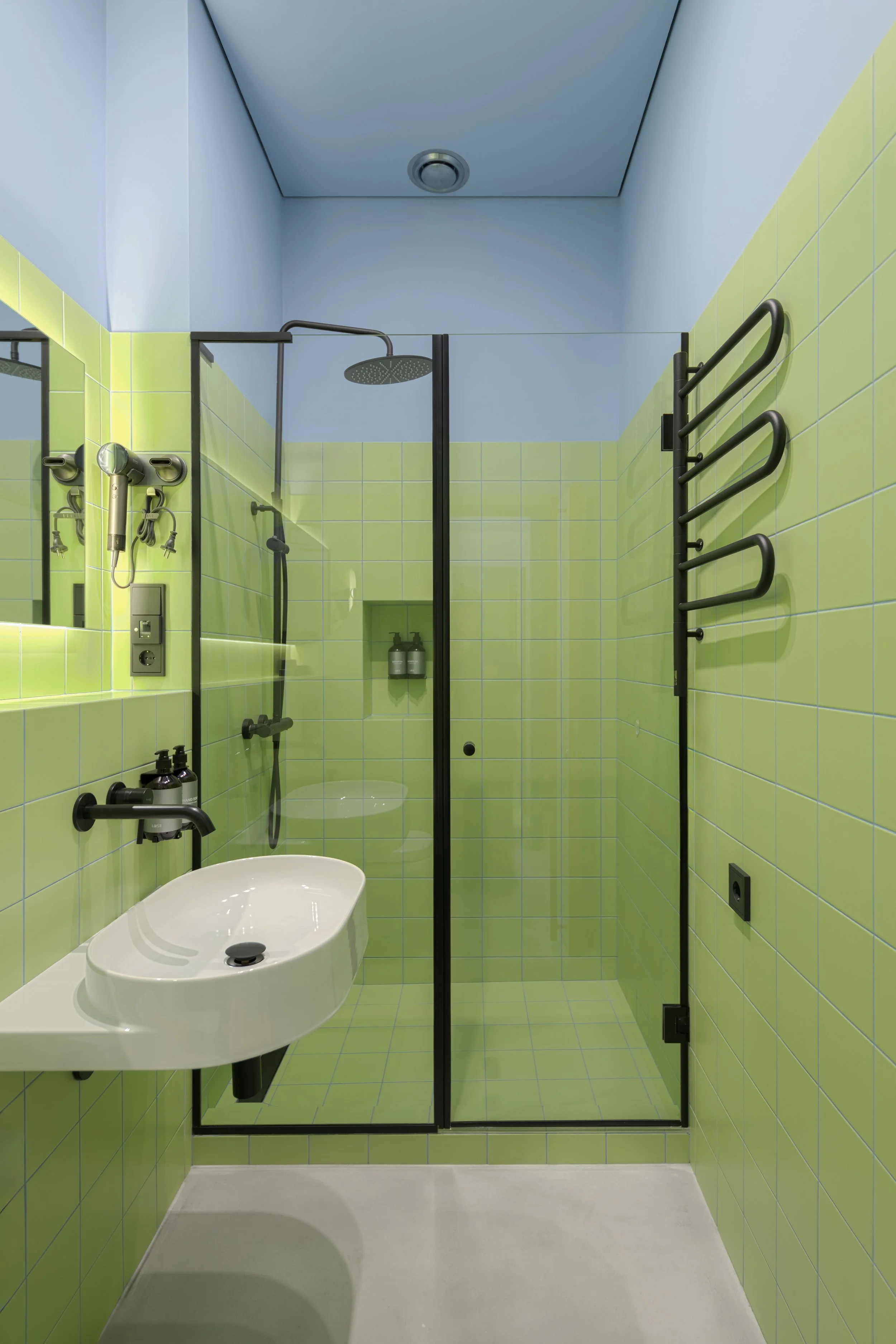
VELODROME

[movement, sport, dynamism, speed, minimalism, energy.]

Why We Chose It:

The Kyiv Velodrome is one of Europe's oldest cycling arenas and a landmark of the city's sporting culture. The apartment follows the same conceptual logic: continuous movement along a circular route and a single uninterrupted spatial trajectory.

Form:

Fluid, dynamic, and constantly in motion.

Design Features:

  • seamless transitions between floor, walls, and ceiling;
  • graphic lines inspired by velodrome track markings;
  • bold color accents in green, blue, and red;
  • a custom blue chair referencing the seating of the Velodrome stands;
  • vinyl flooring inspired by sports surfaces;
  • a photographic artwork serving as a direct visual reference to the Velodrome itself.
 

THIRD FLOOR + MEZZANINE


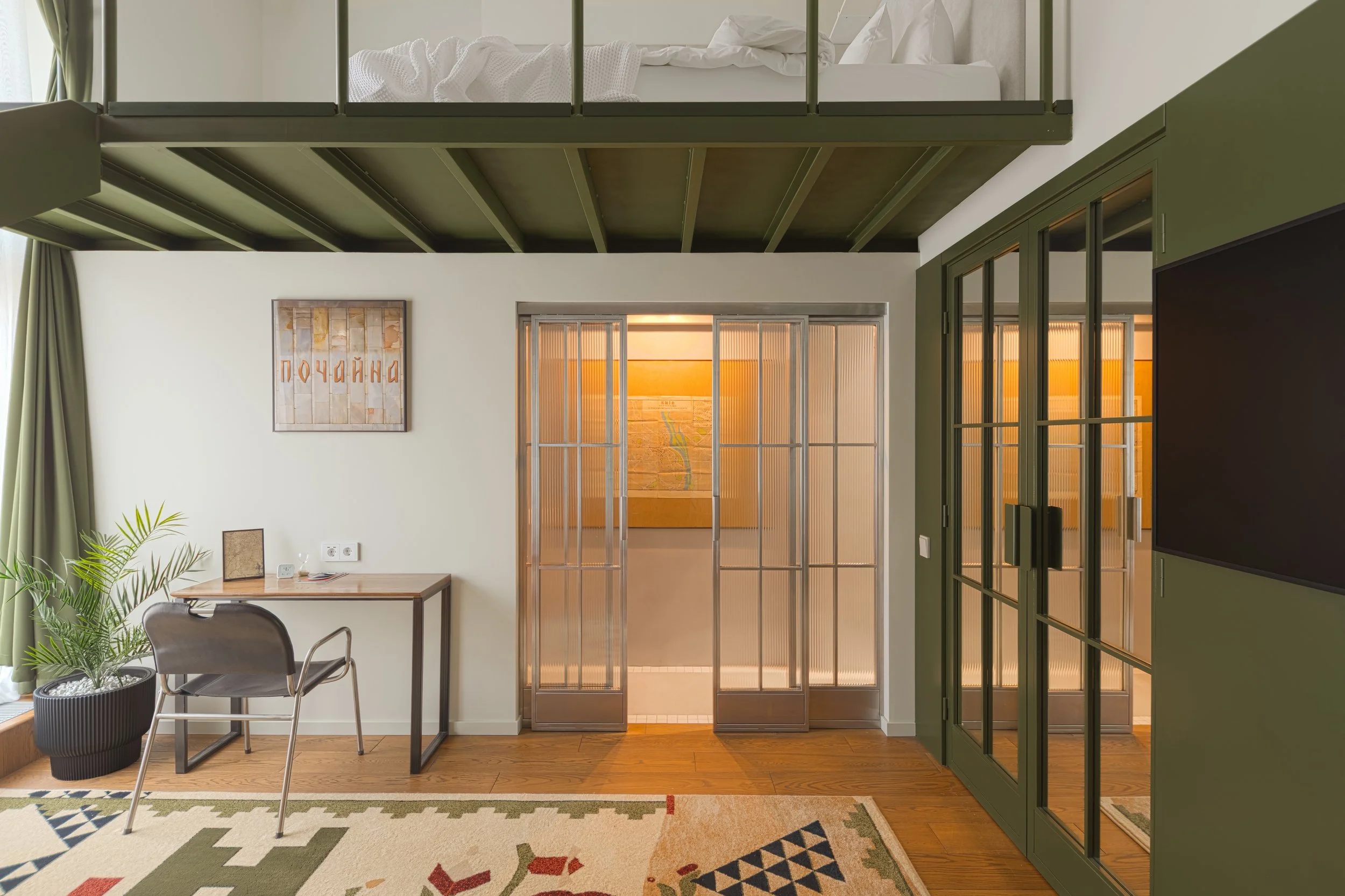
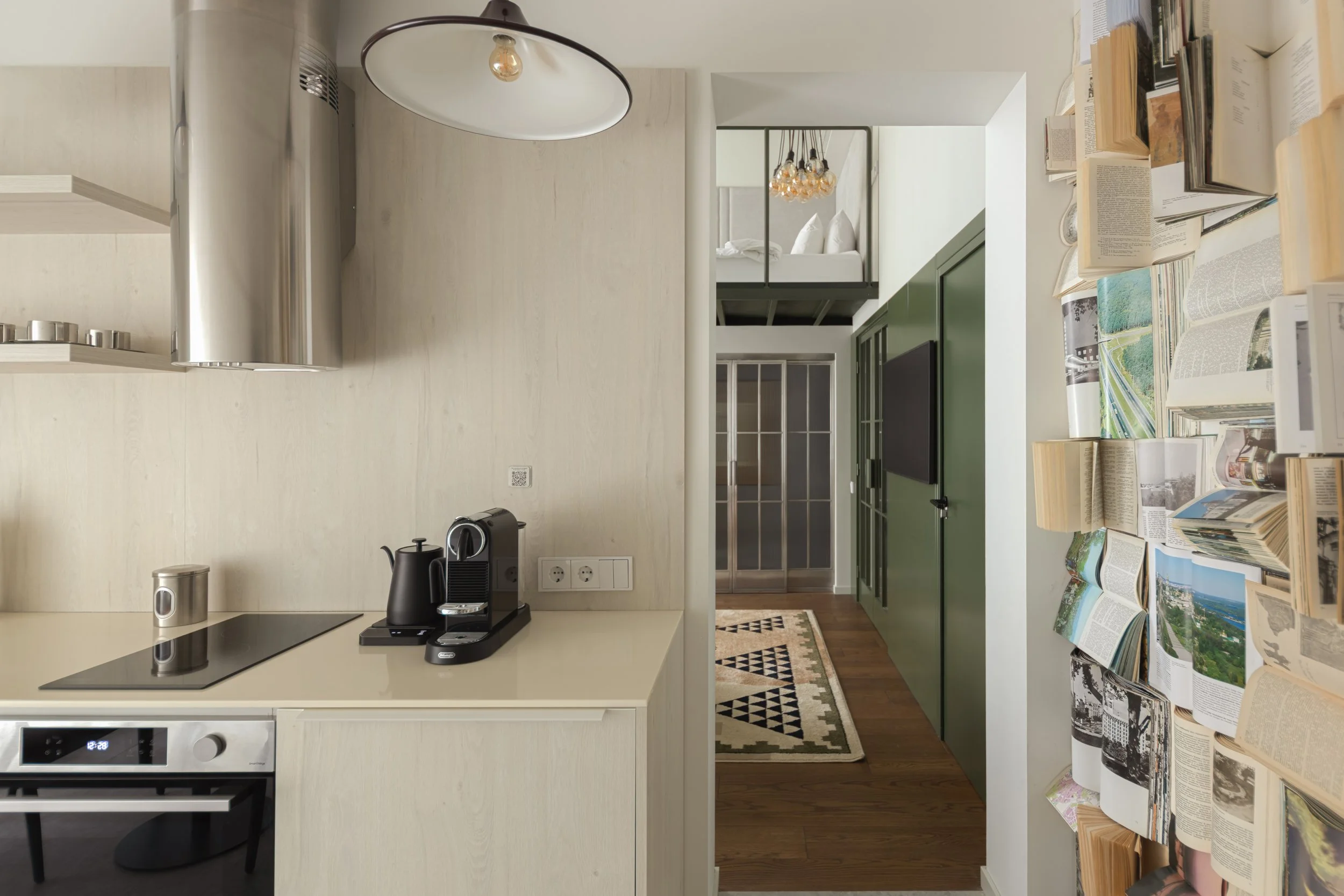
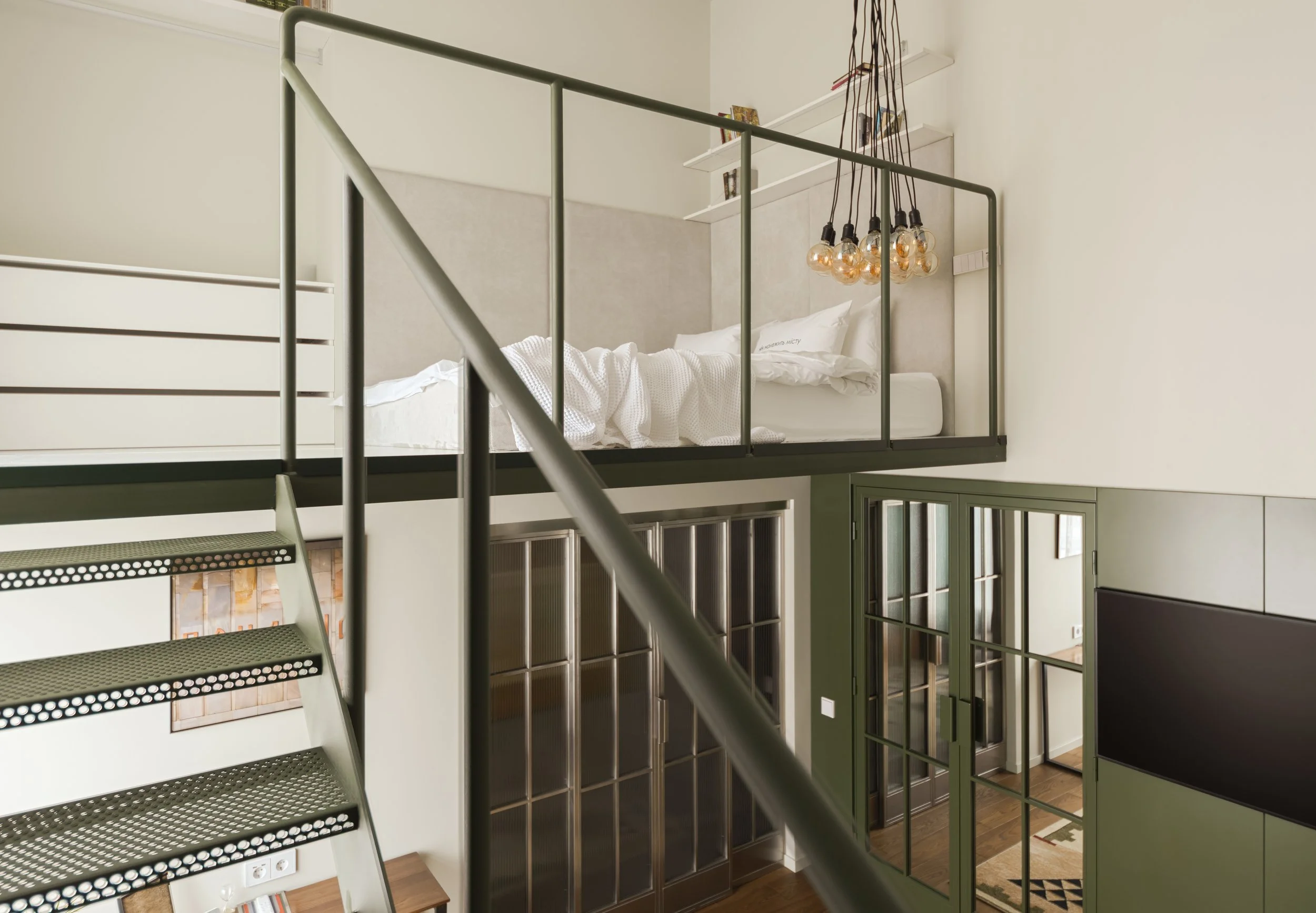
BOOK MARKET

[books, vintage objects, antiques, layered structures, knowledge, marketplace.]

Why We Chose It:

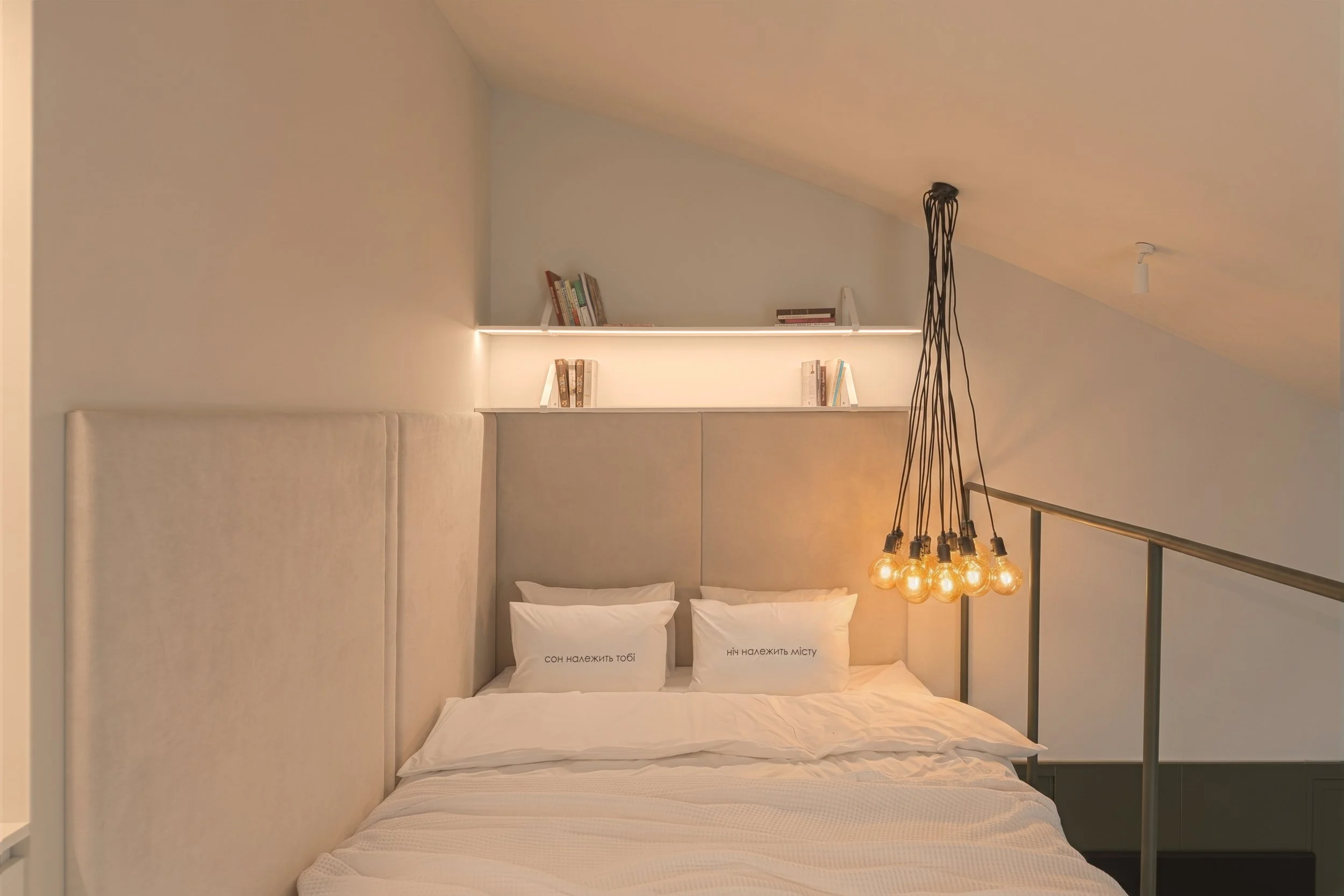
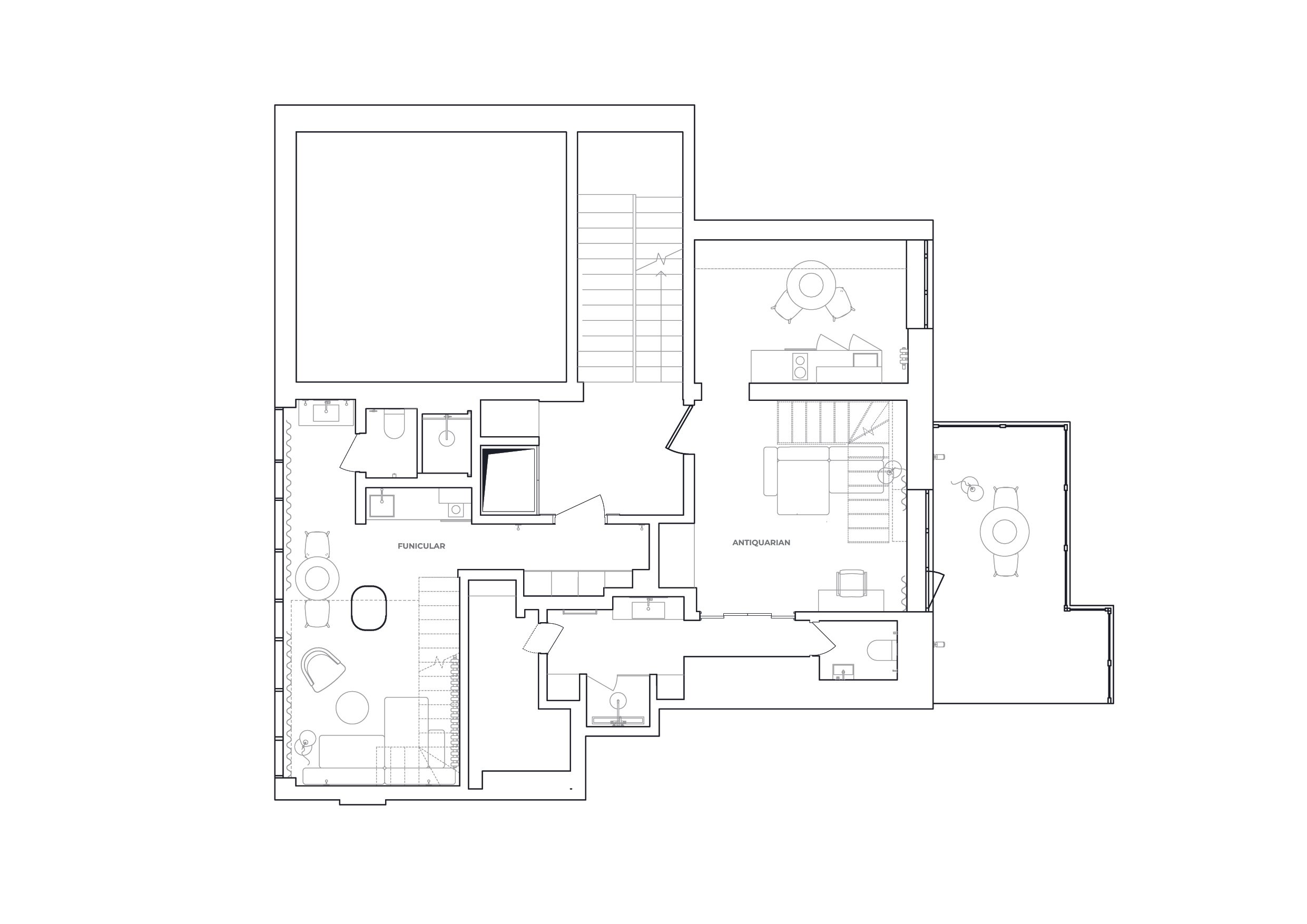
The Book Market is one of Ukraine's largest cultural hubs for the exchange of knowledge. Its non-linear organization, flowing rows of stalls, and diversity of content inspired the apartment's spatial concept, which features a mezzanine and a multi-level layout.

Form:

A two-level structure composed of interconnected spaces, where rooms and circulation areas flow seamlessly into one another.

Design Features:

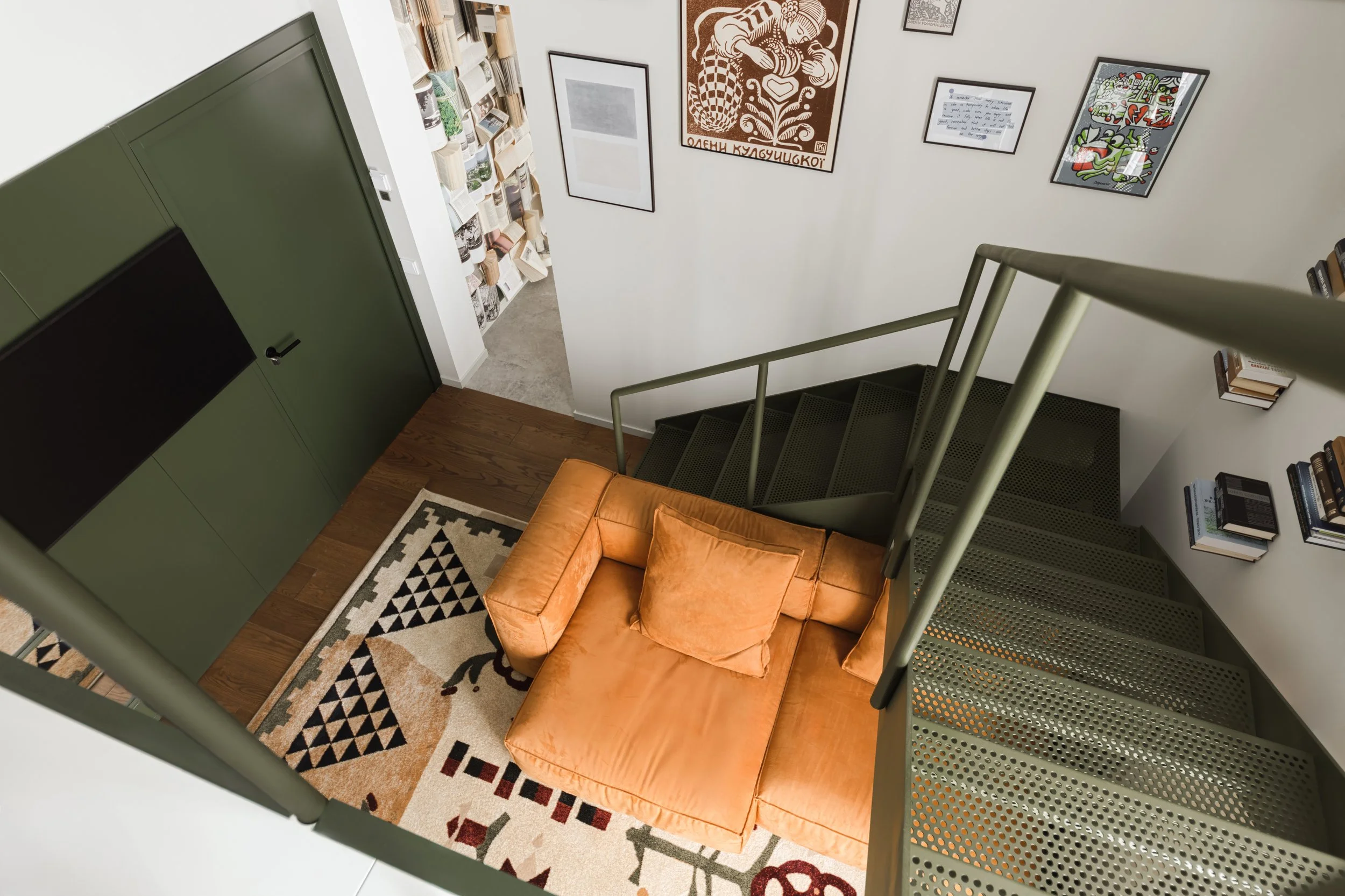
  • exposed metal structures referencing market stall frameworks;
  • timber flooring and microcement finishes inspired by the atmosphere of the marketplace;
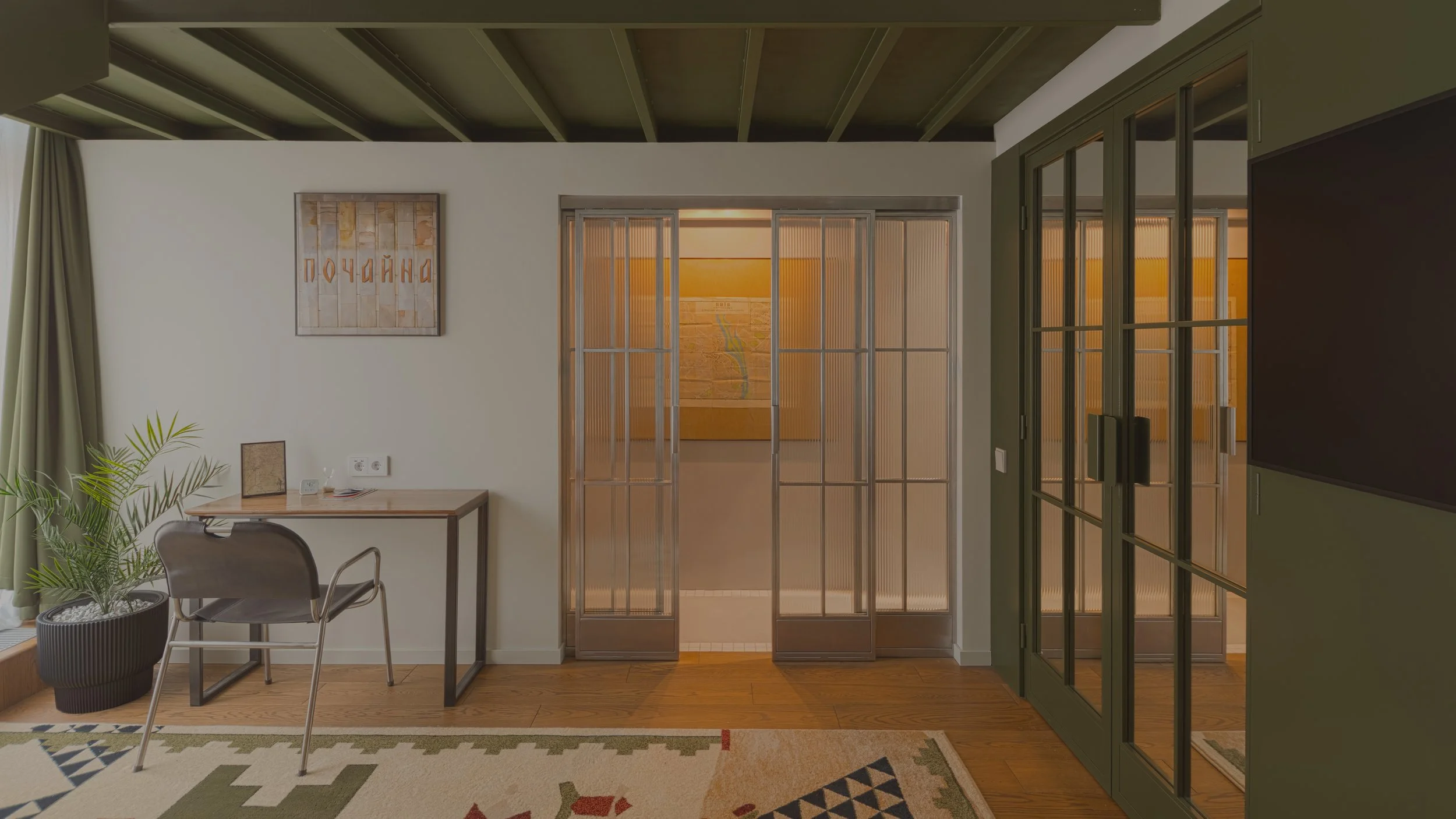
  • green mullions referencing the original market architecture;
  • a staircase and mezzanine serving as the central element of the interior, filled with books, posters, and literary finds sourced directly from the market;
  • a custom rug inspired by 18th-century folk ornaments from the Kyiv region.

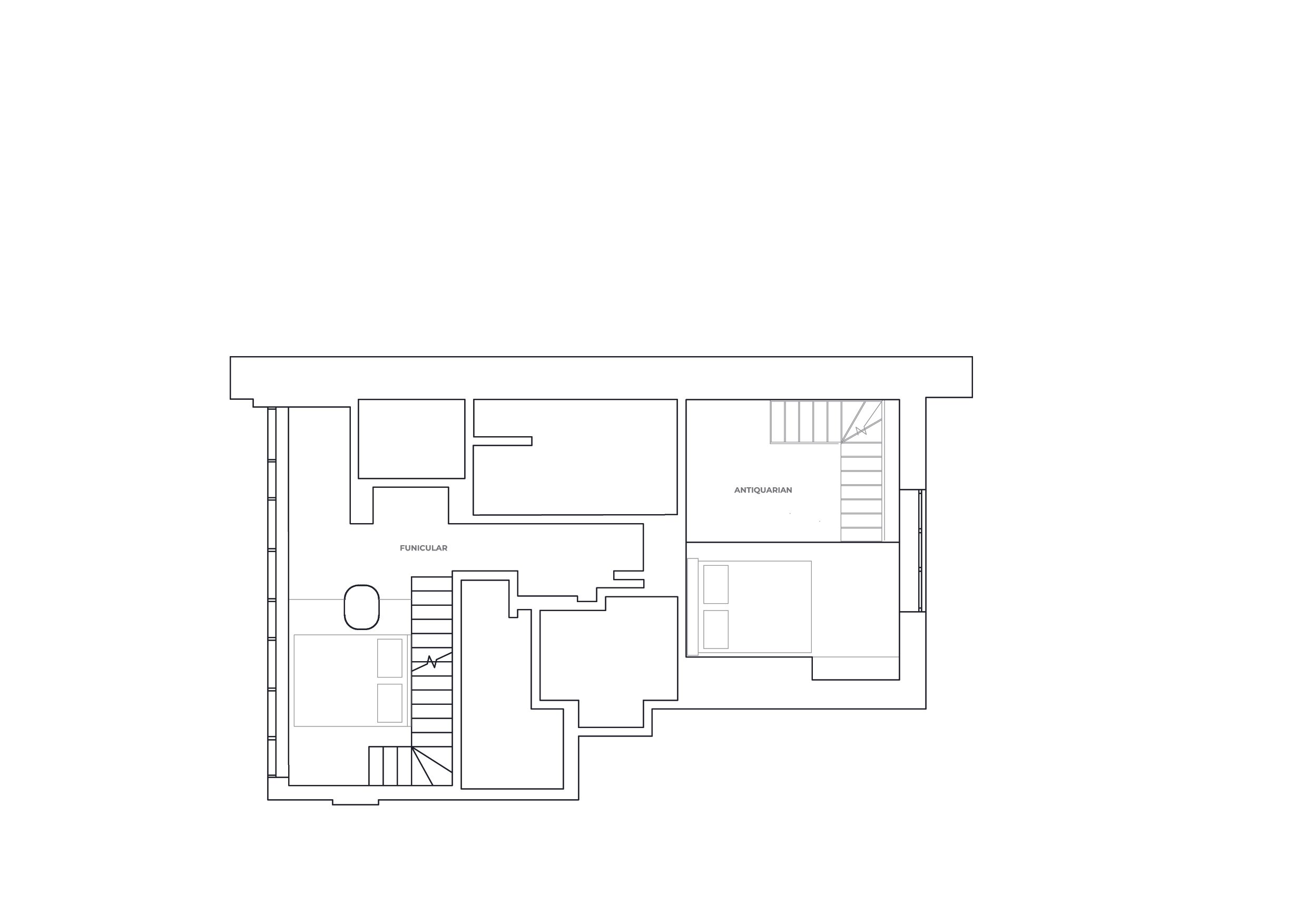
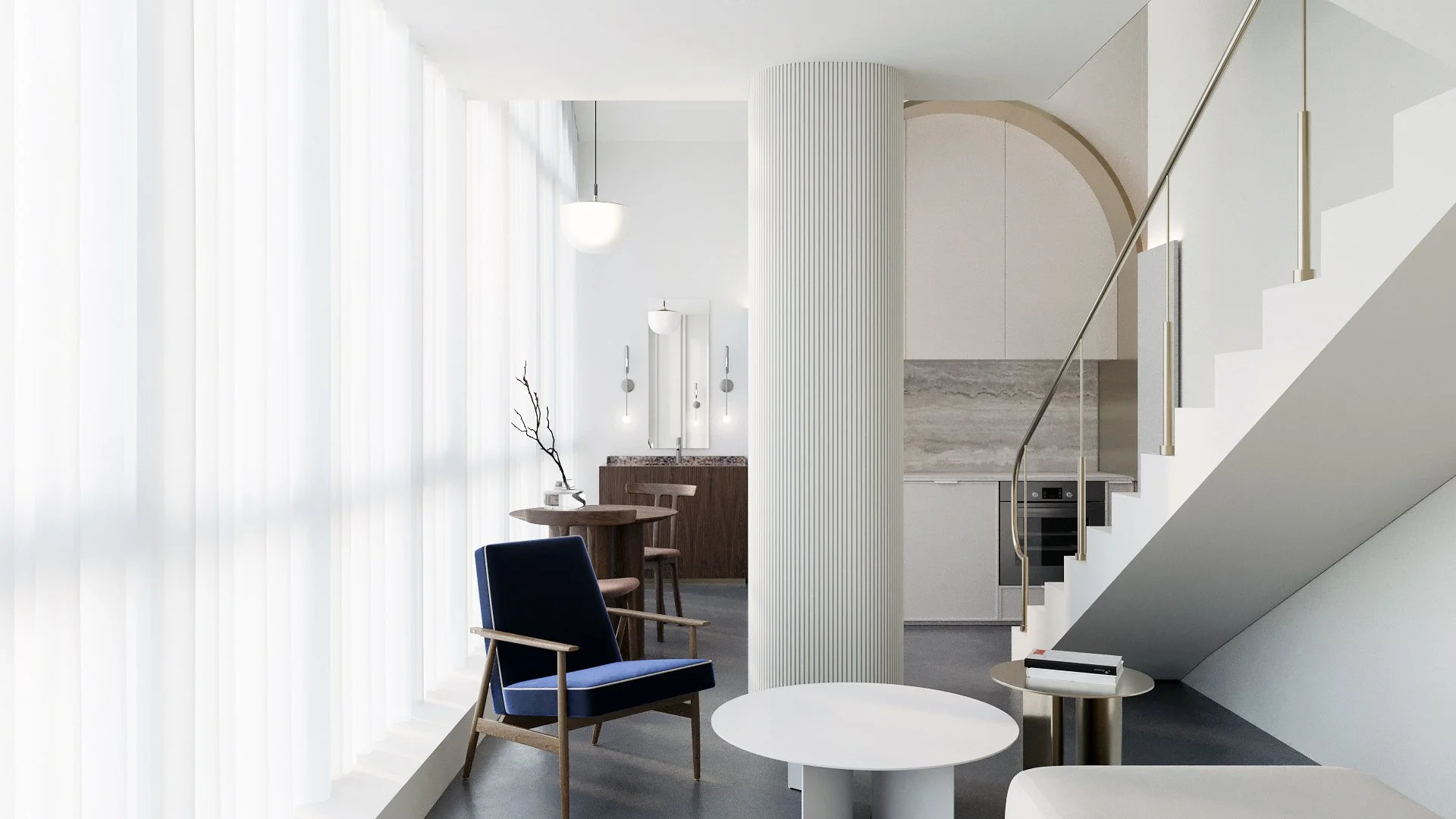
FUNICULAR

[transition, connection, movement, height, glass, metal, vertical dynamics.]


* Currently in the visualization stage and under development.

Why We Chose It:

The Kyiv Funicular connects the Upper Town with Podil, creating one of the city's most distinctive vertical routes. The apartment reinterprets this experience through a mezzanine level and a vertically organized interior with generous ceiling heights.

Form:

Soft arches combined with clear geometric forms.

Design Features:

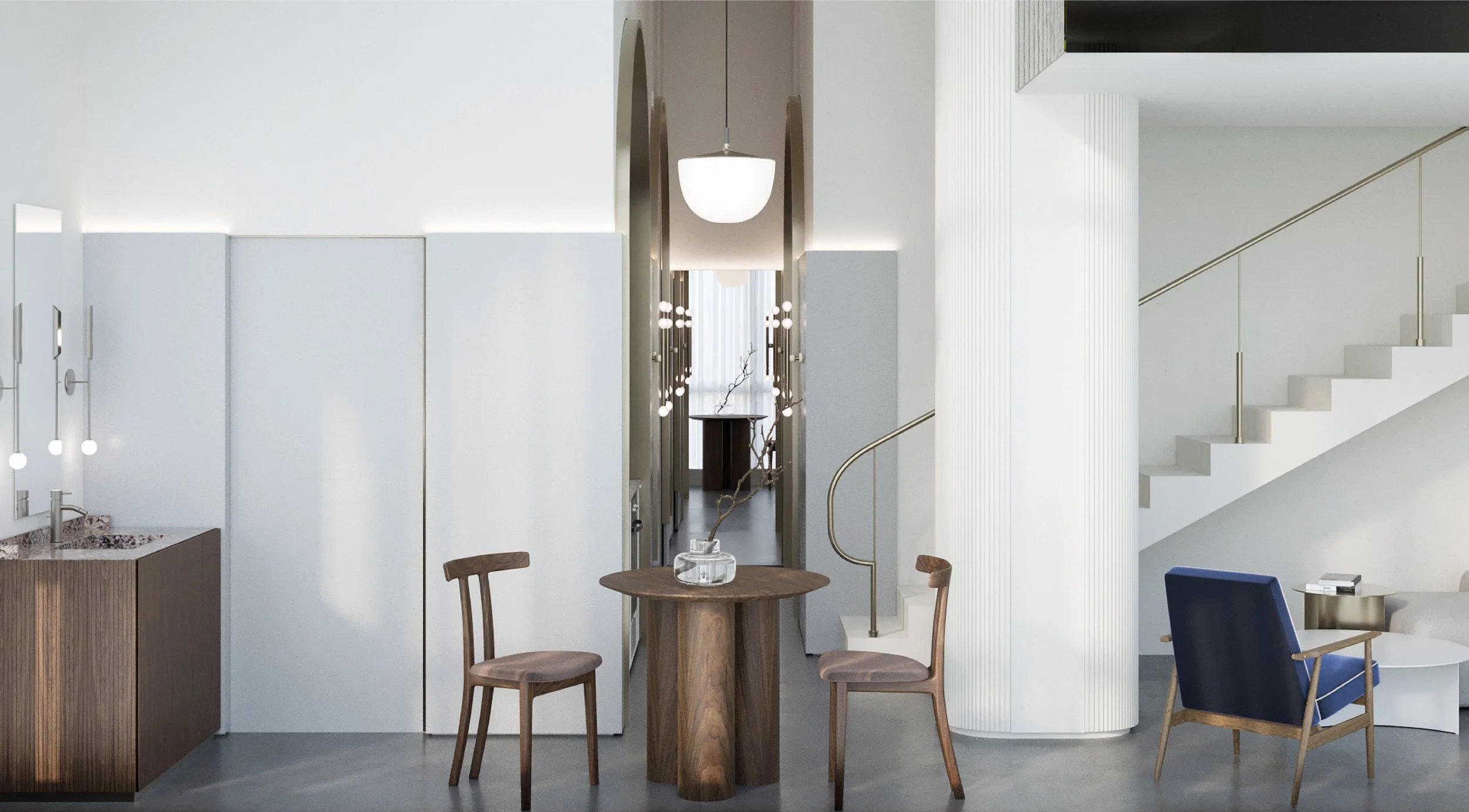
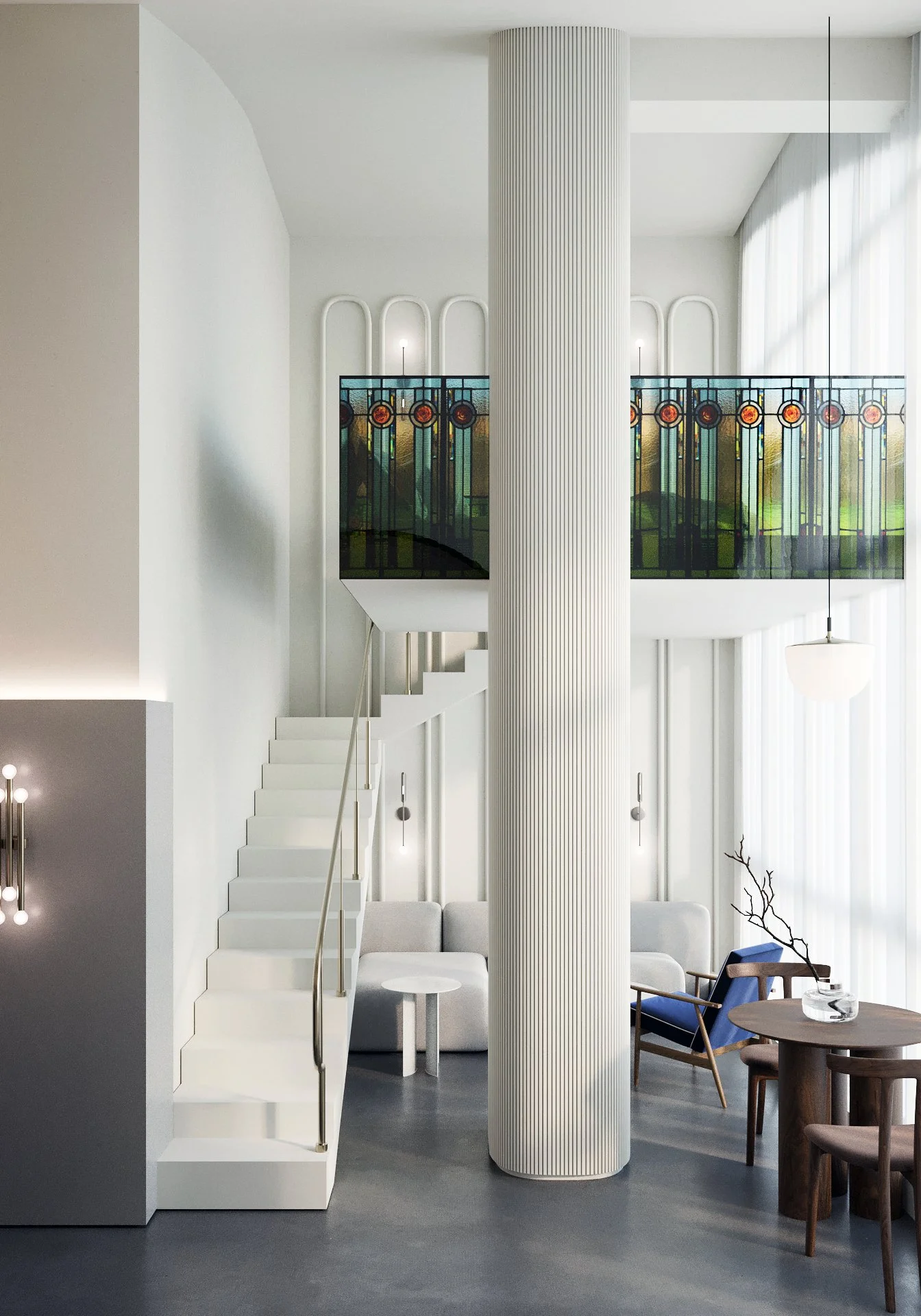
  • glass light fixtures inspired by the architecture of the funicular station;
  • integrated arched elements;
  • metal and light-toned surfaces forming the core material language;
  • an emphasis on vertical connections, openness, and transparency.


Out of every 100 guests, only one has rated our hotel 4 out of 5 stars.


We currently hold a 9.8 rating on Booking.com, and based on our guests' feedback, we're proud of that result.


The hotel is already operating successfully, with a consistently high occupancy rate that continues to exceed our expectations.

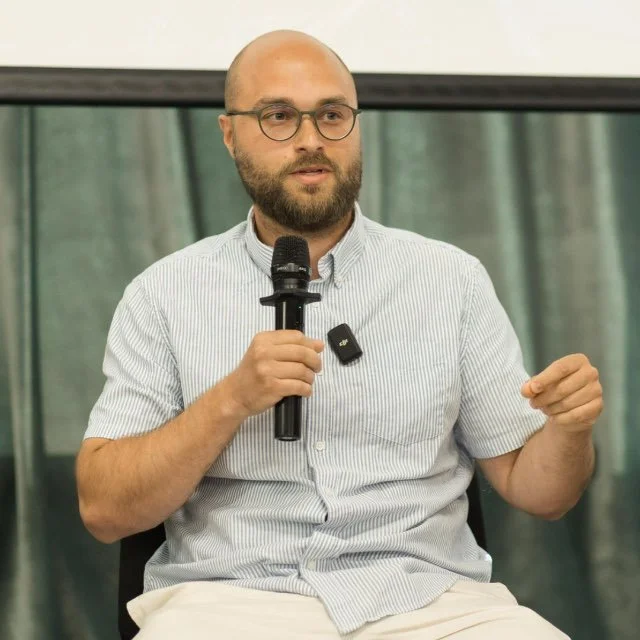
Serhii Matsenko

Owner of LESI Hotel


TEAM


Next project

SOPHIA HOTEL KYIV / hotel

1200 m², Kyiv, 2022